



All Analytical Techniques articles – Page 16
-
 News
NewsCeSPIACE: New peptide drug blocks COVID-19 variants
Scientists have developed CeSPIACE, a peptide drug that offers broad protection against COVID-19 variants, including Omicron XBB.1.5. Find out how it targets a stable part of the virus’s spike protein, making it resistant to mutations.
-
 Article
From Yale to healthcare leader: Dr Shika Pappoe’s impact on kidney care
Dr Shika Pappoe’s journey from Yale and Harvard to transforming kidney care highlights how combining clinical expertise with innovation can reshape healthcare. Read on for her insights on overcoming challenges and driving change in STEM and patient care.
-
 News
NewsFirst AI-designed drug, Rentosertib, officially named by USAN
Insilico Medicine’s AI-designed drug for idiopathic pulmonary fibrosis (IPF), Rentosertib, has been granted an official name by USAN. This is the first drug where both the target and compound were discovered using generative AI, marking a major milestone in AI-driven drug development.
-
 Article
The evolution of AI in drug discovery: learning from history's mistakes (Part 1)
AI is transforming drug discovery, but its adoption mirrors past technological shifts in the industry. In this first part of a two-part series, we reveal Sujeegar Jeevanandam’s observations of the parallels between AI and the electronic lab notebook revolution, highlighting key challenges, lessons learned, and what the future holds for ...
-
 Article
Navigating the AI revolution: a roadmap for pharma’s future
AI-driven drug development, powered by advanced models and expanding data access, is becoming a reality. Learn why navigating regulatory hurdles and mastering biology’s inherent complexities are crucial to fully unlocking its potential.
-
 News
NewsNew AI algorithm searches 10 sextillion drug candidates
Scientists have developed an AI algorithm capable of searching through 10 sextillion potential drug molecules, a feat previously considered impossible. This method could significantly speed up drug discovery and the development of new treatments.
-
 News
NewsAI-designed CDK12/13 inhibitors target resistant cancers
Insilico Medicine’s AI-designed CDK12/13 inhibitors show promise against treatment-resistant cancers. Find out how this breakthrough could reshape cancer therapy.
-
 News
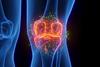
NewsNew genetic discovery offers hope for arthritis drug development
York University researchers have discovered a genetic mutation in the TRAF1 protein that dramatically reduces inflammation, offering a potential breakthrough in rheumatoid arthritis treatment.
-
 News
NewsFORESIGHT consortium secures €9 million to fast-track drug development
The FORESIGHT consortium has secured €9 million to speed up drug development using advanced molecular imaging, targeting major diseases like cancer, autoimmune conditions, and heart disorders.
-
 Article
Large language models: now more affordable and reliable than ever
In this article, Dr Raminderpal Singh explores the transformative impact of the Deepseek R1 open-source large language model on drug discovery. Its potential offers exciting opportunities for both scientists and software developers, marking a significant advancement for the life sciences community.
-
 News
NewsCN Bio advances hepatotoxicity testing to reduce drug failures
CN Bio has developed an advanced hepatotoxicity testing solution to improve preclinical drug safety, providing more human-relevant insights and reducing the risk of drug failures due to liver damage.
-
 News
NewsStudy identifies new genetic targets for neuropsychiatric diseases
Scientists identify thousands of novel enhancers linked to neuronal differentiation and neuropsychiatric disorders, offering new pathways for drug discovery and potential therapeutic targets.
-
 Article
Scientific workflow for hypothesis testing in drug discovery: part 3 of 3
Drug discovery scientists develop and test complex hypotheses using data and expertise, and build workflows to support this. In this third and final article, Dr Raminderpal Singh and Nina Truter summarise the tools used in the scientific workflow – and include key considerations.
-
 News
NewsUC Davis researchers achieve total synthesis of ibogaine
UC Davis researchers achieve a breakthrough in synthesising ibogaine, enabling safer drug development for addiction and depression treatment.
-
 News
NewsRestoring the gut: VE303's strategy for C. diff relief
A new publication in Nature Medicine highlights the potential of VE303 for preventing recurrent C. difficile infection, detailing its impact on the gut microbiome and immune response.
-
 News
NewsNew study shows CGM data can predict diabetes complications
UVA researchers found that continuous glucose monitor data can predict nerve, eye, and kidney damage in type 1 diabetes.
-
 News
NewsUVA’s computer models target antibiotics to combat resistance
Researchers at the University of Virginia School of Medicine have developed computer models to create more targeted antibiotics. This approach aims to fight antibiotic resistance by focusing on specific bacteria in different parts of the body, reducing the reliance on broad-spectrum antibiotics.
-
 Article
FDA’s Project Optimus: A new era in oncology drug dosing
Explore how FDA’s Project Optimus is reshaping oncology drug dosing strategies, with insights on precision medicine, adaptive trial designs, and the role of CROs in optimising patient outcomes.
-
 Article
Obstacles and innovations of macrocyclic drug development
Macrocycles outperform traditional therapeutics on several fronts, yet they account for just four percent of FDA-approved drugs. Colleagues Ann E Cleves and Ajay N Jain from Optibrium Ltd explain why we can expect to see this number increase in the coming years.
-
 Article
Scientific workflow for hypothesis testing in drug discovery: Part 2 of 3
In part two of the step-by-step scientific workflow for drug discovery series, Dr Raminderpal Singh and Nina Truter describe the functions of the workflow previously outlined and include key considerations.