



All Analytical Techniques articles – Page 15
-
 Article
Optimising analytical strategies for ADC development
Antibody-drug conjugates (ADCs) are transforming cancer therapy by enabling targeted drug delivery with minimised side effects, but their complex structure presents unique challenges in bioanalysis.
-
 News
NewsScientists develop immunotherapy to disarm fat-fuelled tumours
A new study reveals how tumours hijack fat metabolism to suppress immune responses - and how a novel antibody, PLT012, may reverse this effect, offering new hope for treating immunotherapy-resistant cancers.
-
 Report
Beyond the Lab: Clinical Trials
Explore how artificial intelligence (AI), biomarkers, and innovative trial technologies are creating a more efficient, data-driven future for drug discovery. From better patient selection to smarter trial design, see how clinical research is evolving to deliver new therapies faster.
-
 Article
Synthetic promoters enhance gene therapy precision
Discover how Chromatin Bioscience’s synthetic promoters are transforming gene therapy by enhancing precision, boosting safety and improving manufacturing efficiency.
-
 Article
Building better drugs: how 3D models are shaping pre-clinical development
Three-dimensional (3D) models are reshaping pre-clinical drug development by providing more accurate insights into drug safety and efficacy. Explore how these advanced in vitro systems help improve predictions and reduce the risk of failure in early-stage drug discovery.
-
 News
NewsBone repair breakthrough: why men and women heal differently
Men and women heal bone injuries through distinct biological processes, challenging assumptions in regenerative medicine. The findings support the development of personalised implants and more effective, sex-specific treatment strategies.
-
 News
NewsFibril 'fuzzy coats' boost Parkinson’s protein spread
New research reveals that the flexible ‘fuzzy coat’ surrounding α-synuclein fibrils plays a critical role in how Parkinson’s disease spreads between brain cells.
-
 News
NewsNew study identifies key immune cells that prevent food allergies
A specialised group of immune cells in the gut has been found to prevent allergic reactions - a discovery that could lead to new treatments for allergies and autoimmune diseases.
-
 Article
Using knowledge graphs in drug discovery (Part 1): how they link to large language models
In this first interview of a two-part series, Andreas Kolleger explores the convergence of knowledge graphs and large language models. As the head of GenAI innovation at Neo4j, Andreas brings a unique cross-industry perspective on how these technologies can enhance life sciences workflows.
-
 Article
LB-102: Redefining schizophrenia treatment in drug discovery
Find out how LB Pharmaceuticals' LB-102 is advancing schizophrenia treatment. This first-in-class antipsychotic demonstrates strong efficacy, safety and tolerability, potentially addressing both acute and negative symptoms. Explore its potential impact on neuropsychiatric drug discovery.
-
 Article
Advanced drug development for neurodegenerative diseases with α-synuclein
Discover how α-synuclein tests are transforming the diagnosis and treatment of neurodegenerative diseases, offering hope for earlier detection, better-targeted therapies and faster drug development.
-
 News
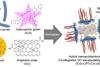
NewsBacteria-boosted nanoparticles offer a triple threat against cancer
A new cancer therapy combines multiple treatment strategies into a single graphene oxide-based nanocomposite. It uses bacterial components to enhance immune response and scalability, creating a powerful and cost-effective approach to tackling tumours.
-
 Article
Advancements in hit identification for membrane protein drug discovery
GPCRs are crucial drug targets, but their complex structures present significant challenges in drug discovery. In this article, Domainex’s Philip Rawlins explores how fragment-based screening and innovative technologies like PoLiPa are helping to overcome these hurdles, with a focus on the Adenosine A2a receptor.
-
 Article
Gene silencing: a step forward for rare disease therapy
Gene silencing offers a promising approach to treating rare neurological diseases like H-ABC. With clinical trials on the horizon, find out how targeted therapies could bring real hope to patients and families.
-
 News
NewsB cell discovery could supercharge future vaccine development
New research reveals how B cells balance mutation and clonal expansion to refine their antibodies. This discovery could lead to more targeted and effective vaccine designs for various diseases.
-
 News
NewsTract Bio identifies drug targets for oesophageal cancer
Tract Bio’s new research reveals key insights into the evolution of oesophageal adenocarcinoma (EAC) and identifies promising drug combinations for more effective treatment.
-
 News
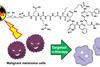
NewsNovel radioactive drug targets aggressive metastatic melanoma
Scientists in Japan have developed a new radioactive drug that emits alpha particles, showing promise for targeting metastatic melanoma - an aggressive skin cancer resistant to many conventional treatments.
-
 Article
The evolution of AI in drug discovery: learning from history's mistakes (Part 2)
In this second part of a two-part series, we continue Sujeegar Jeevanandam’s exploration of the future of AI in drug discovery. We share his vision for transformative AI applications, such as simulating human pharmacokinetics and pharmacodynamics, and offer strategic recommendations for biotechs looking to adopt AI.
-
 News
NewsNew research offers hope for high-grade glioma treatment
High-grade glioma, an aggressive brain cancer affecting both paediatric and adult patients, remains difficult to treat. A collaborative study from the University of Michigan, Dana-Farber Cancer Institute, and the Medical University of Vienna reveals a promising new treatment approach.
-
 News
NewsNanoparticle therapy shows potential to prevent spread of pancreatic cancer to liver
Pancreatic cancer is notoriously hard to treat, especially when it spreads to the liver in advanced stages. Researchers at UCLA’s California NanoSystems Institute (CNSI) have developed an innovative nanoparticle technology to tackle this challenge.