
Every great leap in history started with a single, urgent need. Now AI is emerging as the next great engine of invention, transforming the future of medicine faster than ever imagined.

From landing on the moon to achieving Net Zero, setting hugely ambitious goals can help to galvanise innovation to achieve extraordinary things.
Even failure to reach those goals can facilitate significant progress, including knowledge gained through experience and more rapid advancements across numerous technology areas.
In the Industrial Revolution, a strong focus on solving specific problems led to major leaps forward in the design and development of the steam engine, which powered trains, ships and factories – and changed the world.
In recent times, the highly concentrated effort, fuelled by significant government funding, to develop the Covid-19 vaccine worked in a similar way.
Huge strides in medicine have been made since the discoveries of the smallpox vaccine, antibiotics and anaesthetics.
The response to the pandemic highlighted what is possible with a single, clear goal.
Necessity really was the mother of invention.
Huge strides in medicine have been made since the discoveries of the smallpox vaccine, antibiotics and anaesthetics. Today, gene editing and gene silencing technologies hold the promise of developing therapies that could once again revolutionise healthcare.
But the world of drug research, design and development is plagued by competing national interests, financial motivations, and expensive, complex processes.
So, do we need a new, big vision for drug development that goes beyond the financial interests of Big Pharma, the national perspective of governments, and the complex, costly demands of regulatory bodies?
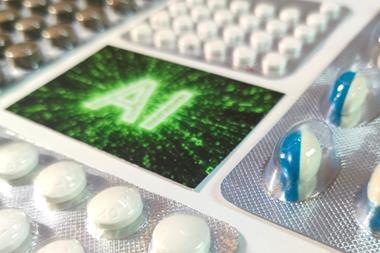
Perhaps artificial intelligence (AI)-designed drugs are the answer.
Seeking approval
The expense, effort and time taken to bring a drug to market is immense – and of course most fail. From an analysis by PatentPC, only 12 percent of drugs that enter clinical trials eventually receive US Food and Drug Administration (FDA) approval.
According to the same analysis, the average cost of developing a new prescription drug is approximately $2.6 billion – taking between 10 and 15 years from discovery to market approval.
This sounds bad, but it gets worse. The agencies that underpin the entire process are hugely expensive themselves. The cost of regulatory compliance adds 15-25 percent to total drug development expenses, and the cost of a failed drug candidate can exceed $1 billion, according to the PatentPC analysis.
There’s a lot you can do with that kind of money.
Rarefied atmosphere
Compared with prescription drugs, the cost of bringing a rare disease drug (orphan drug) to market is typically between $1 billion and $2 billion.
These drugs address, by definition, a limited market. However, government initiatives, starting with the Orphan Drug Act in the US in 1980, have created a more attractive regime for orphan drug development that includes financial incentives such as market exclusivity, tax credits and fast-track approvals.
Compared with prescription drugs, the cost of bringing a rare disease drug (orphan drug) to market is typically between $1 billion and $2 billion.
That being said, it remains an enormous financial gamble.
Structurally, it has been the smaller biotechs, on whom these huge financial burdens weigh most heavily, that have emerged as the primary source of rare disease drug research and development.
Somewhere between 80 and 85 percent of rare diseases are monogenic – caused by mutations in a single gene. This makes them better candidates for AI-designed drugs, as it means that a single protein can be targeted.
However, many diseases involve incredibly complex biological processes with no easily identifiable, single protein to target.
And there are further challenges; the same drug can affect individuals differently, due to genetic and biological variation. An AI-designed drug would need to account for every possible patient response, which may prove an insurmountable barrier – at least until more is known about the underlying biology and we have sufficiently powerful tools.
The future is here, now
Imagine if we could create a new drug to halt progression of a fatal or debilitating disease – or even reverse its symptoms – simply by pressing a button.
An incredible dream, right?
Well, the promise of that dream is held out by advocates of AI. Not today or tomorrow, but relatively soon the accumulation of breakthroughs in multiple disciplines and technologies, for example quantum computing and AI, will combine to produce something close to that.
Before AI, drug discovery was a hugely time-consuming process, subject to trial-and-error experiments and testing.
Why? Because major breakthroughs in AI signal the future direction such technologies will deliver.
Before AI, drug discovery was a hugely time-consuming process, subject to trial-and-error experiments and testing.
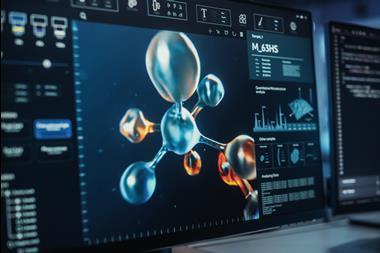
However, AI’s ability to find patterns in data can facilitate major improvements in the speed and accuracy of drug discovery. It can identify targets, discover potential treatments and even design the molecular structure of potential drugs. According to a paper in the National Library of Medicine, published last June, “AI models can predict how well a drug will bind to its target, forecast the efficacy and toxicity of drug compounds, or suggest new applications for old drugs.”
Thus large parts of the traditional drug discovery process can now be supplanted by tools that obviate the need for trial and error – an extraordinary leap forwards.
Five years ago the first drug designed by AI reached clinical trials. It was the result of a collaboration between British startup Exscientia and a Japanese pharmaceutical company, Sumitomo Pharma, who claimed the use of AI meant their drug reached clinical trials five times faster than usual.
In a related area, last year’s Nobel Prize in Chemistry was jointly awarded to Google’s AlphaFold, an AI tool that predicts the 3D structure of proteins from amino acid sequences – another example of how AI can improve the medicine discovery process, and another stepping stone on the path to the ultimate dream.
Google DeepMind spinout Isomorphic Labs claims its AI models reduce the need for time-consuming experimental lab work. Its AI drug design system allows researchers to predict the way molecules will interact with, and bind to, proteins – and behave in the body. In January this year, the company said it plans to have drugs in clinical trials by the end of the year.
The first AI-discovered drug development has also been achieved by the biotech Insilico. Its drug for idiopathic pulmonary fibrosis is the first where both the target and compound were discovered using generative AI.
The whole process took just 18 months.
Conclusions
According to analysis by ScienceDirect, between 2015 and 2024, 75 AI-developed drugs entered clinical trials, with the number under investigation increasing exponentially each year. It reports that “it seems like it’s only a matter of time before the first AI-invented medicines are treating patients.”
And it seems to be working. According to a review in the National Library of Medicine, AI-discovered molecules show a substantially high success rate (80-90 percent) in Phase I clinical trials.
Insilico’s drug entered Phase II clinical trials in the US and China in mid-2023 – yet another major milestone.
If proof were needed of the technology’s critical place in the sector, life sciences investment in AI is booming; in 2023, the Mckinsey Global Institute estimated that generative AI could unlock between $60 billion and $110 billion a year in economic value for the pharmaceutical and medical products industries.
With many AI-discovered drugs entering clinical trials and the first AI-designed medicines poised to reach patients soon, AI’s capabilities seem assured to expedite the industry’s successes.
Here’s my vision: one day, at the push of a button and near instantaneously, an AI tool will design a drug that combats any condition – accounting for known toxicity, safety and side-effects, and factoring in patients’ genetic makeup, medical history and more.
With that vision in mind, the process then becomes one of identifying the requisite steps and building blocks. With a strong focus on specific, smaller goals, so much can be achieved. And this is precisely what we’re seeing with the breakthroughs discussed above.
Think again about the Industrial Revolution; multiple challenges were addressed by a number of people entirely focused on solving specific problems – and it started with a vision.
Having that vision is what made the difference then and is what could make the biggest difference now.
Yes, there are issues and challenges – not least around patient confidentiality – but the promise is so great that we must ensure these are addressed such that the dream becomes extraordinary reality.
Meet the author
Dan Williams PhD, CEO of SynaptixBio
 Dan Williams is CEO of SynaptixBio. After studying at the University of Dundee for a degree in biochemistry and physiology, and a PhD thereafter, he entered the industry, where he worked his way up to senior scientist. Dan then took over management of a cell research group, initially running a cell biology research project then preclinical development.
Following this he moved to drug development, focusing on the organisation and management of both manufacturing and clinical trials. Next he moved to Adaptimmune, switching from biologics to developing cell therapies. He set up development groups within Adaptimmune. While project managing some of the preclinical research and the move from the partnership with an academic group for their clinical trials, he proceeded to take on those clinical trials as a company.
He then managed the larger research group and transitioned to VP of Research Operations. From there, Dan moved to Meatable as Chief Product Officer.
Dan co-founded SynaptixBio Ltd. in 2021 with the aim to push leukodystrophy therapies through to clinical trials.


Topics
- Antibiotics
- Artificial Intelligence (AI)
- Cell & Gene Therapy
- Companies
- Dr Dan Williams (CEO of SynaptixBio)
- Drug Development
- Drug Discovery
- Drug Discovery Processes
- Drug Targets
- Gene Therapy
- High-Throughput Screening (HTS)
- Infectious disease
- Informatics
- Legal & Compliance
- Orphan Drugs
- Precision Medicine
- Sequencing
- SynaptixBio
- Translational Science