



Drug discovery is generating more data than ever, but the challenge is making sure that data is reliable, connected and usable. At Analytica 2026 in Munich, Drug Target Review spoke with technology developers and industry leaders across the exhibition floor to understand how these challenges are being addressed.
Improving data flow throughout drug development
Gregory McVay, Group Vice President and Chief Customer Officer for Danaher’s Life Sciences platform, sees a consistent challenge across biopharma, biotech and research organisations: it is still too hard to move from biological insight to approved therapy. The issue is no longer generating data, but enabling it to flow reliably through discovery, development and manufacturing in a way that compresses timelines rather than adding friction.
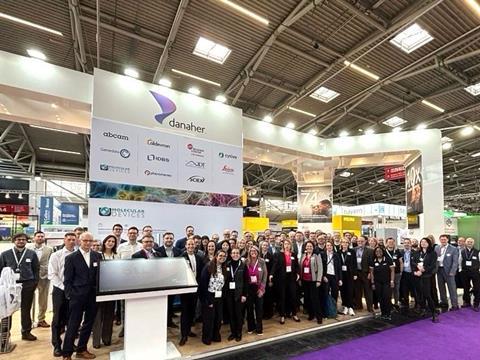
In our conversation at Analytica 2026, McVay described how his team works with customers to pinpoint where R&D and development workflows break down as programs scale and how a more connected ecosystem can remove those bottlenecks. “We’re working to change that by bringing imaging, automation, analytical technologies, AI-driven insights and essential raw materials together in one connected ecosystem,” he explains. Rather than treating these as isolated point solutions, Danaher aims to unite them in an integrated platform that links early discovery, complex modalities such as cell and gene therapies and GMP manufacturing and release.
That vision reflects a broader shift in the market. According to McVay, customers are increasingly looking beyond individual instruments toward longterm partners who can support the full pathway from early research through to IND and commercial supply. He points to three forces behind this: the industrialisation of AI (with governed data and model platforms moving from pilots to production, including “selfdriving” design–make–test–learn systems); the operationalisation of complex modalities such as cell and gene therapies (where the key question is whether therapies can be made, tested and released reliably at scale); and the way organisations are rearchitecting their internal and external collaborations, favoring connected workflows and strategic partnerships over assembling one-off solutions.
On the Analytica show floor, Danaher translated these themes into practice by demonstrating how instruments, consumables, software and analytics from across its portfolio can be combined into an integrated workflows. The intent is clear: reduce handoffs, improve traceability and give development teams a more seamless path from scientific insight to clinical and commercial reality.
Automation moves earlier into biological workflows
At Molecular Devices, Boyd Butler, Global Product Marketing Manager for Imaging, described how the company is expanding beyond its traditional strength in microplate readers into a broader workflow covering cell culture and analysis.
Molecular Devices presented an end-to-end approach at Analytica, linking automated cell culture, high-content imaging and AI-driven analysis. This includes the CellXpress.ai® Automated Cell Culture System, the ImageXpress® HCS.ai High-Content Screening System and the IN Carta® Image Analysis Software, alongside microplate readers for downstream assays.
Cell culture is still more of an art. It’s manual and it’s tedious.
Butler highlighted cell culture as one of the most persistent bottlenecks in discovery, noting that many workflows remain heavily manual. “Cell culture is still more of an art. It’s manual and it’s tedious,” he said.
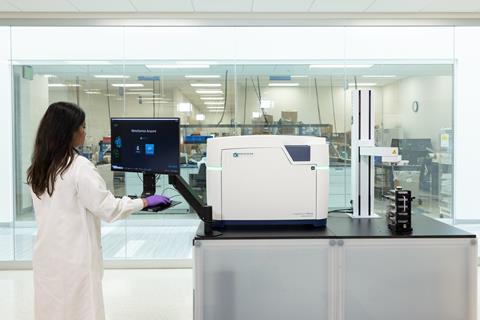
The CellXpress.ai system uses AI-driven automation to support iPSC and organoid culture, combining imaging and machine learning to guide key steps such as feeding, passaging and monitoring. Researchers can define and adjust workflows through an intuitive interface, allowing protocols to be applied consistently across experiments without the need for coding. “You can define what a healthy iPSC-derived organoid should look like and what you want to see. You can then push the organoid in a specific direction through differentiation and train the system to recognise those changes… and then you can walk away,” Butler said.
He also pointed to a common challenge in many labs – a reliance on individual expertise. “If you have someone with all that institutional knowledge and they leave the lab… it’s gone,” he said. Butler noted that this is exactly the problem Molecular Devices is aiming to address. By making systems easier to use and quicker to learn, workflows can be shared across teams without relying on one sole expert. This is particularly important in shared facilities, where multiple users need to run the same systems consistently.
AI depends on high-quality experimental data
Despite the strong focus on AI across Analytica, industry experts emphasised that its effectiveness depends on data quality and experimental validation.
At Malvern Panalytical, Dr Agatha Rosenthal, Market Development Manager for Biologics, works with researchers across drug discovery to generate robust biophysical data and support decision making. She noted that while AI is becoming more widely used, it remains difficult to interpret and depends heavily on the data it is trained on.
“AI is very powerful, but it still relies on high-quality biophysical data because you have to feed AI,” she said.
She added that computational outputs must be validated experimentally rather than taken at face value: “You have to go into the lab and validate what AI is actually generating.”
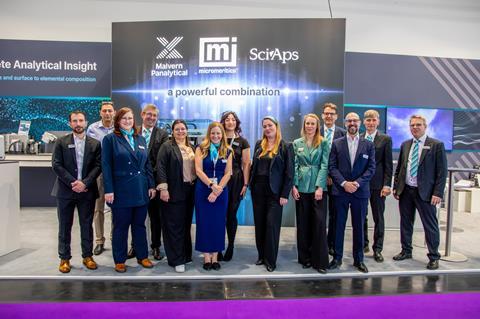
At Analytica, the company presented technologies to support this, particularly in early-stage drug discovery. The WAVE system provides label-free interaction analysis using a highly sensitive optical biosensor, enabling real-time measurement of binding kinetics. Its RAPID technology allows measurements from a single concentration using pulsed injections of increasing duration; this reduces assay time and increases throughput, making it well suited to screening large compound libraries and supporting hit validation and affinity ranking, especially for weak binders with fast off-rates.
Malvern Panalytical also offers isothermal titration calorimetry for thermodynamic analysis, measuring molecular interactions in solution based on heat changes. Rosenthal described this as a gold standard technique, evaluating parameters such as enthalpy, entropy and stoichiometry, helping identify false positives early in discovery.
Rosenthal also highlighted the Zetasizer platform, which uses light scattering to measure particle size and zeta potential, helping assess colloidal and formulation stability under different conditions. She also emphasised the importance of automation and guidance for users from a corporate standpoint. This can be achieved by collaboration, joint initiatives and ongoing support, with researchers able to work closely with application scientists to analyse data, address specific challenges and at the end use Malvern Panalytical as a platform to spread their own scientific achievements.
Analytical demands increase with drug modality complexity
At Phenomenex, Dr Jürgen Niesser, Senior Business Development Manager for Biopharma and Innovator Pharma in Europe, works closely with drug discovery teams to develop analytical strategies for complex biomolecules. Niesser highlighted the complexity of modern therapeutics and the resulting pressure this places on analytical methods. “One of the most significant trends we see is the rapid increase in structural and functional complexity of modern drug modalities,” he said.
One of the most significant trends we see is the rapid increase in structural and functional complexity of modern drug modalities.
He pointed to the expansion of conjugated therapeutics, including antibody–drug conjugates, antibody–oligonucleotide conjugates and radioligand therapies, alongside oligonucleotide-based approaches such as siRNA and mRNA. These introduce challenges related to sequence modifications, delivery systems such as lipid nanoparticles and structural heterogeneity.
At the same time, more complex peptide formats, including cyclic peptides and oral peptide therapeutics, are adding further analytical demands, particularly around stability and formulation-driven impurities. “Analytical methods must resolve highly similar species, characterise heterogeneous populations and deliver reliable data across development stages,” Niesser explained.
To address these challenges, Phenomenex presented a set of purpose-built technologies designed specifically for biomolecular analysis. A central development is native reversed-phase liquid chromatography (nRPLC), which enables characterisation of drug-to-antibody ratio under native and mass spectrometry-compatible conditions.
The company also highlighted its Biozen dSEC column portfolio for aggregate analysis. These columns use bioinert titanium hardware components and hydrophilic surface chemistry to minimise non-specific adsorption while maintaining high recovery and resolution, with formats tailored from peptides and oligonucleotides through to monoclonal antibodies and larger biomolecules such as AAVs, mRNA and plasmids.
In sample preparation, the Clarity OTX Pro platform was presented as an updated approach for oligonucleotide extraction from biological matrices. Designed to improve recovery while reducing artefacts such as oxidation, it also supports automation and liquid-handling workflows, enabling more consistent and scalable processing.
Connecting analytical workflows
At Thermo Fisher Scientific, Dr Aaron Robitaille, Senior Director of Product and Vertical Marketing of Mass Spectrometry, focuses on aligning mass spectrometry workflows with the practical needs of researchers across drug discovery and biopharmaceutical development. Speaking at Analytica, Robitaille highlighted how analytical demands are expanding as drug discovery moves beyond traditional small molecules towards more complex therapeutic classes.
“We are seeing strong demand for workflows that can span beyond monoclonal antibodies to bispecific and antibody–drug conjugates, oligonucleotides and cell and gene therapy-related molecules, not just traditional small molecules,” he said.
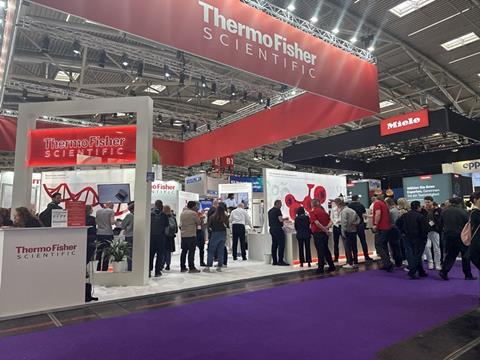
This is driving demand for improved analytical performance, including greater dynamic range and advanced fragmentation for structural and sequence-level characterisation. Thermo Fisher’s response centres on its Orbitrap technology, particularly the Orbitrap Excedion Pro BioPharma Edition mass spectrometer, which combines expanded mass range with EASY-ETD fragmentation to support detailed analysis of complex biotherapeutics.
The company also presented an end-to-end workflow designed specifically for biopharmaceutical applications. This integrates the Vanquish UHPLC system with the Orbitrap Excedion Pro platform and BioPharma Finder software, enabling a connected approach to intact protein analysis, peptide mapping, post-translational modification characterisation and higher-order structural studies.
“Researchers require a path from sample to knowledge,” he said, describing the need to link chromatography, detection, data analysis and digital infrastructure into a continuous workflow.
“The broader molecular coverage achieved with end-to-end workflows can help teams move faster from complex samples to actionable insight,” he concluded.
Multidimensional analysis in complex samples
At Bruker Daltonics, Dr Matthew Lewis, Vice President of Metabolomics and Lipidomics, leads a business unit focused on small-molecule omics across pharma, biopharma, academia and industry, with responsibility for complete customer solutions spanning hardware, software and analytical workflows.
Speaking at Analytica, Lewis highlighted a growing emphasis on drug and metabolite structural characterisation in drug discovery, driven by the need for more detailed molecular information, often in complex biological samples.
One of the key developments is multidimensional “4D” analysis, combining chromatography, ion mobility and mass spectrometry (both MS and MS/MS) to reduce sample complexity within a single experiment. Bruker’s TIMS-based platforms, which use trapped ion mobility spectrometry (TIMS) to separate ions by size and shape, integrate this with high-resolution mass spectrometry, enabling multiple layers of data to be generated simultaneously.
“You get all the MS/MS, all the quantitation, all the characterisation, all the CCS values, all the time,” he said. “One injection, all the data.”
You get all the MS/MS, all the quantitation, all the characterisation, all the CCS values, all the time.
This approach is central to the success of the new timsMetabo, which is designed for high-throughput, high-depth analysis and support applications including metabolite identification and screening.
Another emerging force in this area is the timsOmni which combines TIMS with Omnitrap technology, enabling drug discovery and development researchers the ability to pinpoint exact structural features of drugs, drug impurities or drug degradation products and drug metabolites using omnidirectional MSn and trapped eXd.
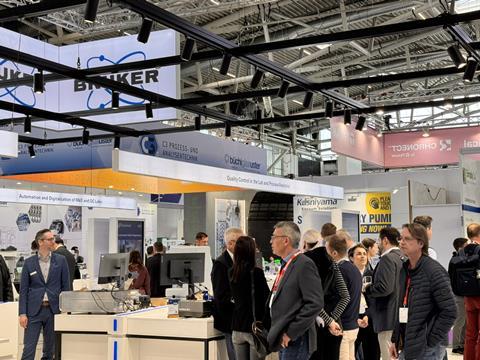
Bruker also presented the ecTOF, which combines traditional electron ionisation (EI) with a complementary novel chemical ionisation (CI) source. By acquiring both ionisation modes simultaneously in a single sample analysis, the ecTOF delivers rich quantitative and descriptive characteristic data including molecular ion information, improving confidence in the identification of compounds in complex samples. “It is like having a second set of eyes on your sample, enabling you to see more metabolism with greater confidence in annotation capability, especially under automation” Lewis explained.
Alongside hardware advances, Lewis emphasised the importance of software and data quality. Bruker has developed integrated “QSee™” quality control tools that allow users to monitor instrument performance over time and assess data quality in real time during batch analysis and across batches. These features are designed to improve reproducibility and give researchers greater confidence in their results.
Beyond drug discovery, Lewis pointed to the growing importance of the exposome – an emerging field focused on understanding how environmental exposures influence human health. He described how analytical technologies are increasingly being used to measure previously uncharacterised compounds in air, water and food, and to link these exposures to biological outcomes.
“Why is colorectal cancer affecting younger and younger people? The answer is in our interaction with our environment,” he said. He added that these tools are helping researchers better understand how environmental exposure contributes to disease, ultimately leading towards better paths for treatment and prevention.
Data quality and reproducibility move to the fore
At Bio-Rad Laboratories, Dr Chelsea Pratt, Biopharma Segment Manager, works across product development, scientific communication and customer engagement to support reliable data generation in research and drug development.
Pratt highlighted that decisions are being made earlier in drug discovery, increasing the need for high-confidence data. “One of the biggest trends we’re seeing is a growing emphasis on data quality, reproducibility and sensitivity,” she said. “Researchers are looking for simpler, more accessible workflows that can scale and integrate into existing labs,” Pratt added, noting the importance of generating data that can be transferred reliably across sites and incorporated into AI and machine learning systems.
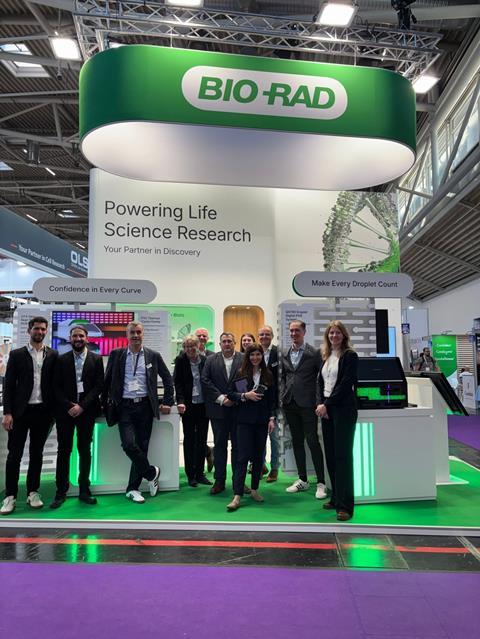
At Analytica, Bio-Rad presented a portfolio spanning early research through to preclinical and clinical development. Central to this was the QX700 series of Droplet Digital PCR systems, which automate digital PCR workflows and enable precise quantification without the need for standard curves – particularly beneficial when working with limited samples or complex matrices.
Our goal is to reduce experimental uncertainty and help scientists focus on interpreting data and advancing their science, rather than troubleshooting workflows.
This was complemented by the CFX Opus real-time PCR system and PTC Tempo thermal cycler, both designed to integrate with automated workflows and third-party liquid handling systems as laboratories scale their operations.
In addition, the ChemiDoc Go imaging system was showcased for gel and western blot analysis, offering sensitive, rapid imaging in a compact benchtop format.
“Our goal is to reduce experimental uncertainty and help scientists focus on interpreting data and advancing their science, rather than troubleshooting workflows,” she concluded.
A more connected future for drug discovery
Generating data is no longer the main challenge – using it properly is. Many of the technologies on show focused on improving how data moves from early experiments through to decision making, with an emphasis on reliability and reproducibility.
There is also a move away from isolated instruments towards connected workflows. Linking sample preparation, analysis and data interpretation helps reduce variability and supports more consistent decisions. Strong individual technologies still matter, but their value now depends on how well they work together.





No comments yet