



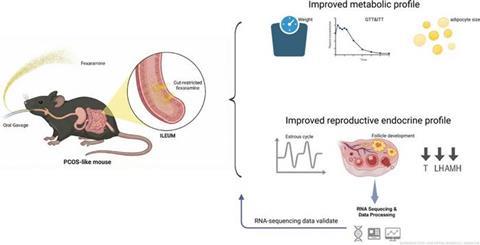
A preclinical study from Fudan University demonstrates that fexaramine, a gut-restricted FXR agonist, addresses both metabolic and reproductive complications in PCOS mouse models.

Researchers at Fudan University have reported promising findings from a new study investigating a gut-targeted drug for the treatment of polycystic ovary syndrome (PCOS), a common hormonal disorder affecting women of reproductive age.
PCOS is linked to a wide range of symptoms including irregular menstrual cycles, infertility, weight gain, insulin resistance and elevated levels of male hormones. Existing treatments mainly focus on controlling symptoms rather than targeting the biological mechanisms that cause the condition.
Growing focus on the gut and hormone regulation
Recent scientific research has increasingly connected PCOS with changes in gut bacteria and disruptions in bile acid signalling pathways. One area of particular interest is the farnesoid X receptor, known as FXR, which is activated by bile acids and plays a central role in regulating metabolism and hormone balance.
Recent scientific research has increasingly connected PCOS with changes in gut bacteria and disruptions in bile acid signalling pathways
Previous attempts to target FXR using drugs that activate the receptor throughout the body have produced inconsistent results and raised safety concerns. Researchers have therefore been searching for alternative approaches that could deliver therapeutic benefits while reducing potential risks.
To explore this, the researchers investigated fexaramine, also known as Fex, a compound designed to remain largely within the intestine after oral administration. By selectively activating FXR in the gut rather than across the whole body, the researchers hoped the treatment could avoid some of the drawbacks associated with conventional systemic drugs.
Significant improvements in metabolic health
The study used two separate mouse models of PCOS to examine whether the intestinal FXR-targeting treatment could improve both metabolic and reproductive complications linked to the disorder.
According to the findings, mice treated with Fex showed marked improvements in metabolic health. Treated animals gained less weight and demonstrated better glucose tolerance and insulin sensitivity compared with untreated mice.
These improvements extended well beyond metabolic measures alone. The treatment also restored disrupted reproductive cycles and reduced the number of abnormal ovarian follicles, which are commonly associated with PCOS.
In addition, the study found increased formation of corpus luteum structures linked to ovulation, suggesting improved ovarian function. Levels of testosterone and androstenedione, hormones that are often elevated in women with PCOS, were also reduced following treatment.
Several key reproductive hormones disrupted by the condition, including luteinising hormone and anti-Müllerian hormone, returned to more normal levels in treated mice.
Genetic analysis reveals broader effects
Further transcriptomic analysis revealed that Fex altered gene pathways involved in follicular development, steroid hormone production, inflammation and glucose and lipid metabolism.
The researchers also observed that several genes linked to ovarian health and insulin sensitivity shifted towards healthier expression patterns after treatment.
Further studies still needed
The findings add support to the emerging theory of a ’gut–ovary axis’ in PCOS, in which intestinal signalling pathways may directly influence reproductive function.
However, the researchers made clear that further work is needed to fully understand the mechanisms behind the observed effects. Additionally, mouse models can not completely replicate the complexity of human PCOS.
The researchers made clear that further work is needed to fully understand the mechanisms behind the observed effects
Clinical trials in humans will therefore be required before conclusions can be drawn about the treatment’s potential use in patients.










No comments yet