



All Cancer articles – Page 3
-
 Article
Deep data not big data
Bigger isn’t always better. In drug discovery, Dr Michael Ritchie argues that the future belongs not to those with the most data, but to those who understand its biological depth.
-
 News
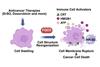
NewsFGD3 protein enhances breast cancer therapies
Scientists have identified a little-known protein, FGD3, that can boost the power of key breast cancer treatments by helping drugs rupture tumour cells and activate the immune system.
-
 News
NewsNew study shows ageing may help prevent cancer growth
Scientists at Stanford University have discovered that older mice develop far fewer and less aggressive lung tumours than younger ones, challenging the long-held belief that cancer risk rises with age.
-
 News
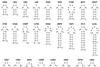
NewsRNA folding: new model could change future drug design
A Japanese research team has simulated how RNA molecules fold, using cutting-edge computational tools to model complex structures with accuracy – a breakthrough that could accelerate the development of RNA-based medicines and therapies.
-
 Article
CD24 emerges as the next macrophage checkpoint
With CD47 therapies constrained by safety, attention is turning to CD24 as a macrophage checkpoint target. Pheast’s PHST001 has now entered the clinic.
-
 Article
What’s changing in cancer drug discovery – and why it matters now
Take part in a live Q&A with oncology experts as they explore the scientific advances driving cancer drug discovery.
-
 News
NewsExisting nerve pain drugs may help stop bone cancer spread
Scientists have discovered that two existing pain medications – bupivacaine and rimegepant – may not only relieve the severe pain caused by osteosarcoma but also slow the disease’s growth.
-
 Article
From wild fungi to faster drug discovery
Nature’s pharmacy has yielded half of today’s medicines, yet most of its potential remains untapped. AI is now changing how quickly new therapies can be found.
-
 Article
The predictive validity crisis: Pharma’s productivity paradox – Part II
Part II shows that the predictive validity crisis can be solved by rethinking how the industry chooses models, measures outcomes and integrates systems. Success stories from Vertex, Regeneron and AstraZeneca illustrate how aligning biology, measurement and strategy can reverse decades of declining productivity.
-
 News
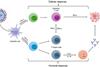
NewsHow nanocarriers and VLPs are uniting to fight cancer
Innovations in nanomedicine are merging to redefine precision oncology. From virus-like particles to magnetic nanoparticles, integrated delivery systems are showing powerful potential for new, targeted cancer treatments.
-
 Article
The predictive validity crisis: Pharma’s productivity paradox – Part I
Drug discovery now costs 100 times more per FDA-approved drug than in 1950, despite vast advances in biology and computing. The core problem is the collapse of predictive validity in preclinical models, which sits at the heart of pharma’s productivity paradox.
-
 News
NewsDNA repair secrets of naked mole-rats may guide new drug discovery
New research has demonstrated how tiny tweaks in a DNA-sensing enzyme may hold the key to the naked mole-rat’s extraordinary lifespan – offering insights that could one day inform therapies for aging and age-related diseases.
-
 News
NewsHow smoking and alcohol shape mutations in our DNA
Researchers have refined a cutting-edge DNA sequencing tool that reveals how mutations accumulate in healthy tissues as we age, offering insights into the earliest stages of cancer development.
-
 News
NewsNew CAR T therapy targets solid tumours safely and effectively
USC researchers have engineered CAR T cells to deliver a dual protein therapy that targets solid tumours – offering hope for cancers previously resistant to treatment.
-
 News
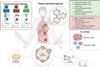
NewsTiny models, powerful insights: how organoids are driving precision oncology
A new review has highlighted how three-dimensional organoid models are transforming cancer research by replicating the complexity of human tumours – bringing precision oncology closer to the clinic.
-
 News
NewsProtecting bones from cancer damage: targeting the UPR pathway
New research highlights how cancer hijacks the unfolded protein response (UPR) in bone cells – potentially allowing for the development of therapies that target this pathway to prevent fractures.
-
 News
NewsMelanoma research: targeted drug duo reactivates immune response
Researchers at Sutter’s California Pacific Medical Center have discovered a potential new treatment strategy for melanoma patients who stop responding to immunotherapy.
-
 News
NewsHow circulating tumour cell organoids are transforming oncology
Circulating tumour cell (CTC)-derived organoids are changing cancer research, providing scientists with a powerful tool for studying drug resistance and informing the development of new personalised therapies.
-
 News
NewsTumour stress drives T cell exhaustion – antioxidants may reverse it
A new research study has discovered that targeted antioxidants could restore T cell function – offering a potential boost for cancer immunotherapies like CAR-T.
-
News
Single-cell technique tracks boron in live tumour cells
Researchers at the University of Birmingham have developed a single-cell technique to track boron inside live tumour cells – making Boron Neutron Capture Therapy more effective in treating head and neck cancers.