



All Drug Discovery articles – Page 23
-
 Webinar
Cancer drug discovery breakthroughs: research that’s changing lives
Watch this roundtable with cancer experts on breakthroughs in targets, models and therapies transforming early-stage oncology discovery.
-
 News
NewsNew leadership at ELRIG aims to expand collaboration across drug discovery
ELRIG, a UK-based scientific community driving innovation in drug discovery, has appointed biopharma leader Dr Del Trezise as its new Chair - signalling a bold new chapter for the organisation.
-
 Article
Spirulina’s role in shaping the future of preventative biologics
From law to biotech, Brian Finrow's career path has been anything but conventional. As Co-founder and CEO of Lumen Bioscience, he’s steering the company’s innovative approach to drug discovery, focusing on preventative biologics that offer scalable, cost-effective solutions. Find out how Finrow's unique spirulina-based platform is changing the way we ...
-
 Webinar
AI-powered drug discovery: Accelerating the development of life-saving therapies
AI in drug discovery is no longer theoretical. It’s already speeding up target identification, improving predictions, and cutting waste. Learn how to apply it in your own discovery pipeline.
-
 Article
Early evidence and emerging trends: How AI is shaping drug discovery and clinical development
Drug development is plagued by high costs, long timelines and low success rates, but what if AI could change that? Read on to discover real-world examples and explore the transformative potential of AI in drug development.
-
 Article
Gylden’s gold platform trains T cells to kill viruses
What if vaccines could train your immune system to eliminate infections at the source? Find out how Gylden Pharma’s gold nanoparticle platform delivers targeted T cell immunity - providing a precise and durable defence against complex infectious diseases.
-
 Article
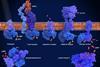
Advancements in hit identification for membrane protein drug discovery
GPCRs are crucial drug targets, but their complex structures present significant challenges in drug discovery. In this article, Domainex’s Philip Rawlins explores how fragment-based screening and innovative technologies like PoLiPa are helping to overcome these hurdles, with a focus on the Adenosine A2a receptor.
-
 News
NewsPSPC1 knockout slows AML in preclinical models
Scientists at UT Health San Antonio have identified PSPC1 in mouse models as a promising new drug target for acute myeloid leukaemia (AML), a deadly blood cancer with limited treatment options.
-
 Article
Next-gen biotech: rBIO’s approach to affordable insulin solutions
rBIO is transforming the biosimilar insulin market with a novel biomanufacturing platform designed to reduce production costs while maintaining high-quality standards. CEO Cameron Owen shares how their approach is shaping drug discovery and improving patient access to life-saving treatments.
-
 Article
ABB’s robotics ecosystem: advancing lab efficiency in drug discovery
In this interview with Jose-Manuel Collados, learn how ABB's strategic partnerships and automation technology are improving lab efficiency, enhancing precision and ultimately speeding up the development of life-saving treatments.
-
 News
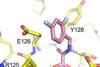
NewsNew approach targets VHR enzyme for sepsis treatment
A new study reveals a promising approach to sepsis treatment by targeting the VHR enzyme using fragment-based drug discovery. This innovative method could lead to more effective therapies for sepsis and other immune-related conditions.
-
 News
NewsTract Bio identifies drug targets for oesophageal cancer
Tract Bio’s new research reveals key insights into the evolution of oesophageal adenocarcinoma (EAC) and identifies promising drug combinations for more effective treatment.
-
 Article
The evolution of AI in drug discovery: learning from history's mistakes (Part 2)
In this second part of a two-part series, we continue Sujeegar Jeevanandam’s exploration of the future of AI in drug discovery. We share his vision for transformative AI applications, such as simulating human pharmacokinetics and pharmacodynamics, and offer strategic recommendations for biotechs looking to adopt AI.
-
 Report
Beyond the Lab: Artificial Intelligence
Download our latest report to discover how AI is transforming drug discovery, accelerating treatments and driving personalised care.
-
 News
NewsCeSPIACE: New peptide drug blocks COVID-19 variants
Scientists have developed CeSPIACE, a peptide drug that offers broad protection against COVID-19 variants, including Omicron XBB.1.5. Find out how it targets a stable part of the virus’s spike protein, making it resistant to mutations.
-
 Article
Abelacimab: the next frontier in safer anticoagulation therapy
Abelacimab represents a breakthrough in drug discovery, offering a novel approach to anticoagulation that could potentially prevent strokes with minimal bleeding risk. Learn how this innovative treatment could set new standards for both clinical practice and pharmaceutical research.
-
 Webinar
Reprogramming immunity: designing smarter checkpoint receptor agonists
Join Dr Daniela Cipolletta from Seismic Therapeutic to discover how FcγRIIb clustering enabled the discovery of S-4321, a low-affinity PD-1 agonist that restores immune balance by engaging multiple inhibitory pathways.
-
 Article
The future of mental health treatment: Zelquistinel's role
Learn about zelquistinel, an innovative NMDA receptor modulator that is transforming treatment possibilities through a novel approach to synaptic plasticity. This breakthrough drug offers new insights into early drug discovery and the future of neuropsychiatric treatment.
-
 News
NewsFirst AI-designed drug, Rentosertib, officially named by USAN
Insilico Medicine’s AI-designed drug for idiopathic pulmonary fibrosis (IPF), Rentosertib, has been granted an official name by USAN. This is the first drug where both the target and compound were discovered using generative AI, marking a major milestone in AI-driven drug development.
-
 Article
The evolution of AI in drug discovery: learning from history's mistakes (Part 1)
AI is transforming drug discovery, but its adoption mirrors past technological shifts in the industry. In this first part of a two-part series, we reveal Sujeegar Jeevanandam’s observations of the parallels between AI and the electronic lab notebook revolution, highlighting key challenges, lessons learned, and what the future holds for ...