



Researchers from three Chinese universities argue that reproducing the mechanical environment of the human body is essential to advancing organoid and organ-on-chip technologies.
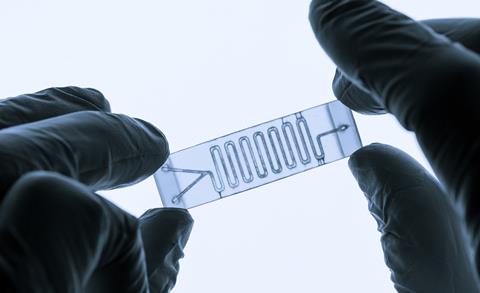
Mechanical forces such as blood flow, breathing and tissue stiffness are essential to developing realistic laboratory models of human organs, according to a new review by researchers from Nanjing University of Chinese Medicine, Nanjing University of Posts and Telecommunications and Nanjing University of Information Science and Technology.
The review examines how physical forces influence the development and function of organoids and organs-on-chips (OoCs). The researchers argue that reproducing these mechanical cues is just as important as recreating the body’s biochemical environment if laboratory models are to accurately reflect human physiology.
Replicating the body’s physical environment
Organoids and organs-on-chips have become very important tools for studying disease and testing potential treatments. However, recreating the complex physical environment experienced by cells inside the human body is still one of the field’s biggest challenges.
The review, titled Mechanical force in organoid and organ-on-a-chip systems: Design principles, biological effects, and translational applications, explores how cells respond to forces including pressure, shear stress, adhesion and contractility and how these signals influence tissue development and function.
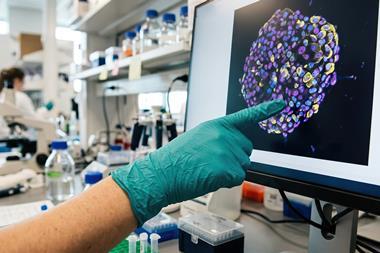
Organoids and organs-on-chips have become very important tools for studying disease and testing potential treatments
“Cells are constantly exposed to mechanical stimuli in the body – heartbeat, blood flow, breathing, even the stiffness of surrounding tissue,” explained corresponding author Dr Yang Zhang, Professor at Nanjing University of Chinese Medicine. “If we ignore these forces in our lab models, we miss a key part of how organs actually work.”
From static cultures to dynamic systems
The researchers trace the development of laboratory culture methods from traditional static scaffolds to more advanced technologies including microfluidics, bioprinting and magnetic levitation. These approaches enable scientists to expose cells to carefully controlled mechanical forces that encourage them to self-organise and mature in ways that more closely resemble living tissues.
Microfluidic chips can reproduce the shear stress generated by blood flow, while flexible membranes mimic the repeated stretching seen in organs such as the lungs during breathing or the intestines during peristalsis.
The review also highlights how different organs require distinct mechanical environments to function effectively.
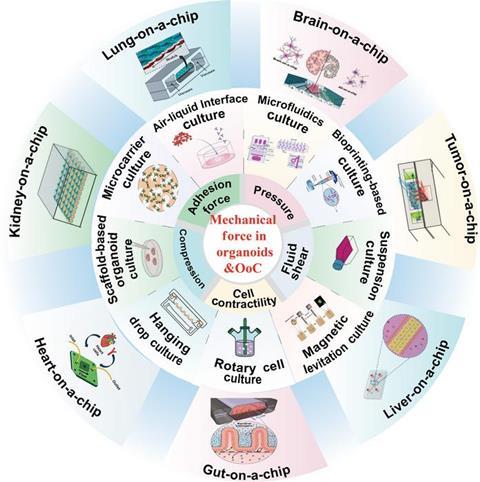
Organ-specific models improve research
According to the researchers, lung-on-a-chip devices use cyclic strain to maintain the alveolar-capillary barrier, while heart-on-a-chip platforms combine mechanical stretching with electrical pacing to promote the maturation of cardiomyocytes. Tumour-on-a-chip models recreate the stiff tissue matrix and increased pressure associated with cancer, helping researchers investigate tumour growth, invasion and resistance to treatment.
Kidney, liver and gut models also rely on precisely controlled fluid flow and pressure to preserve their specialised functions.
Lung-on-a-chip devices use cyclic strain to maintain the alveolar-capillary barrier, while heart-on-a-chip platforms combine mechanical stretching with electrical pacing to promote the maturation of cardiomyocytes
“Each organ has its own mechanical signature,” said co-corresponding author Dr Wei Wang, Professor at Nanjing University of Posts and Telecommunications. “By engineering those signatures into chips, we can study diseases and test drugs in ways that animal models or static cultures cannot achieve.”
Challenges remain
Despite rapid development, the review identifies several barriers to wider adoption, including combining multiple mechanical signals across different biological scales, maintaining stable long-term stimulation and developing materials that can adapt in the same way as the body’s natural extracellular matrix. The authors also call for standardised protocols and improved multi-organ systems to better investigate diseases affecting multiple organs.
The researchers now envisage ’mechano-intelligent’ platforms moving forward, capable of automatically monitoring and adjusting mechanical conditions in real time, which the authors say will play a central role in the next generation of organoid and organ-on-a-chip technologies.


No comments yet