



New research shows that a viral polymerase inhibitor developed at Georgia State University, named GHP-88310, can block canine distemper virus transmission in ferrets under conditions designed to mimic real-world measles spread – which could inform new outbreak response strategies.
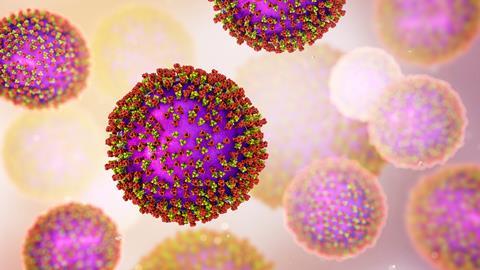
A new oral antiviral drug candidate has shown the potential to prevent the spread of measles by blocking transmission before or shortly after exposure.
The study, found that the experimental drug GHP-88310 prevented transmission of canine distemper virus in ferrets, an established animal model for human measles infection. Researchers say the findings could eventually support vaccination programmes by helping to contain outbreaks more rapidly.
Scientists at the Center for Translational Antiviral Research (CTAR) at Georgia State University investigated whether the broad-spectrum antiviral could stop infection when administered either shortly before or after exposure to the virus.
Blocking transmission through contact and the air
To test the drug under conditions that resemble real-world transmission, the research team developed an experimental system in which infected and uninfected ferrets were housed either in direct physical contact or in separate enclosures that shared air but prevented physical interaction.
The study found that GHP-88310 effectively prevented transmission in both scenarios. Researchers saw that animals already infected with the virus remained infectious for a shorter period when treated with the drug, potentially reducing opportunities for further spread.
“Silencing measles outbreaks quickly is essential to re-establish control over the virus,” said senior author Richard Plemper, a Regents’ Professor and director of the CTAR. “This study follows our recent development of the drug candidate GHP-88310. It demonstrates that the drug is suitable to augment traditional ring vaccination against measles.”
Silencing measles outbreaks quickly is essential to re-establish control over the virus
The findings come as measles has re-emerged across North America. Since 2025, the United States has recorded thousands of cases across multiple states, alongside hundreds of hospitalisations and three confirmed deaths. Large outbreaks in Canada and Mexico have also resulted in multiple deaths, placing more pressure on public health systems and challenging the region’s measles elimination status.
Potential to support outbreak control
Researchers say one of the most significant findings was the drug’s ability to prevent airborne transmission in the ferret model.
“We were very excited to see that GHP-88310 given by mouth completely prevented airborne transmission in our ferret model of measles,” said first author Carolin Lieber, a senior postdoctoral fellow in the Plemper laboratory. “This finding is unprecedented for a viral polymerase inhibitor and demonstrates the extraordinary antiviral potency of this drug.”
We were very excited to see that GHP-88310 given by mouth completely prevented airborne transmission in our ferret model of measles
The experimental design was intended to reflect common routes of measles transmission in human populations, ranging from household exposure to infections acquired in shared indoor environments.
“We designed the study to recapitulate viral spread between people with direct contact, for instance in a household, and between more distant social contacts, for example in classrooms or other indoor settings that bring people into proximity without direct interaction,” said Plemper. “In addition to this prophylactic benefit, GHP-88310 used therapeutically shortened the duration of disease in our model. If equally applicable to human hosts, it may shorten the severe social and economic burden of prolonged quarantine of patients and further aid outbreak management.”
Clinical testing planned
The researchers believe the antiviral could become an important addition to existing vaccination strategies, particularly during outbreaks where rapid intervention is needed to limit transmission. While the findings are based on an animal model, the team is now preparing GHP-88310 for formal clinical testing to determine whether the same benefits can be achieved in people.












No comments yet