



All Neurological disorders articles – Page 8
-
 News
NewsBacterial traces discovered within gliomas and brain metastases
Scientists have discovered active bacterial traces inside brain tumours, overturning assumptions about the brain’s sterility and opening up new possibilities for understanding – and potentially treating – gliomas and brain metastases.
-
 News
NewsScripta Therapeutics raises $12m to advance neurodegenerative research
Oxford-based techbio start-up Scripta Therapeutics has announced a $12 million seed funding round helping them to reshape conventional drug discovery.
-
 Article
Circular RNA technology: the future of gene therapy
Pioneering circular RNA could redefine what the future of gene therapy looks like. Erik Digman Wiklund, CEO of Circio, shares how his company’s platform is enhancing gene expression and tackling toxicity challenges through smarter design and scientific collaboration.
-
 News
NewsHow a psychedelic found in mushrooms could help fight alcoholism
Scientists have discovered that psilocin – the compound produced in the body from the psychedelic found in magic mushrooms – may reduce alcohol consumption by calming activity in brain regions linked to stress.
-
 Article
Nasal drug delivery: the non-invasive future of treatment
Advances in formulation science and device technology are transforming nasal drug delivery, enhancing absorption, stability and patient adherence. This article examines the innovations driving its growth and highlights future applications ranging from systemic treatments to nose-to-brain therapies and vaccines.
-
 News
NewsAlzheimer’s may disrupt fat tissue and raise metabolic disease risk
Researchers have discovered that Alzheimer’s may disrupt communication between nerves and blood vessels in fat tissue which could explain why people with Alzheimer’s are often diagnosed with heart disease and metabolic problems.
-
 Article
Recombinant KLK1: the next step in stroke and preeclampsia treatment
With its lead candidate DM199, DiaMedica Therapeutics is advancing a recombinant form of KLK1 to restore blood flow, improve endothelial function and address unmet needs in the treatment of stroke and preeclampsia.
-
 Article
IL-2 and GLP-1 receptor agonist combination tackles neuroinflammation
Can targeting both regulatory and inflammatory pathways change how we treat neurodegenerative disease? Coya Therapeutics is testing that idea with its IL-2 and GLP-1 receptor agonist combination.
-
 News
NewsBVRA enzyme may slow down Alzheimer’s progression
New research from Johns Hopkins Medicine reveals that the enzyme BVRA protects brain cells from oxidative stress, allowing for potential new methods for treating neurodegenerative diseases like Alzheimer’s.
-
 News
NewsNew blood test detects Alzheimer’s years before symptoms
Scientists have developed two rapid and affordable blood tests that can detect early markers of Alzheimer’s disease – potentially decades before symptoms appear.
-
 News
NewsAlzheimer’s brain structure investigated through fruit flies
Scientists have used fruit flies to study 100 genes linked to Alzheimer’s disease and how these genes affect brain structure, function and stress resilience. The research could help guide new treatments in the future.
-
 News
NewsCRISPR epigenetic ‘switch’ provides new way to control memory
For the first time, researchers have demonstrated that flipping an epigenetic ‘switch’ in memory cells can directly control whether a memory is expressed or silenced, offering new insights into how memories are stored and potentially altered.
-
 News
NewsOveractive neurons linked to schizophrenia-like behaviour
Scientists have identified an overactive brain cell type linked to schizophrenia-like symptoms in mice – a discovery that could lead to new, targeted treatments to prevent cognitive impairments.
-
 News
NewsNew PET tracer could lead to better ALS and Alzheimer’s diagnosis
New preclinical data on ACI-19626, a first-in-class PET tracer for imaging TDP-43 pathology, shows potential to greatly improve early diagnosis and treatment of multiple neurodegenerative diseases.
-
 Article
From wild fungi to faster drug discovery
Nature’s pharmacy has yielded half of today’s medicines, yet most of its potential remains untapped. AI is now changing how quickly new therapies can be found.
-
 Article
The predictive validity crisis: Pharma’s productivity paradox – Part II
Part II shows that the predictive validity crisis can be solved by rethinking how the industry chooses models, measures outcomes and integrates systems. Success stories from Vertex, Regeneron and AstraZeneca illustrate how aligning biology, measurement and strategy can reverse decades of declining productivity.
-
 News
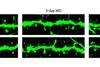
NewsBrain’s circHomer1 RNA offers insights for future neurological treatments
A circular RNA called circHomer1 has been found to play a vital role in forming and adjusting synapses in developing mouse brains, revealing an overlooked mechanism that helps visual neurons respond to changes in sensory input.
-
 News
NewsSPIRAL device offers safer, smarter drug delivery to the brain
Scientists have created a flexible brain implant, called SPIRAL, capable of delivering drugs to multiple regions with pinpoint accuracy.
-
 News
NewsImproving brain resilience: Rab proteins and future treatments
New research has discovered how Rab proteins control the delivery of critical supplies to strengthen neural connections, providing researchers with important insights into memory formation and potential strategies for Alzheimer’s resilience.
-
 Article
The predictive validity crisis: Pharma’s productivity paradox – Part I
Drug discovery now costs 100 times more per FDA-approved drug than in 1950, despite vast advances in biology and computing. The core problem is the collapse of predictive validity in preclinical models, which sits at the heart of pharma’s productivity paradox.