A novel CAR-NKT immunotherapy developed at UCLA has shown striking success in preclinical models of metastatic pancreatic cancer, which could hopefully lead to more accessible treatments.
Pancreatic cancer is one of the most fatal malignancies, with most patients diagnosed only after the disease has already spread. For those with metastatic cancer, the five-year survival rate sits at just 2–3 percent, and median survival is typically measured in months. Now, a breakthrough study from researchers at UCLA could be a pivotal shift in treatment.
The study details a novel cell therapy, known as CAR-NKT cell therapy, which has demonstrated the ability to track and destroy pancreatic tumours even after they have metastasised to other organs. The researchers believe this approach may finally begin to overcome the disease’s longstanding resistance to treatment.
“Developing a therapy that targets both the primary tumour and its metastases in preclinical studies – one that can be ready to use off-the-shelf – represents a fundamental shift in how we might treat this disease,” said senior author Dr Lili Yang, professor of microbiology, immunology and molecular genetics at the Eli and Edythe Broad Center of Regenerative Medicine and Stem Cell Research at UCLA.
A scalable, affordable cell therapy
Unlike personalised cell therapies that require weeks of bespoke manufacturing, CAR-NKT cell therapy is designed for mass production. The cells can be generated from donor blood stem cells, stored and delivered immediately when needed – and at a dramatically lower cost.
Each dose would cost around $5,000, compared with the hundreds of thousands associated with conventional personalised cell therapies. For many pancreatic cancer patients, who often cannot afford to wait weeks for treatment, this speed could be vital.
Breaking through pancreatic cancer’s defence systems
CAR-T therapies have achieved significant success in blood cancers, yet solid tumours like pancreatic cancer are far tougher to treat. Dense connective tissue and suppressive immune environments act as a blockade, and tumours frequently change their molecular markers to evade detection.
CAR-T therapies have achieved significant success in blood cancers, yet solid tumours like pancreatic cancer are far tougher to treat.
To tackle these barriers, the researchers turned to invariant natural killer T cells – or NKT cells – a rare immune cell type capable of mounting multiple attacks at once. By engineering these cells with a chimeric antigen receptor targeting mesothelin, the researchers created a therapy that can strike the tumour from several angles simultaneously.
“We’re essentially surrounding the tumour with no escape routes,” said first author Dr Yanruide Li, a postdoctoral scholar in the UCLA Broad Stem Cell Research Center Training Programme. “Even when the cancer tries to evade one attack pathway by changing its molecular signature, our therapy is hitting it from multiple other angles at the same time. The tumour simply can’t adapt fast enough.”
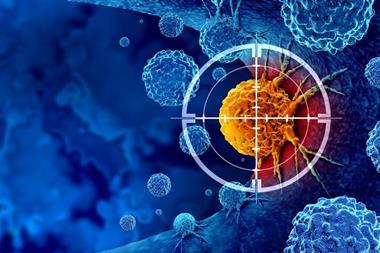
 Microscopy image showing a stem cell-engineered CAR-NKT cell (blue) attacking a human solid tumor cell (magenta). Credit: Lili Yang Lab/UCLA[/caption]
 Reaching metastatic tumours
Metastatic tumours in the liver and lungs are notoriously difficult for immune therapies to reach. To try and overcome this, the researchers used advanced preclinical models that closely mimic human pancreatic cancer, including orthotopic tumours and metastatic liver lesions.
“Many treatments that looked promising in simpler lab models have completely failed in patients,” said study collaborator Dr Caius Radu. “The fact that this therapy worked in both settings is genuinely encouraging.”
The engineered cells displayed strong tumour-homing behaviour due to high levels of chemokine receptors. “When the tumour is in the lung, they go to the lung. When it’s in the pancreas, they go to the pancreas,” Li said.
Towards clinical trials
The therapy also showed consistent effectiveness across multiple tumour models, maintaining potency in harsh tumour environments and showing minimal exhaustion – a common weakness in other cell therapies.
Now preclinical studies are complete; the team is preparing FDA applications to begin clinical trials.
Because mesothelin is also over-expressed in breast, ovarian and lung cancers, the approach could be extended well beyond pancreatic cancer. Now preclinical studies are complete; the team is preparing FDA applications to begin clinical trials.
“Pancreatic cancer patients need better treatment options now,” Yang said. “We’ve developed a therapy that’s potent, safe, scalable and affordable. The next critical step is proving it can deliver the same results in patients that we’ve seen in our preclinical work.”




Topics
- Biologics
- Biopharmaceuticals
- Biotherapeutics
- Cancer
- Cell & Gene Therapy
- Cell-based Technologies
- Dr Lili Yang (Professor at the Eli and Edythe Broad Center of Regenerative Medicine and Stem Cell Research at UCLA)
- Dr Yanruide Li (postdoctoral scholar in the UCLA Broad Stem Cell Research Center Training Programme.)
- Drug Development
- Drug Discovery
- Drug Discovery Processes
- Drug Targets
- Immunotherapy
- immunotherapy
- Molecular Biology
- Monoclonal Antibodies
- Oncology
- Translational Science
- UCLA