A recently developed experimental drug, called NU-9, has shown promise in targeting a toxic form of amyloid beta – halting Alzheimer’s disease before symptoms appear.
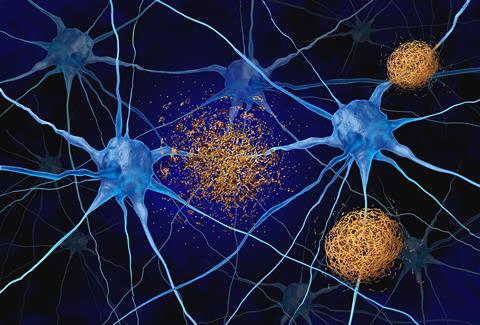
An experimental drug developed at Northwestern University has shown fresh promise as a potential early intervention for Alzheimer’s disease. Researchers identified a previously unknown and highly toxic form of amyloid beta that appears to drive the brain’s earliest pathological changes.
In a new study, scientists found that a distinct sub-species of amyloid beta oligomers –small, toxic clusters of peptides – may play a central role in triggering neuronal dysfunction, inflammation and immune cell activation long before memory loss begins. The experimental compound, NU-9, was able to significantly reduce this toxic subtype and limit the damage it causes in a mouse model of Alzheimer’s disease.
By targeting the disease at its very earliest stages, researchers believe NU-9 could potentially prevent, or substantially delay, the cascade of events that ultimately leads to widespread neuron loss.
Targeting disease before symptoms appear
“Alzheimer’s disease begins decades before its symptoms appear, with early events like toxic amyloid beta oligomers accumulating inside neurons and glial cells becoming reactive long before memory loss is apparent,” said Daniel Kranz, the study’s first author. “By the time symptoms emerge, the underlying pathology is already advanced. This is likely a major reason many clinical trials have failed. They start far too late. In our study, we administered NU-9 before symptom onset, modelling this early, pre-symptomatic window.”
Alzheimer’s disease begins decades before its symptoms appear, with early events like toxic amyloid beta oligomers accumulating inside neurons and glial cells becoming reactive long before memory loss is apparent.
Kranz completed his PhD at Northwestern’s Weinberg College of Arts and Sciences, where he was advised by William Klein, professor of neurobiology and the study’s corresponding author. Klein is also a cofounder of Acumen Pharmaceuticals, which is developing a monoclonal antibody targeting the same amyloid beta subtype identified in the study.
The compound NU-9 was invented by Richard Silverman, a professor of chemistry at Weinberg and founder of Akava Therapeutics. Silverman previously invented pregabalin (Lyrica), a widely used treatment for fibromyalgia, nerve pain and epilepsy.
From ALS to Alzheimer’s
NU-9 was conceived around 15 years ago as part of Silverman’s long-term effort to develop small molecules that prevent toxic protein aggregates in neurodegenerative disease. By 2021, the drug had shown efficacy in animal models of amyotrophic lateral sclerosis (ALS), clearing harmful proteins and restoring neuron health. In 2024, it received US Food and Drug Administration clearance to begin human trials for ALS.
Earlier this year, the team also demonstrated NU-9’s ability to clear toxic amyloid beta oligomers in lab-grown hippocampal brain cells.
“In both ALS and Alzheimer’s disease, cells suffer from toxic protein build up,” Klein said. “Cells have a mechanism to get rid of these proteins, but it gets damaged in degenerative diseases like ALS and Alzheimer’s. NU-9 is rescuing the pathway that saves the cell.”
Striking results in early-stage disease
In the new study, researchers tested NU-9 in a pre-symptomatic mouse model of Alzheimer’s, administering a daily oral dose for 60 days. The drug significantly reduced reactive astrogliosis – a form of early inflammation – and sharply decreased toxic amyloid beta bound to astrocytes. Levels of an abnormal form of TDP-43, a protein linked to cognitive impairment, were also reduced.
“These results are stunning,” Klein said. “NU-9 had an outstanding effect on reactive astrogliosis, which is the essence of neuroinflammation and linked to the early stage of the disease.”
A hidden toxic trigger
The team also discovered what they believe is a key early driver of Alzheimer’s pathology: a distinct amyloid beta oligomer subtype known as ACU193+.
“We identified a distinct amyloid beta oligomer subtype that appears inside neurons and on nearby reactive astrocytes very early in the disease,” Kranz said. “It potentially acts as an instigator of early Alzheimer’s pathology.”
The team is now testing NU-9 in additional Alzheimer’s models and monitoring long-term outcomes to determine whether early treatment can preserve memory and neuron health over time.
NU-9 dramatically reduced this subtype, suggesting it may be particularly effective as a preventative therapy.
“Most people are used to monitoring their cholesterol levels,” Silverman said. “If you have high cholesterol, it doesn’t mean that you will have a heart attack soon. But it’s time to take drugs to lower your cholesterol levels to prevent that heart attack from happening down the road. NU-9 could play a similar role. If someone has a biomarker signalling Alzheimer’s disease, then they could start taking NU-9 before symptoms appear.”
“There are a couple early diagnostic blood tests for Alzheimer’s disease in development,” Klein added. “The promise of better early diagnostics – combined with a drug that could stop the disease in its tracks – is the goal.”
The team is now testing NU-9 in additional Alzheimer’s models and monitoring long-term outcomes to determine whether early treatment can preserve memory and neuron health over time.




Topics
- Biomarkers
- Daniel Kranz (Neuroscientist at Northwestern University)
- Drug Development
- Drug Discovery Processes
- Drug Targets
- High-Throughput Screening (HTS)
- In Vivo Testing
- Molecular Biology
- Neurological disorders
- Neurons
- Neuroprotection
- Neurosciences
- Northwestern University
- Pathology & Molecular Medicine
- Small Molecules
- Translational Science