Scientists have captured, for the first time, dynamic changes in a crucial neuronal ‘master switch’ inside the living brain, potentially informing new future treatments for neurodegenerative diseases.
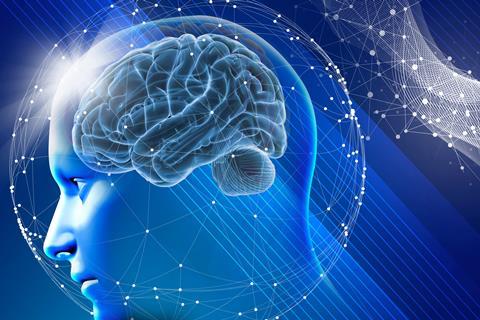
Scientists have, for the first time, observed a fundamental mechanism of learning and memory unfolding in the living brain. Researchers at the German Center for Neurodegenerative Diseases (DZNE) have shown that a key structure involved in generating nerve signals physically changes during learning, offering fresh insight into how the brain adapts to experience. The scientists hope that insights gained from the study could be used to inform future treatments neurodegenerative disorders like Alzheimer's.
The discovery, made in the brains of living mice by a team led by neuroscientist Jan Gründemann, working with collaborators from Switzerland, Italy and Austria. Until now, this phenomenon had only been documented in cell cultures or post-mortem brain tissue.
Learning and the brain’s wiring
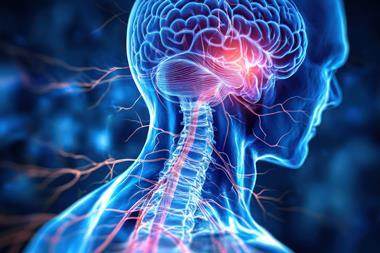
Learning and memory rely on changes in how neurons connect and communicate. Neurons form complex networks, exchanging electrical signals through branching extensions. This architecture underpins the brain’s function but remains flexible, reshaping itself in response to experience – a property known as neuroplasticity.
Learning and memory rely on changes in how neurons connect and communicate.
Traditionally, research has focused on synapses, the junctions where neurons pass signals to one another. However, the new study highlights another crucial site of plasticity: the axon initial segment, a specialised region at the start of a neuron’s axon that acts as a cellular pulse generator.
A pacemaker under the microscope
Most neurons possess an axon initial segment containing a dense concentration of ion channels. “The axon initial segment determines whether a nerve impulse is generated or not,” says Jan Gründemann, neuroscientist at the German Center for Neurodegenerative Diseases (DZNE). Using advanced microscopy, researchers were able to monitor this structure in the living brain as learning occurred.
“Thanks to specialised microscopy methods, two members of our team, Chloé Benoit and Dan Ganea, were able to monitor the size of these segments in the living brain during learning – that’s a first. Until now, axon initial segments were mostly measured in cell cultures or tissue samples. We have now tracked them in the brain over several days in the context of learning.”
Sometimes longer, sometimes shorter
The experiments involved training mice to respond differently to various situations. As the animals learned, researchers repeatedly observed the same individual neurons within a region of the cerebral cortex known to be involved in learning.
The experiments involved training mice to respond differently to various situations.
“We found that the axon initial segments of the observed neurons changed length; they got longer or shrunk,” explains Gründemann. “The length of the axon initial segment determines the excitability of a neuron. Cells with a long initial segment generate stronger pulses than those with a short segment. This mechanism can therefore regulate brain activity. We do not yet know why some segments became longer and others shorter. This is presumably a crucial control lever to optimally adjust neuronal activity.”
A neuronal ‘master switch’
Axons transmit electrical impulses from one neuron to many others via synapses. While synaptic changes have long been associated with memory formation, the axon initial segment appears to play a more decisive role.
“Signals get transmitted from one neuron to another via synapses, but the axon initial segment decides whether a neuron will fire and how strong its output will be. So, in a sense, this is a master switch,” says Gründemann.
“Both synapses and axon initial segments influence signal transmission between neurons. Both are sites of neuroplasticity. And our study shows that both can be relevant for memory formation.”
Implications for disease
Although the research focused on a specific brain area, the team believes the mechanism may be widespread. “Although we have only studied a specific area of the brain, we assume that, similar to synaptic plasticity, dynamic changes of the axon initial segment are a general principle associated with learning,” Gründemann notes.
Next, the researchers plan to explore whether disruptions to this ‘master switch’ play a role in neurodegenerative conditions, including Alzheimer’s disease – a step that could open new avenues for understanding and treating memory loss.



Topics
- Disease Research
- Drug Development
- Drug Discovery Processes
- High-Throughput Screening (HTS)
- Imaging & Diagnostics
- Jan Gründemann (neuroscientist at the German Center for Neurodegenerative Diseases (DZNE)
- Microscopy
- Molecular Biology
- Neurological disorders
- Neurons
- Neuroprotection
- Neurosciences
- Research and development
- the German Center for Neurodegenerative Diseases (DZNE)
- Translational Science