



All Cancer articles – Page 23
-
 Article
Insights into cellular therapies for cancer treatment
Many exciting developments are expected to take place in immunotherapy and oncology in the next few years. We had the privilege of discussing the opportunities of various cell therapies with Dr Suresh Nair, Physician in Chief, who elucidates how Lehigh Valley Topper Cancer Institute is directing research towards better treatments, ...
-
 News
NewsIdentification of an immune biomarker for liver cancer
New immunotherapies may be developed for patients with HCC associated with steatotic liver disease, with TREM1 suggested as a target.
-
 Article
A new genetic biomarker to predict immunotherapy success
Tumours with a greater IGR burden could respond better to immune checkpoint blockades, advancing precise treatments for patients.
-
 News
NewsThe implications of EN-1 overexpression in late-stage PDAC
Using tumour organoids, researchers identified that overexpression of Engrailed-1 blocked genes associated with natural cell death.
-
News
Improved CAR T-cell immunotherapy for acute myeloid leukaemia
Researchers have created dual-targeted CARs, which performed better than single-targeted CARs in both in vivo and in vitro experiments.
-
 News
NewsNew molecular imaging technique improves breast cancer diagnostics
Low-dose positron emission mammography (PEM) has a high sensitivity for detecting cancer and reduces the likelihood of false positives.
-
 News
NewsLung adenocarcinoma: metabolic reprogramming of macrophages
Disrupting the mechanism that EGFR-driven lung adenocarcinoma uses to alter macrophages’ lipid metabolism could inspire new treatments.
-
 Article
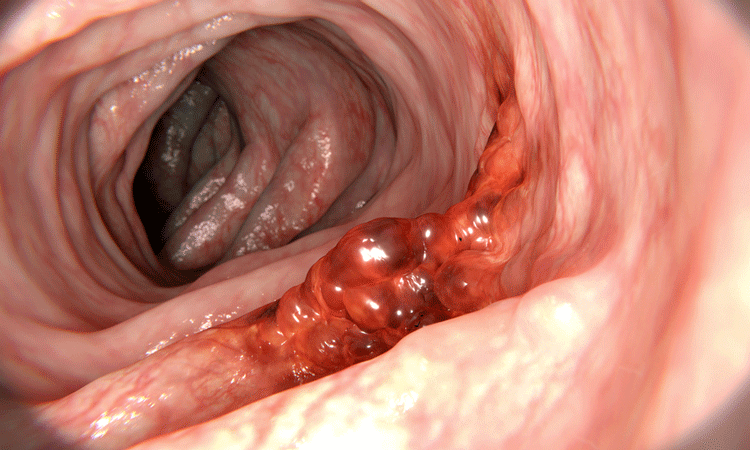
Investigating the intratumoural microbiome in young-onset CRC patients
New insights about young-onset CRC tumour-related bacteria could lead to new diagnostic markers and therapeutic targets.
-
 News
NewsIntegrin αV and β5 partner to drive cancer cell growth
A novel cellular mechanism has been uncovered with the use of CRISPR gene-tiling technology, which could advance oncologic therapies.
-
 News
NewsReducing drug resistance in acute myeloid leukaemia patients
Researchers conducted a proteogenomic characterisation and found that drug exposure changes drug sensitivity.
-
 News
NewsOrganoid drug testing predicts bowel cancer treatment response
A new study proves that organoid drug testing is highly accurate at predicting effective treatments and finds a novel therapeutic option.
-
 Article
The great prostate debate: innovations in prostate cancer screening
While blood tests measuring prostate-specific antigen (PSA) levels have been a primary screening tool, their limitations in specificity have led to challenges such as overdiagnosis and overtreatment. Cleveland Diagnostics is pioneering an alternative approach with the IsoPSA test, focusing on assessing the structure of the PSA protein rather than its ...
-
 News
NewsHow the DA subtype of Wilms tumour resists chemotherapy
Researchers suggest that DA histology slowly emerges by accumulating burdens of DNA damage and copy number aberrations.
-
 Whitepaper
Application Note: Understanding The Multiplex Imaging Landscape
Learn about the different types of multiplexed imaging available, as well as their applications, benefits and disadvantages.
-
 News
NewsAugmenting cancer immunogenicity through MHC class I
A novel technology can reduce tumour sizes significantly and improve treatment efficacy when used with existing immunotherapy.
-
 News
NewsImproving cancer treatment by exploiting mtDNA mutations
For the first time, mitochondrial DNA mutations could be used with immunotherapy to increase the chances of successful treatments.
-
News
Novel prediction tool accurately determines disease stage
A new learning-based framework enables patients and caregivers to predict the timing of any of the five clinical groups of AD development.
-
News
Targeting Ku70 could improve bowel cancer treatment
The Ku70 protein prevents cancer cells from becoming more aggressive and metastasising. It could also be used as an immune biomarker.
-
 Article
Therapeutic peptide developed for triple-negative breast cancer
Scientists demonstrate how disrupting the Cx26 molecular complex in triple-negative breast cancer cells slowed tumour growth.
-
 News
NewsNew immunological pathway to treat bone tumours
Researchers observed significant upregulation of Siglec-15 in the tumour microenvironment in bone tumour samples from breast cancer patients.