

New research has demonstrated that Asgard Therapeutics’ proprietary in vivo reprogramming technology can convert tumour cells into cDC1-like dendritic cells, triggering the formation of mature immunogenic tertiary lymphoid structures across seven tumour models.
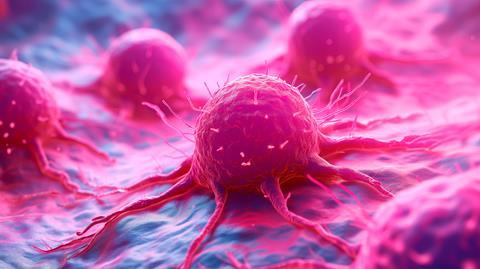
An experimental cell reprogramming technology developed by Asgard Therapeutics has demonstrated the ability to induce mature immunogenic tertiary lymphoid structures (imgTLSs) across seven cancer types in preclinical models, potentially offering a new approach to strengthening anti-tumour immune responses.
The study details how the company’s proprietary in vivo technology can transform tumour cells into type 1 conventional dendritic cell-like (cDC1-like) cells, triggering the formation of immune structures associated with improved immunotherapy responses and patient survival.
The findings could support the development of treatments that remodel the tumour microenvironment (TME) to promote more effective anti-tumour immunity.
Reprogramming tumour cells to stimulate immunity
Tertiary lymphoid structures (TLSs) are organised collections of immune cells that can develop within tumours. Mature immunogenic TLSs contain T cells and B cells, which contribute to anti-tumour immune responses.
Although their presence is associated with improved outcomes across several cancers, reliably inducing their formation across different tumour types and microenvironments has remained challenging.
The researchers investigated whether reprogramming tumour cells into cDC1-like cells could overcome this limitation. Using Asgard’s technology, they induced imgTLS formation in murine models of seven cancers: melanoma, colorectal, bladder, breast, lung, pancreatic and glioblastoma.
The approach showed clear activity across both subcutaneous and orthotopic tumour models, suggesting its effects were not restricted to a particular cancer type or tumour environment.
The induced immune structures contained CD4+ and CD8+ T cells alongside B cells. They also featured BCL6+ germinal centres, which support antibody class-switching and the production of tumour-reactive antibodies.
Importantly, researchers found that B cells were required for both imgTLS formation and tumour control, linking changes in the tumour microenvironment to functional anti-tumour activity.
These findings provide strong evidence that, using Asgard’s in vivo cell reprogramming technology alone, we can reliably induce mature immunogenic TLSs across multiple tumour types. Recent work has implicated natural cDC1s in the formation and maintenance of TLS and our study shows that the cDC1-like cells generated by in vivo reprogramming recapitulate these functions, supporting the fidelity of our mechanism of action.”
Filipe Pereira, Co-founder and Head of Innovation at Asgard
Improved tumour responses and clinical potential
The study also reported increased complete response rates when cell reprogramming was combined with the induction of imgTLSs, compared with anti-PD1 immune checkpoint blockade alone. Complete tumour regressions were observed in colorectal and breast cancer models.
Researchers additionally identified a statistically significant positive correlation between larger imgTLSs and improved long-term tumour control, suggesting these structures could potentially serve as biomarkers of treatment response.
The team also detected a similar DC-LAMP+ cDC1-associated architecture in human tumours, providing further evidence that the biological processes involved may be conserved in patients.
Demonstrating reliable induction of mature, immunogenic TLSs is something many companies and institutions have been trying to achieve. Thus, these new results are an important validation of the potential of our platform to turn tumours into sites of productive anti-tumour immunity. Together with the data we are presenting at SITC, the findings further support our efforts to advance our lead asset AT-108 toward the clinic next year, where we believe it could have a transformative impact on cancer patients.”
Cristiana Pires, Co-founder and Chief Executive Officer of Asgard Therapeutics
Advancing lead candidate AT-108
The findings complement preclinical research into Asgard’s lead candidate, AT-108. Following intratumoral administration, the treatment produces dose-dependent immune changes, including increased cytotoxic and activated T-cell populations and reduced immunosuppressive macrophages.
Researchers also saw changes in circulating immune cells and blood-based transcriptional signatures associated with B-cell and immunoglobulin activity, potentially providing accessible pharmacodynamic biomarkers of treatment response.
These findings will be presented at the Society for Immunotherapy of Cancer’s (SITC) 41st Annual Meeting, held from 4–8 November 2026 in Phoenix, Arizona.
The company aims to advance AT-108 towards clinical development in 2027.
No comments yet