



All Drug Delivery articles – Page 3
-
 News
NewsNew RNA injection could help hearts heal after heart attacks
A new RNA-based therapy developed at Columbia University could help the heart repair itself after a heart attack without invasive surgery.
-
 News
NewsNew drug delivery system boosts paclitaxel cancer treatment
Researchers at Osaka Metropolitan University have developed a novel drug delivery system that improves the solubility of the anticancer drug paclitaxel.
-
 News
NewsSimple amino acid mix dramatically improves gene therapy delivery
Scientists have discovered that adding a simple cocktail of three common amino acids to lipid nanoparticle injections can dramatically improve the delivery of mRNA and CRISPR therapies.
-
 News
NewsLab-made lncRNA could lead to new anti-inflammatory drugs
Scientists at the University of Toronto have created long noncoding RNA outside living cells for the first time, a breakthrough that has already produced experimental anti-inflammatory molecules.
-
 News
NewsNew AI tool could accelerate drug discovery and cut lab costs
Scientists have developed a machine learning system that can predict how complex chemical reactions will produce the correct molecular form for medicines.
-
 Article
Preclinical takeaways from the World ADC Conference London
Experts from the World ADC Conference in London highlight how patient-centric, predictive preclinical tools and innovative ADC designs are improving safety, efficacy and clinical translation.
-
 News
NewsWater interaction key to smarter nanomedicine design
Scientists at Arizona State University have discovered that the way nanoparticles interact with water determines how they behave inside the human body, providing a new thermodynamic framework that could lead to more effective nanomedicines.
-
 News
NewsBispecific EGFR/EphA2-targeting ADC shows promise in colorectal cancer
Promatix Biosciences Ltd has announced positive preclinical data for its first-in-class bispecific antibody–drug conjugate, PBS293-MMAE, demonstrating enhanced tumour selectivity, improved suppression and reduced toxicity in colorectal cancer models.
-
 News
NewsMessy lipid nanoparticles deliver RNA more effectively
New research shows that lipid nanoparticles used in mRNA vaccines may deliver RNA more effectively when their structure is disorganised.
-
 News
NewsBrain discovery could improve drugs targeting amyloid diseases
New research shows the brain can intentionally form amyloids to store memories, challenging decades of thinking about neurodegenerative disease and pointing towards new strategies for drug discovery.
-
 News
NewsVirus-mimicking LENN nanoparticles deliver mRNA to bladder cancer cells
Researchers have developed virus-inspired LENN nanoparticles that deliver mRNA therapies directly to bladder cancer cells, remain stable after freeze-drying and avoid triggering immune responses.
-
 News
NewsBeige fat identified as potential target for blood pressure drugs
New research shows beige fat around blood vessels helps regulate blood pressure, offering potential pathways for future therapies to reduce cardiovascular risk.
-
 News
NewsNew fluorescent technology tracks drug responses in cells
Researchers have developed new innovative fluorescent labels that allow scientists to observe cellular processes with unprecedented clarity – offering a powerful tool for medicine, drug research and cell biology.
-
 News
NewsNew AI genomics platform targets kidney and cardiorenal disease
Seattle-based biotech company, Variant Bio, have launched Inference, an AI-powered genomics platform designed to accelerate drug discovery and identify genetically supported targets.
-
 News
NewsTRPM5 protein switch discovery could lead to new diabetes drugs
Northwestern University scientists have discovered a hidden ‘control switch’ in the TRPM5 protein, which helps regulate taste, blood sugar and gut health and could lead to new therapies for targeting diabetes and obesity.
-
 News
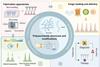
NewsPolysaccharide microneedles: the future of cancer immunotherapy
Polysaccharide-based microneedles are emerging as a dual-action platform for cancer immunotherapy, delivering anti-cancer drugs directly to the skin while actively modulating the immune system.
-
 Article
Peptides in practice: what it takes to advance these therapies to clinic
Peptide therapeutics are emerging as a powerful class of medicines capable of targeting diseases that challenge traditional modalities. This article reveals their rising clinical impact and the key development, safety and translational challenges that must be addressed to bring them successfully to patients.
-
 Article
Why patient-derived biology matters for ADC discovery
What can we learn from tumours after they stop responding to treatment? By studying patient tissue directly, researchers are finding new ADC targets that conventional screening often misses.
-
 News
NewsUltra-stable hydrogel boosts gastrointestinal wound repair
PolyU researchers have developed a new acid-resistant hydrogel inspired by natural gastric mucus that adheres far better than current treatments.
-
 Article
Building better biologics and a stronger future for women in STEM
Great biologics don’t happen by chance, and neither do great STEM careers. Dr Lidia Serina shares the lessons behind both.