



All Editorial articles
-
 Article
Drug Target Review launches new website designed for drug discovery professionals
Drug Target Review has launched an updated website to improve access to content across early-stage drug discovery, alongside a new membership model that offers a gateway to premium analysis, reports and expert commentary.
-
 News
NewsCC023 mice reveal how ALS can develop after viral infections
Researchers have discovered a mouse strain that mirrors ALS in humans following a viral infection, offering new insights into how the disease develops, potentially opening new pathways for early diagnosis and drug development.
-
 News
NewsNew fluorescent technology tracks drug responses in cells
Researchers have developed new innovative fluorescent labels that allow scientists to observe cellular processes with unprecedented clarity – offering a powerful tool for medicine, drug research and cell biology.
-
 News
Newsinsitro expands AI drug discovery with CombinAbleAI acquisition
insitro has acquired Israeli AI therapeutics company CombinAbleAI and launched its TherML platform, creating an end-to-end, modality-agnostic system for designing small molecules, antibodies, oligonucleotides and other complex biologics.
-
 News
NewsNew Type 2 diabetes drugs may improve insulin sensitivity
Scientists have used advanced computer modelling and lab techniques to design potential new diabetes drugs that improve insulin sensitivity.
-
 News
NewsPropofol and insulin may reduce cognitive decline in older age
New research from the University of Illinois suggests that widely used drugs, including propofol and intranasal insulin, could help protect ageing brains from memory decline and postoperative cognitive impairment.
-
 News
NewsTRPM5 protein switch discovery could lead to new diabetes drugs
Northwestern University scientists have discovered a hidden ‘control switch’ in the TRPM5 protein, which helps regulate taste, blood sugar and gut health and could lead to new therapies for targeting diabetes and obesity.
-
 News
NewsHow aggressive breast cancer evades the immune system
Researchers in China have discovered a previously unknown mechanism that allows aggressive breast cancers to avoid immune attack, while simultaneously exposing a weakness that could make these tumours especially responsive to existing immunotherapy treatments.
-
 News
NewsExperimental drug NU-9 reduces toxic amyloid in early Alzheimer’s
A recently developed experimental drug, called NU-9, has shown promise in targeting a toxic form of amyloid beta – halting Alzheimer’s disease before symptoms appear.
-
 News
NewsTiny RNA molecule helps viruses hijack bacterial cells
Scientists have discovered a hidden RNA ‘switch’ used by bacteriophages to hijack bacterial cells, revealing a new layer of viral control that could help advance phage therapy and efforts to combat antibiotic-resistant infections.
-
 News
NewsNew Spheromatrix platform speeds up cancer drug research
Researchers at NYU Abu Dhabi have developed a cheap, paper-based platform that allows tumour models to be grown, frozen and stored for future cancer drug testing – called Spheromatrix.
-
 News
NewsLive-cell liquid biopsy study aims to transform cancer treatment
Vortex Liquid Biopsy Solutions has launched a new clinical study with The Doctors Laboratory to assess how its live-cell liquid biopsy technology could change cancer monitoring and treatment.
-
 News
NewsTY1: new experimental drug restores tissue after heart attack
Scientists have developed an experimental RNA-based drug, TY1, that repairs DNA, reduces scar tissue and could lead to new treatments for heart attacks and autoimmune diseases.
-
 News
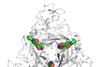
NewsBlocking the P2X4 receptor: a potential pathway to new therapies
Researchers have discovered how to inhibit the P2X4 receptor, a key protein linked to chronic pain, inflammation and certain cancers.
-
 News
NewsMYC inhibitor Omomyc boosts PARP drug response in breast cancer
A preclinical study led by VHIO reveals that the MYC inhibitor Omomyc enhances the effectiveness of PARP inhibitors, offering a potential new treatment strategy for patients with drug-resistant triple-negative breast cancer.
-
 Article
RNA that knows where to go: the rise of targeted delivery
What if RNA medicines could be guided directly to tumours, sparing healthy tissue and reducing side effects? Advances in targeted delivery are bringing that vision closer to reality.
-
 Article
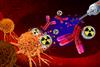
The partnership changing the pace of radiopharmaceutical development
A new collaboration between Crown Bioscience and Medicines Discovery Catapult is bringing advanced tumour models together with world-class imaging and radiochemistry to accelerate the development of next-generation radiopharmaceuticals.
-
 News
NewsResearchers identify new drug site on epilepsy target SV2A
A team led by St. Jude Children’s Research Hospital and UT Southwestern has mapped how key anti-epilepsy drugs latch onto their neural target, SV2A.
-
 News
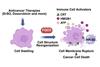
NewsFGD3 protein enhances breast cancer therapies
Scientists have identified a little-known protein, FGD3, that can boost the power of key breast cancer treatments by helping drugs rupture tumour cells and activate the immune system.
-
 News
NewsNew framework enhances reliability of virtual cell models
Shift Bioscience have announced new research revealing that AI-driven virtual cell models perform far better than previously thought when assessed with correctly calibrated metrics.