



A novel therapeutic strategy targeting both STING activation and PI3Kγ inhibition has demonstrated significant survival benefits in preclinical pancreatic ductal adenocarcinoma models.
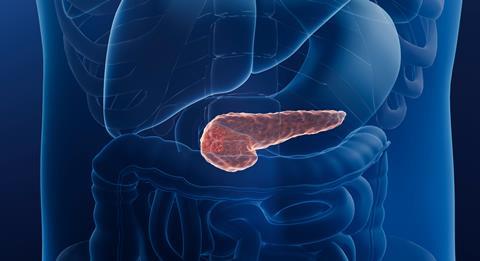
Scientists at the University of Michigan’s College of Pharmacy and Rogel Cancer Center have developed a new experimental treatment strategy for pancreatic cancer – one of the most deadly forms of the disease.
Pancreatic ductal adenocarcinoma has a five-year survival rate of just 13 percent and is resistant to many modern treatments, including immunotherapy. Currently only two main treatment regimens are available, both with limited effectiveness.
Why pancreatic cancer resists treatment
Even though Immunotherapy has massively changed the way we care for several cancers, pancreatic tumours have proved largely resistant to it.
This resistance is driven in part by the immune system itself. Certain immune cells, including myeloid cells and regulatory B cells, actively suppress the body’s ability to attack tumours.
Certain immune cells, including myeloid cells and regulatory B cells, actively suppress the body’s ability to attack tumours
The researchers set out to address this challenge by targeting multiple resistance pathways at once.
“Immune resistance in pancreatic cancer is complicated because there are multiple resistance pathways,” said Duxin Sun, U-M Professor of Pharmaceutical Sciences. “We wanted to develop a drug molecule that could adaptively stimulate the helpful pathways while inhibiting the harmful ones.”
Targeting the immune system more precisely
Previous research had shown that compounds known as STimulator of Interferon Genes (STING) agonists could enhance immunotherapy by activating parts of the immune system, whilst playing a key role in triggering immune responses against tumours.
While STING agonists can overcome resistance linked to myeloid cells, they have an unintended drawback. They also increase the number of regulatory B cells, which in turn suppress the immune response and promote resistance.
In the new study, the team discovered why this happens. They found that STING activates myeloid cells independently of an enzyme called PI3Kγ, but increases regulatory B cells through this same enzyme.
This knowledge allowed the researchers to test a combined approach: activating STING while simultaneously blocking PI3Kγ.
Promising results in early studies
The team developed a dual-targeting compound known as SH-273, designed to both stimulate the immune system and prevent the mechanisms that dampen it.
In mouse models of pancreatic cancer, the treatment significantly improved survival, extending lifespan to 201 days. The scientists were particularly happy with these results as many therapies show little to no effectiveness in these models, which carry the same mutations seen in human pancreatic cancers.
In mouse models of pancreatic cancer, the treatment significantly improved survival, extending lifespan to 201 days
The drug also reduced the spread and invasion of tumours in the lungs and showed no signs of toxicity in the animals studied.
“It is significant that a treatment has improved survival for such a long time in mice with pancreatic tumours,” said Sun. “Our findings point to a new therapeutic concept for pancreatic cancer – keeping the immune system’s ‘go’ signals on, while shutting down the B cell brake that fuels resistance.”
Looking ahead to clinical trials
The findings suggest that tackling multiple immune pathways at once could be help to overcome the resistance seen in pancreatic cancer.
While the results are based on preclinical studies in mice and human-derived cells, the researchers are optimistic about the next steps. They now plan to advance SH-273 into Phase I clinical trials and continue exploring additional immune mechanisms that could be targeted.







No comments yet