



Researchers at the University of California have created a novel approach to studying drug-protein interactions that could aid the discovery new drugs.
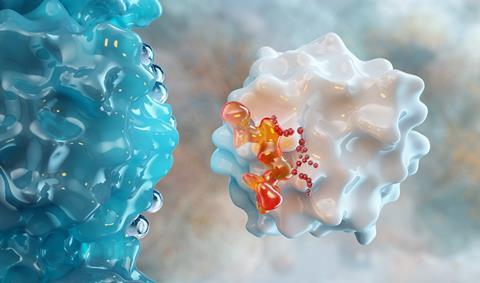
An international research team led by the University of California (UCLA) has developed a new technology that could help in developing safer and more effective medicines.
The method, known as SEE-CITE, builds on an established laboratory technique called photo-crosslinking and enables researchers to compare how different molecules bind to the same protein site in a single experiment.
A long-standing challenge in drug discovery
Many medicines work by binding to specific proteins in the body, altering their activity to treat disease. However, identifying exactly where and how a drug attaches to its target has been difficult for scientists.
Many medicines work by binding to specific proteins in the body, altering their activity to treat disease
Photo-crosslinking, first introduced in 1969, has been widely used to study these interactions. The method involves attaching a chemical tag to a molecule, which locks into place when exposed to ultraviolet light, marking the binding site on a protein.
Despite its usefulness, the chemical tags left behind are often inconsistent and structurally complex, making it difficult to compare results between different molecules.
A cleaner and more precise approach
The new SEE-CITE technology addresses this problem by enabling the studied molecule to detach from its chemical payload after binding. This leaves behind a clean and uniform chemical signature, allowing researchers to directly compare how strongly different molecules interact with the same site.
By standardising the ’calling card’ left on proteins, the method makes it possible to generate more reliable and quantitative data.
The research team also enhanced a commonly used software tool to better analyse the complex datasets produced by the technique, which improves accuracy further.
Testing the method on cancer drugs
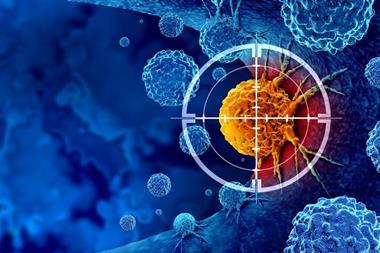
To demonstrate the potential of SEE-CITE, the researchers studied two cancer drugs, dasatinib and ascinimib. Both of these drugs target kinase proteins that can drive leukaemia when mutated, but bind to different sites on the protein.
To demonstrate the potential of SEE-CITE, the researchers studied two cancer drugs, dasatinib and ascinimib
The results confirmed previously known interactions for both drugs while also uncovering new ones. Importantly, the newer drug ascinimib showed fewer unintended interactions with other kinases which may help explain its more favourable safety profile and reduced side effects.
The ability to identify such off-target effects is very important in drug development, as unintended binding can lead to adverse reactions.
Broad potential across medicine
Researchers say the new technology could have wide-ranging applications beyond cancer, including studies of cholesterol regulation and metabolic liver diseases.
By providing a more precise map of how molecules interact with proteins, SEE-CITE could help scientists better understand the biological mechanisms underlying both health and disease.
The method could also enable the discovery of new therapies, reveal previously unknown effects of existing drugs and improve the design of future treatments.
Looking ahead
The UCLA-led team believes SEE-CITE will allow for more comprehensive analysis of molecular interactions within cells. As drug discovery increasingly relies on detailed knowledge of how compounds behave at the molecular level, tools that offer clearer and more reliable data will be crucial.
The UCLA-led team believes SEE-CITE will allow for more comprehensive analysis of molecular interactions within cells
By improving the ability to measure binding interactions and identify unintended effects early, the technology could ultimately contribute to the development of safer, more targeted therapies for a wide range of conditions.






No comments yet