Swedish researchers unveiled a new cancer protein profile database compiled from artificial intelligence and machine learning.
Cancer prediction medicine gained a boost with the recent unveiling of a new cancer protein profile database compiled from artificial intelligence (AI) and machine learning. The new open-access Disease Blood Atlas provides a first-ever map of the proteome signature in blood from cancer patients.
The new database, produced by the Human Protein Atlas consortium, based within SciLifeLab, a joint research centre that includes KTH Royal Institute of Technology, Uppsala University, Karolinska Institutet and Stockholm University, all Sweden, highlights 1,463 proteins associated with 12 different types of cancer, and presents proteins that can be used to identify individual cancer types based on a drop of blood.
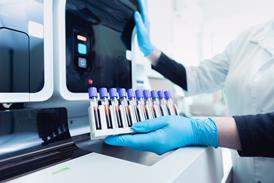
Professor Mathias Uhlén said that the Disease Blood Atlas was compiled from measurements of minute amounts of blood plasma collected from 1,400 cancer patients, at the time of diagnosis and before treatment. The blood samples underwent a combination of statistical analysis of gene expression and machine-learning-based disease prediction.
“This is a novel pan-cancer strategy for exploring the proteome signature in blood from cancer patients,” he added.
The release marks the 22nd version of the open-access Human Protein Atlas, a resource for profiling human proteins, which contains 12 sections each exploring the human proteins from different angels, including the new Disease Blood Atlas and the Protein 3D Structure sections.

The yellow bar in this readout of protein GFAP indicates elevated expression in the blood of patients with brain tumours [Credit: Human Disease Blood Atlas].[/caption]
The release is accompanied by 5 million pages of updates in the Human Protein Atlas’ databases of tissues and cell lines.
The Protein 3-D Structure section shows the three-dimensional structures for all human proteins using an AI-based prediction model (AlfaFold). In addition, a major update of the Tissue Atlas section provides detailed multiplex spatial profiling of proteins specific for human testis and kidney. More data is also provided on single cell analysis of tissues and organs, as well as data from an extensive catalogue of human cell lines.
”We believe that the new sections of the open access Human Protein Atlas with large amounts of novel data covering all human proteins provides new dimensions of valuable information for researchers interested in human biology and disease,” Uhlén concluded .