Lukas Gaats and his team at mo:re are using automation to bring consistency to 3D cell culture and move drug discovery beyond animal models. Read on to find out how.
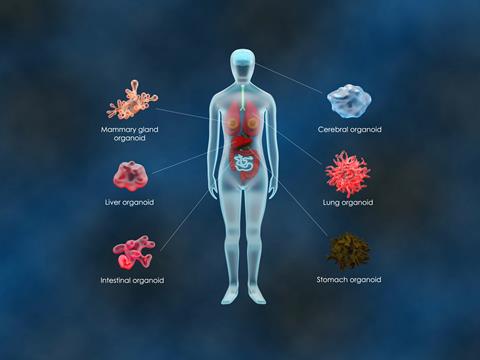
In drug discovery, the reliability of preclinical data depends on how closely laboratory models replicate human biology. Although 3D cell culture and organoid technologies have made considerable progress, many laboratories continue to face challenges with reproducibility. Even small variations in culture conditions – such as media composition, handling methods and incubation timing – can produce inconsistent results, making it difficult to compare data or translate findings into meaningful clinical outcomes. The resulting lack of standardisation slows research and reduces confidence in how accurately these models represent human responses to treatment.
This challenge is one that Lukas Gaats, co-founder and CEO of mo:re, experienced first-hand while working in regenerative medicine. Trained as a biomedical engineer, Gaats recognised that the main obstacle was not the biology itself, but the variability introduced by the manual techniques used to create and maintain 3D cell cultures.
“We saw a big lack of reproducibility in growing 3D tissue models,” he recalls. “We turned this into a company to help people standardise their cultures.”
Founded two and a half years ago, mo:re began as a university spinout and now operates commercially at a time when research organisations and regulators are re-evaluating their reliance on animal models and encouraging the wider adoption of human-relevant systems.
Improving prediction with human-relevant systems
The company’s approach centres on building 3D models derived from human cells. By mirroring human biology more accurately than animal systems, these models have the potential to improve the prediction of safety and efficacy in drug development.
Some effects simply cannot be shown in an animal model, whereas in a human model they can.
“Some effects simply cannot be shown in an animal model, whereas in a human model they can,” Gaats explains. “Just from the genetic background, we have an inherent advantage.”
He notes that mo:re’s technology is not intended as a complete substitute for animal testing but has demonstrated clear benefits in key areas such as liver and kidney toxicity studies. “We’re definitely better and there are enough publications to show that,” he says.
The advantage over conventional two-dimensional cell culture is equally clear. “Are you two-dimensional? Are you flat? No, you are not. In 3D you are much closer to reality,” he says. “With our technology we make it very easy to move into 3D; so why not, with only minimal additional effort, achieve results that are more realistic and more translatable to the clinic?”
Are you two-dimensional? Are you flat? No, you are not. In 3D you are much closer to reality.
Ethical considerations further strengthen this direction. “We are big on reducing animals because there are specific assays where no animals are necessary,” says Gaats.
Across the sector, regulators are beginning to recognise that non-animal methods can offer more predictive and reproducible data for human biology. Agencies are updating guidance to reflect these developments, allowing companies to incorporate in vitro and computational models earlier in the development process. While animal testing has not been eliminated, the emphasis is shifting towards evidence-based alternatives that can improve efficiency, reduce costs and enhance translational accuracy.
The MO:BOT: automation built around biology
mo:re’s flagship system, the MO:BOT, is described as the first fully automated 3D cell-culture platform. Although it visually resembles a liquid-handling robot, Gaats emphasises that it is designed from a biological rather than mechanical perspective.
“We are ultimately a biotech company, not an automation company and that makes us stand out,” he says. “We are always application first.”
The MO:BOT automates the steps that scientists would otherwise perform manually – from cell seeding to medium exchange – while maintaining the biological integrity of the process. “We speak the language of the scientist and translate it into robotic algorithms,” he explains. “You can perform your cell culture in a very easy way while having the benefit of higher standardisation, higher throughput and higher reproducibility.”
We can clearly reject organoids that do not meet our standards for progressing into a drug screening.
Each run includes in-process quality control. “We can clearly reject organoids that do not meet our standards for progressing into a drug screening,” Gaats says.
The result is a system that delivers consistent, high-quality 3D models ready for downstream analysis. While automation naturally speeds up workflows, mo:re’s focus is on reliability rather than throughput alone. “Technology always needs to follow the biology and that’s the way we think,” he says.
Flexibility is another distinguishing feature. “You can run three different organoids that require different setups within minutes because you do not need to plug in cables or attach new functions to the work field,” he explains. “When you talk to scientists / users, what they like is this plug-and-play design and execution of experiments.”
Enhancing reliability and regulatory confidence
mo:re’s emphasis on reproducibility, quality and traceability aims to build confidence in preclinical data. “In simple terms, we address two aspects: verification and validation,” Gaats explains.
Verification ensures that the data generated meet strict statistical standards, with low variation and high predictability. Validation confirms that the model itself is clinically relevant. “We provide a tool to carry out this level of science ten to fifteen times faster than before,” he reveals.
Such advances could influence how regulators assess preclinical data. “If you test on highly realistic and complex models and you present this fully verified data to a regulator, they are more likely, for example, to let you skip the second phase,” he explains. “One example is bemdaneprocel (BRT-DA01), which was permitted to proceed directly to phase III trials after regulators determined that the mechanism of action and in vitro data provided sufficient justification to bypass phase II.”
For industry, this translates into significant time and cost efficiencies. “If you are working with 3D cell cultures using the MO:BOT, the standardisation it provides means you need only one third of the sample size to achieve the same statistical power,” Gaats explains. “That allows a biotech to test three times as many conditions or perform one third of the experiments to obtain the same amount of data.”
The route towards animal-free research
For decades, animal testing has been a standard of preclinical research, used to evaluate the safety and efficacy of new drug candidates before human trials. While these models have provided insights, their ability to predict human responses is increasingly questioned. Species differences can limit the relevance of animal data, leading to late-stage failures and higher development costs. At the same time, ethical considerations and public pressure have accelerated the search for alternative methods that are more humane and scientifically robust.
As 3D cell models get more important, it’s inevitable to automate, because otherwise you can’t handle the throughput.
Complete replacement of animal testing remains a long-term goal, but Gaats believes that a major reduction is already under way. “There will be a coexistence. It is not realistic that we will substitute them entirely by now,” he says. “We’re not here to substitute them because that would only build up resistance. We want people to convince themselves how good this technology is because it is insanely good.”
Still, Gaats expects a measurable decline in animal testing over the next decade, driven by regulatory reform and the wider adoption of validated new approach methodologies (NAMs). “It’s inevitable that there will be a reduction. Whether there will be a complete substitution in the next decade is hard to answer – but still more in favour of yes than no,” he says.
Automation will be key. “As 3D cell models get more important, it’s inevitable to automate, because otherwise you can’t handle the throughput,” he notes.
Impact on discovery timelines and decision-making
For pharmaceutical and biotechnology companies, the implications of adopting the MO:BOT extend far beyond efficiency. The platform enables organisations to expand testing capacity and improve the quality of early-stage decision-making.
“We routinely scale up cell culture protocols from a six-well format to a 96-well format, meaning that you get twelve times more data points on the same footprint,” says Gaats.
This scalability allows researchers to test more compounds, explore broader dose ranges and generate data with stronger statistical power. “The cost savings are not even the biggest thing – what people want is reproducibility,” he says. “It is a whole different dimension than saying we save you two hours of pipetting.”
Five years ahead: automation and NAMs as standard practice
Looking to the near future, Gaats foresees automation becoming an integral part of drug discovery. “There will be no more biotechs relying exclusively on animal models, simply because investors have understood that working with NAMs is the way to go,” he says.
There will be no more biotechs relying exclusively on animal models, simply because investors have understood that working with NAMs is the way to go.
Automation also supports progress in personalised medicine. “On an organoid we can test material from twenty different patients at a time. All of a sudden you have a larger population to test from, which leads to better drugs with fewer side effects,” he explains.
This evolution, he argues, will define the next phase of preclinical research. “Looking five years into the future, there is no way around automated NAMs in drug development,” he says.
Lessons from the startup journey
Running a young company in a rapidly evolving field affords Gaats perspective on what it takes to grow from research concept to commercial enterprise. “Our investors tell us scale, scale, scale, but early on it is far more important to have partners, not clients,” he says. “Only in that way can you build a product that will scale automatically.”
He acknowledges the breadth of responsibility that comes with building a business from the ground up. “One mentor told me, you’re not the CEO – you’re the CoE, the chief of everything else,” he says. “My main job is to keep the path clear for our engineers and scientists, from sales and fundraising to bookkeeping.”
Trust and focus, he adds, are essential. “You don’t need to be the best at everything. You just need to have high trust in your team. My team is better than me in so many things and that’s exactly how it should be,” he says.
Ultimately, Gaats sees openness to change as the defining quality for any founder navigating the evolution from startup to established company. “You must adapt always. The Lukas of a year ago was concerned with fundraising. The Lukas of today is concerned with commercialising the product and the Lukas in a year will be focused on building a robust organisation,” he says.
As automation, human-relevant models and regulatory momentum converge, mo:re’s progress illustrates a wider transformation across life sciences. The focus on reproducibility and human-centred data is reshaping the foundations of preclinical research.
As Gaats explains, the shift away from animal testing must come from within the scientific community. “We cannot convince someone who wants to keep working with animals to move away from them,” he admits. “But once people are open, we can show them that doing it with us is the best way to do it.”
The growing adoption of automated, human-relevant models is also bringing new technical demands, particularly around how these complex biological systems are analysed at scale. Our upcoming webinar explores how high-content imaging can be successfully integrated into robotic workflows to support advanced experimental pipelines.
What it takes to automate high-content imaging at scale
25 March 2026 | 3:00 PM GMT
Free registration | Live Q&A included
Learn what it really takes to integrate high-content imaging into automated laboratory workflows. This expert-led session explores the technical, operational and design challenges of building a high-throughput robotic imaging pipeline and how they can be successfully addressed in practice.
Hear directly from specialists at the forefront of laboratory automation and imaging integration:
- Dr Sant Kumar, Automation Scientist, Laboratory Automation Facility, ETH Zurich
- Dr Yvonne Dürnberger, Business Development Manager High-Content Imaging, Yokogawa Life Science Europe
Meet the expert
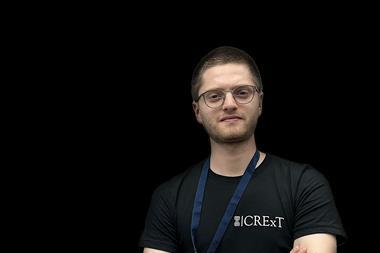
 Lukas Gaats, co-founder and CEO of MO:RE
Lukas Gaats is a German entrepreneur and the co-founder and CEO of MO:RE. He holds a master's degree in biomedical engineering and an MBA. He spun out MO:RE from his research in bioprinting and regenerative medicine, aiming to standardise the cultivation of 3D cell models.