



Cincinnati Children’s researchers have developed a 3D-printed confined culture system that produces transplantation-ready intestinal organoids in 14 days – half the time of previous methods.
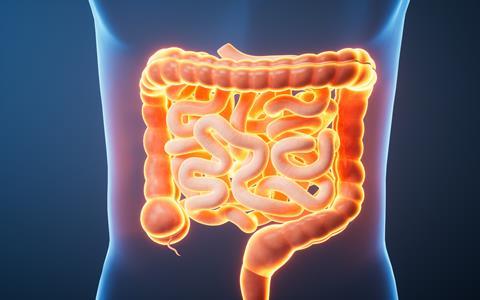
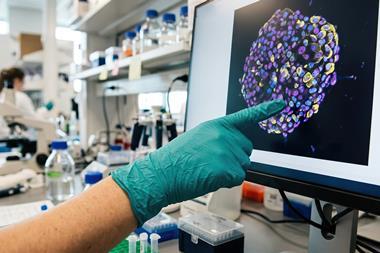
Researchers at Cincinnati Children’s have developed a new 3D-printed production system that allows scientists to grow larger and more advanced human gut organoids in half the time needed by previous methods.
Using what researchers call a ’confined culture system’ or CCS, the team successfully grew organoids for the small intestine, colon and stomach into tubular structures nearly 10 times larger than those produced through earlier techniques. The new organoids also developed their own functional nerve cells without requiring additional engineering steps.
“By reaching transplantation maturity twice as fast and developing their own functional nerves, these organoids demonstrate how engineering principles can drive biological innovation,” said staff investigator Dr Holly Poling. “Our confined culture system is more than a production method; it’s a scalable, flexible platform for building complex human tissues.”
The study could help speed up the development of lab-grown intestinal tissues for repairing damage to the digestive tract and studying gastrointestinal diseases.
3D-printed trays speed up organoid growth
Scientists at Cincinnati Children’s Center for Stem Cell & Organoid Medicine (CuSTOM) have spent more than 15 years refining miniature digestive system tissues grown from stem cells.
This latest study uses 3D printing to create specialised tray-like scaffolds from surgical resin. These trays are then filled with a silicone-based material and designed with grooves that guide spherical organoids into aligned rows. This arrangement encourages the tiny spheroids to fuse together and mature more efficiently.
Researchers said that by day six, the individual spheroids had merged into unified structures. After being transferred into a second growth medium, the tissues continued developing for another eight days.
Researchers said that by day six, the individual spheroids had merged into unified structures
By day 14, the organoids had generated all the cell types and tissue structures that previously took 28 days to produce.
The engineered tissues were then transplanted into genetically modified rodents to reduce the risk of rejection. According to the researchers, all transplanted tissues successfully engrafted.
After further growth inside the rodents, researchers produced up to 8cm of functioning small intestine tissue compared with around 1cm using older methods. These larger tissues also displayed neuromuscular functions resembling those found in native human digestive tissue.
“We are now able not only to generate complex gastrointestinal organoids at scale but also to guide their differentiation into functional tissues with integrated enteric neuronal networks,” said senior author Dr Maxime Mahe. “By leveraging a defined growth environment, the intrinsic self-organisation capacity of the cells drives the formation of tissue structures that closely resemble the human gastrointestinal tract.”
Potential future for personalised organ repair
The study’s co-author Dr Jim Wells, Chief Scientific Director at CuSTOM, said the system could remove major obstacles that have limited organoid production and research.
“This platform’s simplicity, reproducibility and versatility make it accessible for widespread adoption,” Wells says. “In addition, the emergence of a self-organised nervous system within these organoids is particularly important for further studies of neurodevelopmental disorders.”
This platform’s simplicity, reproducibility and versatility make it accessible for widespread adoption
Earlier studies demonstrated ways to combine nerve cells with intestinal tissue and grow organoids using implanted blood supplies in mice. The latest work, involving rats instead of mice, has now produced substantially larger tissue structures.
“It is still not possible to grow complete, full-sized human organs in some sort of tank, but research like this has produced significant amounts of tissue that can be matched directly to individual patients,” said Michael Helmrath, a surgeon-scientist at Cincinnati Children’s and a co-director of CuSTOM. “We believe such tissues, once transplanted, would further grow and multiply as part of the patient’s own organ to restore functions.”
Researchers cautioned that further development will be needed before CCS organoids can enter human clinical trials. However, scientists believe the technology could eventually reduce the need for full organ transplants in children and infants with severe digestive disorders.


No comments yet