



A multidisciplinary team has developed stem cell-derived heart assembloids incorporating mechanical forces to replicate in vivo conditions, successfully modelling four distinct valve disorders and opening new avenues for target identification and therapeutic investigation.
Researchers have developed human heart organoids with functioning valves to model a range of heart valve disorders, creating a new platform for investigating disease mechanisms and potential treatments.
The multidisciplinary team, led by Guang Li, an associate professor in the University of Pittsburgh’s School of Medicine Department of Cell Biology, combined expertise in genetics, mechanics, chemistry and biology to develop the model.
The work addresses a limitation of conventional animal models, which do not always reproduce human heart valve development and disease accurately.
“human valves are very different from animal valves,” Li said. “To study human valve diseases, we need human valve models.”
Building a human heart model
The researchers used pluripotent adult human stem cells to create organoids, which are simplified versions of human organs. Different organoids can also be combined into assembloids to better reproduce the interactions between tissues found in complex organs.
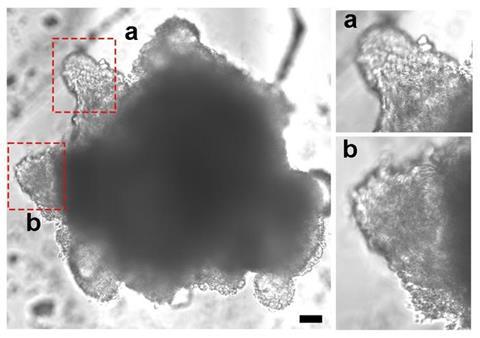
For the new model, Li’s team grew a valve on the surface of a heart assembloid made by combining two organoids containing different types of heart cells.
The researchers then incorporated mechanical forces designed to replicate conditions within a functioning heart. These included a flowing medium to mimic blood, an endothelial cell culture to model the cells lining heart valves and magnetised beads controlled by a magnetic belt to simulate muscle contraction.
The work brought together researchers including Lance Davidson, William Kepler Whiteford Professor of Bioengineering in the Swanson School of Engineering and Si-Yang Zhen, Professor of Biomedical Engineering at Carnegie Mellon University.
“This kind of project is really a hallmark of the community of researchers in Pittsburgh,” Davidson said.
Modelling heart valve disorders
Once established, the organoid model was used to investigate four types of valve disorders, including mitral valve prolapse (MVP), a genetic condition affecting an estimated 7 to 8 million people in the US.
The researchers introduced a mutation associated with MVP into the developing organoids. The resulting valves displayed characteristics of the disorder, allowing the team to investigate the pathways involved in its development.
The researchers also created models of acquired valve damage, including changes associated with valve calcification, cryo-injury and complications linked to hypoglycaemia and diabetes.
These models enabled Li and his colleagues to begin identifying biological pathways associated with valve abnormalities and investigate how they might be corrected. The team also plans to use the models to explore potential treatments for acquired valve disorders.
Increasing model complexity
The researchers aim to further develop the platform to more closely reproduce the structure and function of a human heart.
Li’s next step is to create assembloids containing two chambers and grow the valves inside them rather than on the surface. This could provide a more physiologically representative model for studying how heart valves develop and respond to disease.
The researchers hope that increasingly sophisticated human heart models will provide new opportunities to investigate disease mechanisms and evaluate potential treatments while addressing some of the limitations of animal models.






No comments yet