



A deep-learning analysis of nearly 20 million peptide fragments has revealed that prion and prion-like proteins harbour previously unknown antimicrobial sequences, identifying a new class of peptides dubbed ‘prionins’ which could lead to new antibiotic development opportunities.
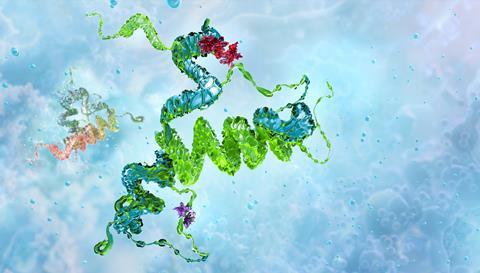
Scientists have uncovered a surprising new source of potential antibiotics hidden within prions, the misfolded proteins best known for causing rare and fatal neurodegenerative diseases.
The discovery, made by researchers at the Perelman School of Medicine at the University of Pennsylvania, suggests that prion and prion-like proteins may contain previously unknown antimicrobial peptides capable of killing bacteria, including drug-resistant strains.
The study identifies a new class of peptides dubbed ’prionins’ and highlights the growing role of artificial intelligence in uncovering potential drug candidates from unexpected biological sources.
A surprising source of antimicrobial activity
Prions have long been associated with devastating brain disorders, but emerging evidence has hinted that some disease-related proteins may also possess antimicrobial properties. Previous studies found that fragments of proteins such as amyloid-beta and the cellular prion protein could help combat microbes.
Until now, however, no researchers had systematically searched prion and prion-like proteins on a large scale for hidden antimicrobial peptides.
To tackle this challenge, the Penn team used a deep-learning platform known as APEX 1.1 to analyse 19.3 million peptide fragments derived from 2,897 prion and prion-like proteins. The system predicted which amino acid sequences were most likely to exhibit antibiotic activity and identified 1,179 promising candidates.
The researchers named this newly identified group of molecules ’prionins’.
“This work changes where we think antibiotics might be hiding,” said César de la Fuente, PhD, FRSB, Presidential Associate Professor and director of the Machine Biology Group at the University of Pennsylvania Perelman School of Medicine and senior author of the study. “Prions have long been seen almost entirely through the lens of disease, but AI let us ask a different question: whether these proteins also encode useful molecular fragments. The answer appears to be yes.”
Laboratory tests confirm antibacterial activity
Following the AI analysis, the research team selected 75 of the most promising peptides for laboratory testing against 11 bacterial pathogens, including several drug-resistant species.
The results were encouraging. Of the 75 peptides tested, 59 inhibited at least one bacterial pathogen, while 42 demonstrated strong activity at low concentrations.
Further experiments suggested that many of the active prionins kill bacteria by disrupting their membranes, a common mechanism used by naturally occurring antimicrobial peptides.
Researchers also assessed the safety of the molecules and found limited signs of toxicity. Sixteen of the active peptides caused no measurable harm to red blood cells or human cells at the highest concentrations tested.
Advances in protein discovery are creating new opportunities for drug development, but understanding protein function remains a key challenge. Join our upcoming webinar: From expert task to lab routine – membrane protein purification and analysis simplified to explore automated workflows and technologies designed to simplify membrane protein purification and stability analysis while preserving native protein structure.
Success in animal studies
To further validate the findings, the team selected two of the most promising peptides, one derived from a fungus and another from a roundworm, for testing in mice.
Both molecules successfully reduced bacterial levels in a skin infection model involving Acinetobacter baumannii, a pathogen known for its resistance to many existing antibiotics. Their performance was comparable to polymyxin B, a last-resort antibiotic, and researchers observed no treatment-related weight loss in the animals.
“This is where the story becomes more than a computer screen,” said Marcelo Torres, co-first author of the study. “The AI search gave us a short list of candidates, but the important point is that many of those molecules worked in the lab, and two worked in an animal infection model. That is what makes this a discovery platform, not just a prediction exercise.”
Expanding the search for new medicines
The findings form part of a broader effort by the de la Fuente laboratory to identify so-called ’encrypted peptides’ hidden within larger proteins. Previous projects have explored human proteins, extinct organisms, archaea, microbiomes and venoms.
While the study does not suggest that prions naturally function as antibiotics in the body, it does reveal an unexpected and potentially valuable source of new antimicrobial compounds at a time when antibiotic resistance continues to threaten global healthcare.
“For a long time, drug discovery has been limited not only by what we can test, but by where we choose to look,” de la Fuente said. “AI is changing that. It gives us a way to search the hidden layers of biology and ask whether molecules associated with one story - in this case, disease - may also carry another story with therapeutic potential.”



No comments yet