



A systematic screening approach published in Nature identifies novel molecular glue degraders across previously unexploited E3 ligases, including a metabolically activated compound that selectively targets cancer-associated oxidative stress conditions — potentially transforming the druggable proteome.
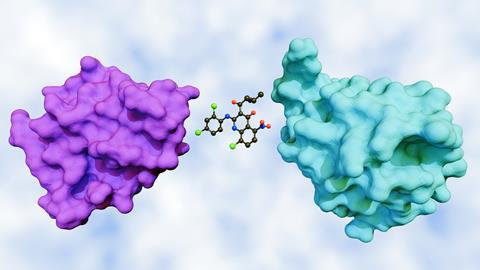
Researchers at Dana-Farber Cancer Institute have developed a systematic platform for discovering molecular glues that could significantly expand the range of proteins targeted by protein degradation therapies, which could help in the development of new cancer drugs.
Published in Nature, the research describes a scalable screening approach that identifies molecular glue degraders capable of redirecting E3 ligases to disease-associated proteins, broadening the scope of therapeutic protein degradation beyond the small number of ligases currently exploited by drug developers.
The study also reports the discovery of what the researchers describe as the first metabolically activated molecular glue degrader, suggesting these compounds may be more context dependent and tunable than previously thought.
Expanding the protein degradation toolbox
Protein degraders harness the cell’s natural protein recycling machinery by directing E3 ligases to tag unwanted proteins for destruction. Molecular glues achieve this by binding to an E3 ligase and promoting its interaction with a target protein that would not normally be recognised for degradation.
The field has attracted lots of interest since the discovery that the multiple myeloma treatment lenalidomide functions as a molecular glue degrader, enabling previously ’undruggable’ proteins, including transcription factors, to become viable therapeutic targets.
Although several protein degraders have now entered clinical testing, current approaches rely on only a small fraction of the approximately 600 E3 ligases encoded in the human genome.
“This novel platform is an exciting scalable approach to the discovery of molecular glues that could help drive the significant expansion of molecular glue applications for the treatment of cancer and other diseases,” says Dr Eric Fischer, a co-senior author of the study and a chemical biologist at Dana-Farber.
Systematic screening identifies novel degrader
The discovery platform begins with a high-throughput screening process in which selected E3 ligases are immobilised on magnetic beads and exposed to cellular lysate together with a library of drug compounds. When a compound increases the affinity between an E3 ligase and a cellular protein, mass spectrometry is used to identify proteins that may subsequently be targeted for degradation inside cells.
Testing the platform against seven E3 ligases identified an interaction between the understudied ligase DCAF11 and the protein DDX18. Subsequent screening narrowed the responsible compound to a molecule known as M12.
However, attempts to validate M12 in cellular models initially failed, prompting further investigation using cryo-electron microscopy.
Metabolic activation offers new opportunities
Structural analysis demonstrated that M12 had undergone glutathionylation, a metabolic modification that activated its molecular glue properties. The findings indicate that M12 functions only in cells with elevated metabolites associated with oxidative stress, a condition more commonly found in cancer cells than healthy tissue.
“This was a huge surprise, and it is the first observation of a molecular glue that has been activated metabolically by glutathionylation,” says co-first author Franziska Wachter, a Dana-Farber scientist and a paediatric oncologist. “Our in-house ability to do structural biology using cryo-electron microscopy was essential for us to quickly understand what was going on.”
Further experiments showed that activated M12 could be adapted to recruit additional proteins to the DCAF11 complex. This enabled degradation of several cancer-related targets including SMARCA2, WEE1 and CDK7.
The researchers say that these findings represent proof of principle rather than a drug candidate ready for clinical development. Further work will be required to optimise molecular glue degraders identified through the platform and evaluate their therapeutic potential.
“This is a fabulous example of how powerful our combined expertise in cancer genomics, cell biology, structural biology and protein biochemistry can be,” said Dr Benjamin Ebert, President and CEO of Dana-Farber and co-senior author of the study “This systematic approach to discovering novel molecular glue degraders opens up the possibility for expanding the number of proteins that can be targeted for degradation as a treatment for cancer.”







No comments yet