AI is moving from a supporting role into the core of drug discovery. By 2026, it is expected to shape how targets are chosen, how biology is analysed and how development decisions are made.

Artificial intelligence (AI) is moving from isolated applications into the core of drug discovery. By 2026, it is expected to influence how targets are identified, how biological data are analysed and how clinical development decisions are made.
As AI tools are applied earlier in discovery, computational prediction is increasingly used alongside experimental validation rather than after it. This allows teams to test biological hypotheses earlier, build confidence sooner and reduce late-stage failure.
AI-guided target identification becomes the starting point
In early discovery, target identification has traditionally involved reviewing published evidence, developing biological hypotheses and validating them through repeated laboratory experiments. This process can be slow and often relies on partial views of disease biology. By 2026, early target selection is expected to depend far more on computational analysis, enabling scientists to interrogate large biological datasets before committing to wet-lab work.
In 2026, identifying disease targets will rely on in silico exploration before any wet-lab validation begins.
“In 2026, identifying disease targets will rely on in silico exploration before any wet-lab validation begins,” says Veronica DeFelice, Director of Biologics at Sapio Sciences. She explains that AI-guided platforms connected to laboratory information management systems will integrate genomic, proteomic and transcriptomic datasets to reveal molecular patterns and disease mechanisms that were previously hidden when data were analysed in isolation.
By combining these datasets, scientists can define more precise starting points for biologics discovery. DeFelice notes that researchers will use these insights to select targets “with stronger biological rationale and a clearer therapeutic pathway based on disease association and molecular verification.” This, she says, will reduce the number of programmes that stall during preclinical development. Earlier confidence in target biology also allows teams to focus resources on candidates with a clearer line of sight to mechanism, modality selection and downstream development decisions, rather than revisiting foundational assumptions later in the pipeline.
Biological modelling moves into everyday workflows
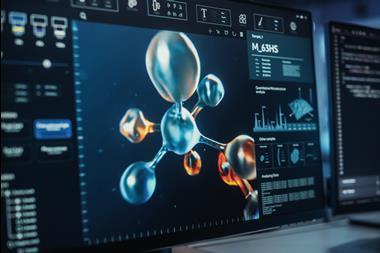
Alongside AI-guided target identification, biological modelling is set to become foundational in early discovery rather than a specialist activity. DeFelice points to the growing availability of structure prediction and binding simulation tools embedded directly within AI-native laboratory systems and digital lab notebooks.
By 2026, scientists working on complex biologic modalities such as multispecific antibodies and fusion proteins will routinely evaluate affinity and specificity computationally before committing resources to experimental work. Making modelling part of daily scientific practice reduces trial and error and improves candidate selection at earlier stages.
This closer integration of computational prediction and experimental validation is changing how discovery teams work in practice. Rather than operating in sequence, modelling and wet-lab experiments increasingly inform one another, allowing data generated in one step to guide the next. This shortens feedback cycles and helps teams move from biological insight to candidate selection more efficiently.
Genomics data reaches unprecedented scale
The growing reliance on AI in discovery is closely linked to the scale of biological data now being generated, particularly in genomics. Advances in sequencing technologies continue to accelerate data generation, but analysis remains a major bottleneck.
In 2026, we will see stunning examples of how AI can interpret genomics data to understand complex biology.
“In 2026, we will see stunning examples of how AI can interpret genomics data to understand complex biology,” says Neil Ward, Vice President and General Manager for EMEA at PacBio. He highlights the scale of the challenge, noting that analysing a single genome involves tens of thousands of lines of code. At population scale, genomics studies “could generate up to 15× more data than YouTube over the next decade.”
At this scale, traditional bioinformatics approaches alone are no longer sufficient. Ward points to a growing move towards natural language interfaces that allow scientists to interrogate genomics data without relying exclusively on specialist code.
“We are already seeing major AI players partnering with science firms to analyse genomics data in natural language rather than relying on specialised bioinformatics code,” he says. These collaborations are intended to make complex genomic analysis easier to use without removing the underlying analytical complexity.
Digital twins move from pilots to practice
AI is also increasingly being used in later stages of development, particularly through digital twins. According to Dr Gen Li, Founder and President at Phesi, 2026 will mark a turning point for their adoption.
After years of experimentation, 2026 will mark the year digital twins move from pilot to practice in clinical development.
“After years of experimentation, 2026 will mark the year digital twins move from pilot to practice in clinical development,” Li says. Sponsors have increasingly explored digital twins to optimise protocol design, reduce amendments and accelerate timelines, but uncertainty around regulation has limited wider use.
“That’s now changing,” Li explains. Regulators including the FDA are expanding AI frameworks and finalising risk-based guidance to support safe and effective use of these technologies in clinical development. As regulatory clarity improves, opportunities to integrate digital twins into trial design and execution are expected to grow.
Li emphasises that regulatory trust is central to adoption. “To unlock the full value of digital twins, sponsors must earn regulatory trust through rigorous validation, ethical data governance and clear documentation,” he says. Continued collaboration between regulators, sponsors and technology partners will be essential.
If implemented responsibly, digital twins offer the potential for faster, more patient-centric and more equitable clinical trials.
Towards a more integrated discovery process
Taken together, these developments point to a more integrated and computationally driven approach to drug discovery and development. AI-guided target identification, embedded biological modelling, scalable genomics analysis and digital twins are increasingly used together rather than as isolated tools. As AI becomes more widely embedded, discovery teams are moving from experimentation to routine use, with the focus now on where these tools sit in existing workflows and how their outputs inform early scientific decisions.
About the experts
Dr Gen Li, Founder and President of Phesi
 Gen founded Phesi in 2007 with the aim of revolutionising the clinical trials industry. Since its founding, Phesi has been helping biotechs to design and optimise clinical trials by applying data to solve problems in drug development.
Prior to this, Dr Li was Head of Productivity for Pfizer Worldwide Clinical Development, a position he assumed following Pfizer’s acquisition of Pharmacia, where Gen delivered the first implementation of productivity measurement for clinical development. While at Pharmacia and Pfizer, Gen significantly contributed to the Centre for Medicines Research (CMR) International database for pharmaceutical R&D performance, assuring the collection of key clinical trial parameters as representative of the critical path for delivery. He was also instrumental in creating the KMR productivity mode.
Previously, he earned his PhD in Biochemistry from Beijing University and an MBA from the Johnson Graduate School of Management at Cornell University.
Veronica DeFelice, Director of Biologics at Sapio Sciences
 Veronica DeFelice is director of biologic products at Sapio Sciences, where she applies deep expertise in antibody therapeutics, biologic informatics and cross-functional product development. Her career spans roles in research, biologics innovation and AI-driven drug discovery at organisations including AICure, Nurix Therapeutics and Sartorius. Veronica began her career as a researcher in Greece, where she isolated three novel peptides and later advanced platform approaches in cell and gene therapy. She holds a master’s degree in bioinformatics and biochemistry from Georgetown University, a bachelor’s degree in biology and cognitive science from the University of Connecticut and several advanced certifications in genetics, pharmacology and bioproduction.
Neil Ward, VP and General Manager, EMEA at PacBio
 Neil Ward is Vice President and General Manager for Europe, Middle East and Africa at PacBio. He is a genomics industry veteran with more than two decades of global experience, serving as a contributor to many of the world’s largest genomics projects including Genomics England’s 100,000 Genome Project, the Estonian Genome Project and the whole genome sequencing of the 500,000 UK Biobank samples.
Neil has a passion for the role genomics can play to better human health and he believes that this can be achieved by accelerating the utility of in-depth, highly accurate genomic applications



Topics
- Artificial Intelligence (AI)
- Big Data
- Bioinformatics
- Biologics
- Companies
- Computational Techniques
- Dr Gen Li (Founder and President of Phesi)
- Drug Development
- Drug Discovery
- Drug Discovery Processes
- Drug Targets
- Genomics & Sequencing
- High-Throughput Screening (HTS)
- Informatics
- Machine Learning (ML)
- Molecular Modelling
- Neil Ward (VP and General Manager - EMEA at PacBio)
- Neurological disorders
- Next-Generation Sequencing (NGS)
- PacBio
- Phesi
- Precision Medicine
- Sapio Sciences
- Sequencing
- Translational Science
- Veronica DeFelice (Director of Biologics at Sapio Sciences)