



All DNA articles
-
 Article
Sample collection: the overlooked key to genomic study success
As genomic studies become larger and more diverse, sample collection can make or break their success. Discover why collection strategy matters for recruitment, scale and data quality.
-
 News
NewsHER3-DXd and olaparib combination boosts lung cancer treatment responses
A new preclinical study finds that combining the antibody-drug conjugate HER3-DXd with PARP inhibitor olaparib significantly improves treatment responses in NSCLC models, including those harbouring EGFR and KRAS mutations, by overwhelming DNA repair capacity and activating innate immune signalling.
-
 Article
Why researchers are revisiting bisantrene decades after it was abandoned
An oncology drug abandoned decades ago is getting a second look, with new research uncovering a mechanism that could offer an alternative route to targeting MYC, one of cancer’s toughest targets.
-
 Article
Gene therapy’s biggest challenge is the cell’s own defence mechanisms
What if one of gene therapy’s biggest obstacles isn’t delivery, but the body’s own cells? Discover why DNA silencing is emerging as a major challenge for long-lasting genetic medicines.
-
 News
NewsNew bispecific T cell engager platform targets ovarian cancer in preclinical studies
Scientists at The Wistar Institute have engineered a DNA-delivered bispecific T cell engager using a ‘knob-into-hole’ antibody platform, demonstrating improved persistence and dual-antigen targeting in preclinical ovarian cancer models.
-
 News
NewsKCL-286 targets multiple Alzheimer’s pathways in preclinical study
A repurposed small molecule originally developed for spinal cord injury has demonstrated the ability to address multiple disease-relevant pathways in Alzheimer’s disease, including DNA damage and neuroinflammation, offering a potential route to disease-modifying therapy.
-
 News
NewsResearchers reveal how entinostat disrupts pancreatic cancer repair
Scientists at the Salk Institute have discovered how the investigational HDAC inhibitor entinostat disrupts DNA repair mechanisms in pancreatic cancer cells, potentially enabling more effective combination therapies with reduced toxicity through novel nanoparticle delivery systems.
-
 News
NewsMineralised DNA hydrogel accelerates bone repair in preclinical studies
A mineralised DNA hydrogel has demonstrated accelerated bone repair and improved tissue mineralisation in preclinical studies, offering a potential new approach to treating difficult bone defects through combined immune regulation and sustained regeneration.
-
 News
NewsMYC protein found to repair DNA in cancer cells
Oregon Health & Science University researchers have identified a non-canonical function of the MYC oncoprotein in DNA damage repair, revealing how tumour cells survive chemotherapy-induced stress.
-
 News
NewsAI tool reveals DNA exists in partially open states
Researchers have discovered that DNA wrapped around nucleosomes exists in multiple partially open states rather than simply locked or accessible configurations.
-
 News
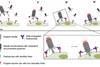
NewsDNA ‘needle’ bypasses cellular defences to deliver therapeutics
A microscopic DNA nanostructure inspired by bacteriophages can deliver therapeutic molecules directly into cells whilst evading endosomal traps that typically render treatments ineffective. The virus-inspired platform, demonstrated in breast cancer cells, could address the longstanding challenge that only one per cent of oligonucleotide therapeutics reach their cellular targets.
-
 News
NewsDNA-based system delivers targeted cancer drugs via biomarker logic
Researchers at the University of Geneva have developed a DNA-based drug delivery platform that uses molecular logic gates to identify cancer cells through dual biomarker recognition. The system activates cytotoxic agents only when both tumour markers are present, offering enhanced specificity over current antibody–drug conjugates while enabling deeper tissue penetration and multi-drug combinations.
-
 News
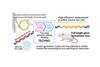
NewsNew TECHNO platform enables large-scale human gene integration in mice
Japanese researchers have developed a new gene-editing platform, TECHNO, that allows entire human genes – including regulatory regions – to be inserted into mice, allowing for better disease modelling and drug testing.
-
 News
NewsNew study links prenatal DNA screening to better CMV treatment decisions
A new study suggests that a low-cost form of non-invasive prenatal screening could help clinicians identify pregnant women at highest risk of transmitting cytomegalovirus to their babies.
-
 News
NewsTiny RNA molecule helps viruses hijack bacterial cells
Scientists have discovered a hidden RNA ‘switch’ used by bacteriophages to hijack bacterial cells, revealing a new layer of viral control that could help advance phage therapy and efforts to combat antibiotic-resistant infections.
-
 News
NewsNew AI model links genetic mutations to specific diseases
Scientists have developed a new artificial intelligence tool that can identify harmful genetic mutations and predict the types of diseases they are likely to cause, offering faster diagnosis and new opportunities for drug discovery.
-
 News
NewsTY1: new experimental drug restores tissue after heart attack
Scientists have developed an experimental RNA-based drug, TY1, that repairs DNA, reduces scar tissue and could lead to new treatments for heart attacks and autoimmune diseases.
-
 News
NewsMYC inhibitor Omomyc boosts PARP drug response in breast cancer
A preclinical study led by VHIO reveals that the MYC inhibitor Omomyc enhances the effectiveness of PARP inhibitors, offering a potential new treatment strategy for patients with drug-resistant triple-negative breast cancer.
-
 Article
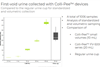
Why first-void urine could potentially change the future of HPV screening
From richer biomarker content to patient-friendly sampling, first-void urine is emerging as a promising tool in precision health. Here is why scientists are paying attention.
-
 News
NewsDNA repair secrets of naked mole-rats may guide new drug discovery
New research has demonstrated how tiny tweaks in a DNA-sensing enzyme may hold the key to the naked mole-rat’s extraordinary lifespan – offering insights that could one day inform therapies for aging and age-related diseases.