



All Drug Development articles – Page 13
-
 News
NewsUK Government announce plans to phase out animal testing for drugs
The UK government have announced a new strategy to phase out animal testing in scientific research, aiming to replace traditional experiments with innovative human-relevant methods such as organ-on-a-chip systems and AI analysis.
-
 News
NewsGLP-1 weight loss drugs may protect against pancreatitis
A new study has found that GLP-1 weight loss drugs do not increase the risk of pancreatitis or heart problems in patients with high triglycerides – and may even help protect against the condition.
-
 Article
Nasal drug delivery: the non-invasive future of treatment
Advances in formulation science and device technology are transforming nasal drug delivery, enhancing absorption, stability and patient adherence. This article examines the innovations driving its growth and highlights future applications ranging from systemic treatments to nose-to-brain therapies and vaccines.
-
 Article
Beyond weight loss: the gap in current drug development for obesity
Current obesity drug development remains overly focused on short-term weight reduction, despite obesity being a chronic, multifactorial disease. Broader, mechanism-driven approaches are needed to ensure durable efficacy, safety and accessibility.
-
 News
NewsProtein FSP1 found to help melanoma survive in lymph nodes
New research has discovered a key survival mechanism in metastatic melanoma, revealing that cancer cells spreading to lymph nodes depend on a protein called FSP1 to avoid cell death.
-
 Article
Recombinant KLK1: the next step in stroke and preeclampsia treatment
With its lead candidate DM199, DiaMedica Therapeutics is advancing a recombinant form of KLK1 to restore blood flow, improve endothelial function and address unmet needs in the treatment of stroke and preeclampsia.
-
 News
NewsSugar-coated tumours: a new target for pancreatic cancer
Researchers have discovered that pancreatic tumours evade the immune system by disguising themselves with a sugar coating. To combat this, they have developed a new antibody therapy that blocks this ‘don’t-attack’ signal, which slows tumour growth.
-
 Article
IL-2 and GLP-1 receptor agonist combination tackles neuroinflammation
Can targeting both regulatory and inflammatory pathways change how we treat neurodegenerative disease? Coya Therapeutics is testing that idea with its IL-2 and GLP-1 receptor agonist combination.
-
 Article
CD24 emerges as the next macrophage checkpoint
With CD47 therapies constrained by safety, attention is turning to CD24 as a macrophage checkpoint target. Pheast’s PHST001 has now entered the clinic.
-
 Article
What’s changing in cancer drug discovery – and why it matters now
Take part in a live Q&A with oncology experts as they explore the scientific advances driving cancer drug discovery.
-
 News
NewsCRISPR epigenetic ‘switch’ provides new way to control memory
For the first time, researchers have demonstrated that flipping an epigenetic ‘switch’ in memory cells can directly control whether a memory is expressed or silenced, offering new insights into how memories are stored and potentially altered.
-
 News
NewsTargeting fibroblasts could lead to new heart failure therapies
Long considered structural support cells, a new research study has discovered how fibroblasts actively worsen heart failure by disrupting heart muscle function, which could lead to new therapeutic strategies for heart failure.
-
 Article
When chemistry corrects biology: the deuterated return of a MET inhibitor
A promising MET inhibitor failed in the clinic due to human-specific metabolism. Now its deuterated analogue, DO-2, is showing that a simple isotope swap might overcome the problem.
-
 News
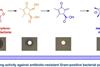
NewsNew antibiotic discovery could help tackle antimicrobial resistance
Scientists have discovered a powerful new antibiotic hidden within the compound pre-methylenomycin C lactone, which shows real effectiveness against drug-resistant infections such as MRSA and VRE.
-
 News
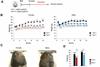
NewsTRF1 protein identified as potential obesity drug target
Researchers have discovered that removing a telomere-protecting protein, TRF1, makes mice leaner and metabolically healthier without shortening their telomeres, potentially leading to new methods for tackling obesity and age-related diseases.
-
 News
NewsNew PET tracer could lead to better ALS and Alzheimer’s diagnosis
New preclinical data on ACI-19626, a first-in-class PET tracer for imaging TDP-43 pathology, shows potential to greatly improve early diagnosis and treatment of multiple neurodegenerative diseases.
-
 Article
From war rooms to launch rooms: how AI is changing the game
Within3’s Jason Smith explores how artificial intelligence is breathing new life into next-generation launch situation rooms; delivering actionable insights for pharmaceutical companies.
-
 Article
The predictive validity crisis: Pharma’s productivity paradox – Part II
Part II shows that the predictive validity crisis can be solved by rethinking how the industry chooses models, measures outcomes and integrates systems. Success stories from Vertex, Regeneron and AstraZeneca illustrate how aligning biology, measurement and strategy can reverse decades of declining productivity.
-
 News
NewsNew compound blend reverses sugar damage to tackle ageing and obesity
Scientists have developed a compound blend that reverses sugar-related cellular damage in mice, which could lead to future therapies to slow ageing and treat metabolic diseases.
-
 News
NewsPulmonary fibrosis: new drug slows and reverses lung scarring
Researchers have identified a key cellular mechanism that drives pulmonary fibrosis and successfully blocked it in mice, reducing lung scarring.