



A new Japanese study has discovered that cancer cells persisting after KRAS inhibitor treatment become critically dependent on glutamine metabolism and lysosomal function — a biological weakness that researchers believe could be exploited to eliminate residual tumour cells.
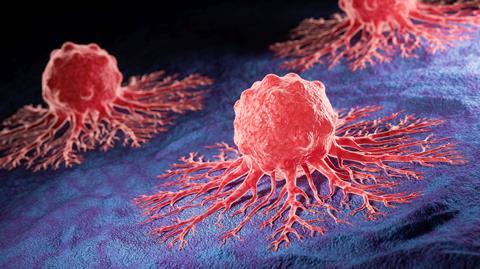
Researchers in Japan have discovered a potential new strategy to prevent the return of some of the deadliest cancers by targeting a hidden weakness in tumour cells that survive treatment.
The study from Chiba University focuses on cancers driven by mutations in the KRAS gene, one of the most common genetic drivers of cancer worldwide.
KRAS mutations are frequently found in lung, pancreatic and colorectal cancers and act as a molecular switch that controls cell growth, normally turning on only when growth signals are required. However, mutations can lock the protein into a permanently active state, triggering uncontrolled cell division and tumour development.
While the approval of the KRAS inhibitor sotorasib in 2021 marked a major breakthrough in treating certain forms of non-small cell lung cancer, researchers have enocuntered an issue with a small number of cancer cells often surviving treatment that can later drive disease recurrence.
Surviving cells undergo major changes
Scientists have long known about these so-called drug-tolerant persister cells (DTPs), but the new research suggests they are far more biologically active than previously thought.
Together, the researchers investigated how these cells survive KRAS-targeted therapies. The study also involved collaborators from the Tokyo Metropolitan Institute for Geriatrics and Gerontology and the National Institute of Health Sciences in Japan.
“The central message of our study is that the same adaptive process that allows cancer cells to survive KRAS-targeted therapy may also expose a new weakness,” said Associate Professor, Dr Aoki. ”Targeting this weakness could provide a strategy to eliminate residual KRAS-mutant cancer cells after KRAS inhibition, prevent relapse at its source and ultimately move KRAS-targeted therapy closer to curative treatment.”
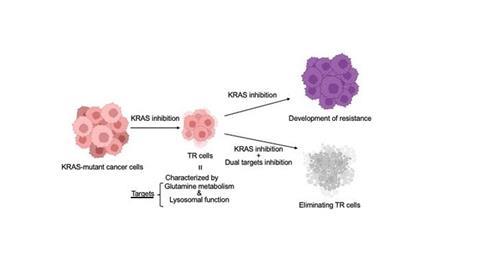
Researchers exposed laboratory models of KRAS-mutant non-small cell lung cancer and pancreatic ductal adenocarcinoma to KRAS inhibitors, allowing surviving cells to enter a drug-tolerant state.
The study found that these cells temporarily stopped dividing and displayed characteristics similar to cellular senescence, a condition in which cells cease growing. However, unlike truly senescent cells, the persister cells regained their ability to multiply once treatment ended.
New vulnerability identified
Further analysis revealed that the surviving cells underwent significant metabolic changes to remain alive during treatment.
In particular, they became heavily dependent on glutamine metabolism and lysosome-associated functions, which help cells process nutrients and recycle waste.
According to the researchers, this dependence may represent a critical weakness.
By blocking glutamine metabolism and lysosome-associated functions, the team was able to reduce the survival of drug-tolerant cells during KRAS inhibitor treatment. Additional experiments suggested the effect was linked to disruptions in the cells’ internal redox balance.
Combination therapies
The findings point towards a possible combination therapy approach in which KRAS inhibitors are used to shrink tumours while additional treatments target the survival mechanisms that persister cells rely on.
“If such a strategy becomes available in clinical practice, patients with KRAS-mutant cancers may receive treatment regimens designed not only to shrink tumours but also to prevent relapse by eliminating residual cancer cells,” said Dr Aoki. “In 5 to 10 years, this could help move KRAS-targeted therapy toward a more complete and potentially curative cancer treatment.”
Although the research remains at an early stage, the discovery is an important step towards improving outcomes in KRAS-mutant cancers.




No comments yet