



A new review has assessed how non-endocytic transmembrane delivery strategies could circumvent poor endosomal escape efficiency, outlining a range of emerging platforms with the potential to advance gene editing, mRNA therapeutics, protein medicines and cellular engineering.
Emerging technologies that deliver therapeutic molecules directly into cells could help overcome one of the biggest barriers to developing next-generation medicines, according to a new review published in Biomedical Analysis.
The review examines a growing range of non-endocytic transmembrane delivery strategies, which bypass conventional cellular uptake pathways to transport therapeutic biomacromolecules directly into the cell’s cytoplasm. Researchers believe these approaches could improve the effectiveness of gene therapies, mRNA treatments, protein-based medicines and cellular engineering technologies.
Led by Dr Yang Liu from the Institute of Energy at the Hefei Comprehensive National Science Center, the review brings together the latest research into physical, bioengineered and biomimetic delivery platforms, while assessing their potential for future clinical applications.
Overcoming a major obstacle
Many promising therapies rely on delivering large biological molecules, such as proteins, nucleic acids and gene-editing tools, into cells. However, conventional delivery methods typically depend on endocytosis, a natural process in which cells engulf external material.
Many promising therapies rely on delivering large biological molecules
Once inside the cell, many therapeutic molecules become trapped in endosomes and fail to reach the cytoplasm where they are needed to function. This poor endosomal escape efficiency has become a significant obstacle to the clinical development of many biomacromolecule-based therapies.
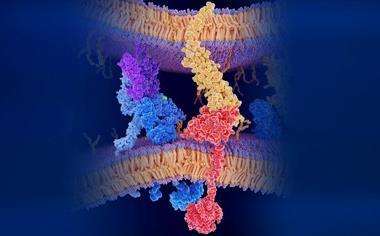
The review highlights how non-endocytic delivery systems avoid this problem by bypassing traditional uptake routes and transporting therapeutic cargo directly across the cell membrane.
Range of new delivery platforms
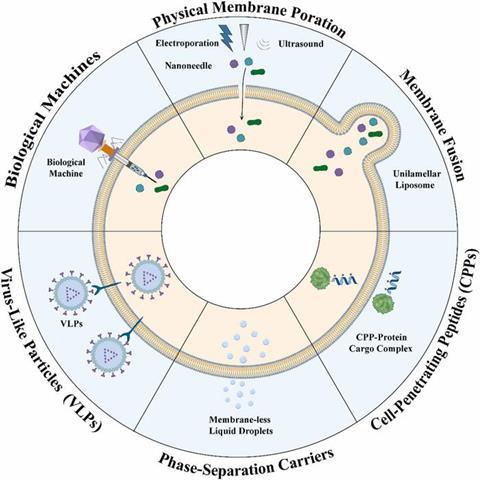
The authors outline the development of several non-endocytic delivery technologies, beginning with physical techniques that temporarily increase the permeability of the cell membrane.
These include electroporation, sonoporation, photothermal approaches and mechanical membrane modulation, all of which create temporary openings in the membrane to allow therapeutic molecules to enter cells. Advances in microengineering and nanotechnology are helping improve delivery efficiency while reducing damage to cells.
The review also explores biomimetic approaches inspired by natural biological processes. Cell-penetrating peptides, among the earliest bioengineered delivery systems, provided the foundation for more sophisticated technologies that followed.
These include membrane fusion systems, virus-like particles and phase-separated carriers, each designed to improve intracellular transport by mimicking naturally occurring mechanisms. The review also highlights engineered biological nanomachines as one of the most innovative areas of research, with the potential to introduce functional biomolecules into cells by replicating natural molecular delivery systems.
Supporting future therapies
Efficient intracellular delivery is essential for many emerging medical technologies. Gene-editing platforms such as CRISPR require therapeutic molecules to reach specific locations within cells, while mRNA therapies, protein therapeutics and cellular engineering all depend on reliable methods of transporting functional biomolecules across cell membranes.
Although the review identifies significant potential for non-endocytic delivery strategies, it notes that important challenges remain before the technologies can be widely adopted in clinical practice.
Efficient intracellular delivery is essential for many emerging medical technologies
These include improving delivery specificity, reducing unwanted immune responses, developing scalable manufacturing processes suitable for clinical use and demonstrating long-term safety.
Expanding the possibilities for precision medicine
The researchers believe continued advances in non-endocytic delivery technologies could help unlock the full therapeutic potential of biomacromolecules by overcoming the limitations of conventional delivery methods.
“Delivering functional biomacromolecules into cells remains a major bottleneck for many emerging biomedical therapies, largely due to the low endosomal escape efficiency of conventional endocytosis-dependent pathways,” said Dr Yang Liu, corresponding author of the review. ”This review highlights how non-endocytic delivery strategies bypass canonical cellular uptake pathways and membrane barriers and provide new opportunities for gene therapy, mRNA therapeutics, protein therapeutics and cellular engineering.”




No comments yet