



A newly characterised antibiotic ’megacluster’ in Streptomyces encodes four families of biotin-targeting compounds in a co-located genomic arrangement that suggests a largely unexplored class of nutrient-targeting antibiotics that may have been overlooked in drug discovery programmes.

Researchers at McMaster University have identified what they describe as a remarkable antibiotic ’megacluster’ in Streptomyces bacteria, showcasing a natural defence system that could help create future treatments for drug-resistant infections.
The discovery, centres on an unusual section of bacterial DNA containing genes that produce four different families of antibiotic compounds. Among them is a molecule entirely new to science and another that had never previously been recognised as an antibiotic.
Together, the four compounds target biotin, also known as vitamin B7, an essential nutrient that most bacteria need to survive and reproduce.
A coordinated assault on bacterial survival
Biotin plays a crucial role in bacterial growth and cell division. The newly identified antibiotics work in tandem to disrupt the nutrient’s production, uptake and use, effectively starving rival bacteria of a vital resource.
Eric Brown, Professor of Biochemistry and Biomedical Sciences at McMaster University and Principal Investigator of the study, compared the strategy to a military siege.
Biotin plays a crucial role in bacterial growth and cell division
“It’s really sinister,” he says. “Picture one of these molecules taking out the power, another taking out communications infrastructure, another cutting off water systems and another blocking critical roadways. It’s an all-out, strategic and coordinated attack on rival bacteria.”
According to Brown, while it is unusual for four different antibiotic families to attack the same biological target in distinct ways, finding all four gene clusters located together is unprecedented.
An evolutionary advantage
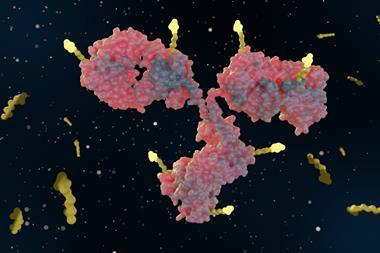
The researchers also found that the antibiotic-producing genes are flanked by two streptavidin genes, enabling the bacteria to produce proteins that bind biotin.
“It’s very intentional design,” says Brown, an executive member of NexusHealth at McMaster. “The proteins are made to bind up available biotin, while their neighbouring antibiotics prevent competing cells from getting to it first.”
The researchers also found that the antibiotic-producing genes are flanked by two streptavidin genes
The team discovered that the anti-biotin megacluster is widespread across different Streptomyces species, suggesting the strategy evolved millions of years ago and has been preserved through evolution.
“It’s not only a very complex and ingenious architecture but it’s also incredibly abundant,” explains Rodion Gordzevich, a postdoctoral fellow in Brown’s laboratory. “Our analysis showed that this megacluster is even more widespread across Streptomyces genomes than the genes responsible for making streptomycin — one of the classic antibiotics discovered from these bacteria back in the 1940s.”
Potential weapon against resistance
In animal models of infection, two of the newly characterised compounds proved highly effective against multidrug-resistant E. coli, providing an early indication of their therapeutic potential.
The research, conducted in collaboration with Professor Gerry Wright’s laboratory at McMaster, comes as scientists worldwide seek new approaches to tackling antimicrobial resistance.
Brown believes the multi-pronged strategy could make it more difficult for bacteria to evolve resistance.
In animal models of infection, two of the newly characterised compounds proved highly effective against multidrug-resistant E. coli
His team has also challenged conventional methods used to identify antibiotics, arguing that nutrient-rich laboratory conditions may conceal compounds that target nutrient acquisition and synthesis pathways.
“The dominant – in fact, accredited – method for determining whether or not a bacterium is susceptible to an antibiotic is to test it in microbiological media, which is incredibly rich in vitamins, amino acids, trace metals and other nutrients,” said Brown. “There is no reasonable way to know whether molecules that target these nutrient acquisition and synthesis systems are actually working when the nutrients themselves are so overwhelmingly abundant in lab conditions.”
The findings suggest many promising antibiotics may have been overlooked.
“For decades, drug discovery researchers have been screening for antibiotics under conditions that may actively mask this kind of activity,” said Brown. “What this work tells us is that there is an entire world of nutrient-targeting molecules just waiting to be discovered.”










No comments yet