

All Cell-based Technologies articles
-
 Article
The role of live-cell imaging in evaluating drug responses
Two compounds can produce similar endpoint results yet trigger very different cellular responses. Live-cell imaging allows researchers to track these differences and identify effects that conventional assays may miss.
-
 News
Immortalised telocyte line sustains gut organoids without growth-factor supplements
A newly developed immortalised telocyte cell line can sustain intestinal organoids without growth-factor supplements, offering researchers a more accessible tool for studying the intestinal stem-cell niche and tissue regeneration.
-
 News
Cellular atlas of DCIS reveals clues to invasive breast cancer progression
A large-scale single-cell atlas of ductal carcinoma in situ has identified novel stromal structures and microenvironmental features that may help distinguish lesions at risk of progressing to invasive breast cancer.
-
 Article
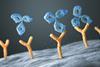
Antibody recycling, FcRn and the next generation of biologics
One receptor can protect antibodies from degradation, extend their half-life and become a drug target itself. Explore the science behind FcRn and how researchers measure its function.
-
 Article
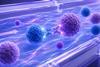
Flow-based human tumour models reveal immune responses missed by static culture
Static cultures can miss critical immune–tumour interactions. Learn how the Mera™ flow-based human tissue model better captures T-cell activity to strengthen preclinical immunotherapy research.
-
 News
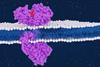
AI-designed miniproteins target GPCRs in drug discovery
GPCRs account for a significant proportion of approved drug targets, yet selectively controlling their activity remains a major challenge. Researchers have now used AI-assisted protein design to create miniproteins capable of activating or inhibiting these receptors, providing an alternative strategy for targeting this important class of membrane proteins.
-
 News
New immune mapping reveals lung tumour microenvironment dynamics
VIB-VUB researchers have developed a patient-relevant lung adenocarcinoma model combined with SEPARATE-Seq technology to create detailed immune maps distinguishing tissue-infiltrating cells from circulating populations.
-
 News
New platform reveals shared drug targets across genetic mutations in cancer and neurodegeneration
Researchers have developed PerturbFate, a platform that simultaneously tracks gene expression, RNA dynamics and chromatin accessibility across thousands of genetic perturbations in single cells. Applied to melanoma drug resistance, the technology revealed that diverse mutations converge on shared regulatory nodes, offering a route to therapies targeting common mechanisms rather than individual genetic alterations.
-
 News
ELRIG announces keynote speakers for Advances in Cell-based Screening 2026 in Gothenburg
ELRIG has announced the keynote speakers for its 2026 Advances in Cell-based Screening conference in Gothenburg, where scientists will gather to explore how human-first models, advanced cell biology and AI are changing the future of drug discovery.
-
 News
Promega launches live-cell platform to expand the druggable proteome
A new platform from Promega enables scientists to measure compound binding directly in living cells, helping to translate biochemical hits into more reliable drug discovery decisions.
-
 News
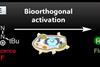
New fluorescent technology tracks drug responses in cells
Researchers have developed new innovative fluorescent labels that allow scientists to observe cellular processes with unprecedented clarity – offering a powerful tool for medicine, drug research and cell biology.
-
 Article
Quality over quantity: drug discovery automation in 2026
Automation in 2026 is no longer judged by the volume of experiments, but by the reliability of the evidence they produce. As complex biology and tighter budgets collide, industry leaders are pivoting toward automated workflows to secure the data integrity required for confident, early-stage decision-making.
-
 News
New Type 2 diabetes drugs may improve insulin sensitivity
Scientists have used advanced computer modelling and lab techniques to design potential new diabetes drugs that improve insulin sensitivity.
-
 News
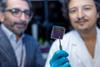
New Spheromatrix platform speeds up cancer drug research
Researchers at NYU Abu Dhabi have developed a cheap, paper-based platform that allows tumour models to be grown, frozen and stored for future cancer drug testing – called Spheromatrix.
-
 News
Live-cell liquid biopsy study aims to transform cancer treatment
Vortex Liquid Biopsy Solutions has launched a new clinical study with The Doctors Laboratory to assess how its live-cell liquid biopsy technology could change cancer monitoring and treatment.
-
 News
New CAR-NKT treatment destroys metastatic pancreatic tumours
A novel CAR-NKT immunotherapy developed at UCLA has shown striking success in preclinical models of metastatic pancreatic cancer, which could hopefully lead to more accessible treatments.
-
 News
Targeting fibroblasts could lead to new heart failure therapies
Long considered structural support cells, a new research study has discovered how fibroblasts actively worsen heart failure by disrupting heart muscle function, which could lead to new therapeutic strategies for heart failure.
-
 News
Sperm ‘switch’ discovery could lead to new fertility therapies
Scientists have discovered the molecular ‘switch’ that powers sperm for fertilisation, which could potentially lead to new infertility treatments.
-
 Article
An ethical shift in NHP research: iPSC-derived cardiomyocytes for safer pharmacology
As regulators move to phase out primate testing, NHP-derived iPSC cardiomyocytes are emerging as a scalable, ethical and scientifically robust alternative - offering drug developers a clear path to faster, more predictive, and more responsible innovation.
-
 Article
Consumables engineered for speed and reproducibility in drug discovery
What if familiar lab formats could be redesigned to remove the weak points in permeability and absorbance testing? This article explores how design choices in common consumables can improve both speed and reproducibility in early-stage research.