


All G-Protein Coupled Receptors (GPCRs) articles
-
 News
Speakers announced for Protein Sciences in Drug Discovery 2026 in Stevenage
Three leading scientists in protein science, structural biology and AI will headline the Protein Sciences in Drug Discovery conference at GSK Stevenage in November 2026, exploring advances in AI-driven drug design, native mass spectrometry and membrane protein folding.
-
 News
Insilico Medicine nominates AI-designed ISM1354 GIPR antagonist for obesity
Insilico Medicine has nominated ISM1354, an AI-designed small-molecule GIPR antagonist, as a preclinical candidate for obesity and related metabolic disorders.
-
 News
Insilico launches specialist AI models for drug discovery chemistry
Insilico Medicine has unveiled a suite of compact, domain-trained AI models targeting ADMET prediction, retrosynthesis and target activity across GPCR and kinase panels, claiming state-of-the-art results on more than 70 benchmarks.
-
 News
Membrane lipid composition directly regulates EGFR activity in cells
MIT researchers have demonstrated that cell membrane composition directly influences EGFR activity, with elevated negatively charged lipids locking the receptor into a growth-promoting state.
-
 News
AI-designed miniproteins target GPCRs in drug discovery
GPCRs account for a significant proportion of approved drug targets, yet selectively controlling their activity remains a major challenge. Researchers have now used AI-assisted protein design to create miniproteins capable of activating or inhibiting these receptors, providing an alternative strategy for targeting this important class of membrane proteins.
-
 News
Molecular map reveals thromboxane receptor structure for new blood clotting drug development
International researchers have mapped the structure of the thromboxase A₂ receptor using cryo-electron microscopy, revealing some unexpected activation mechanisms.
-
 News
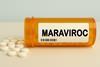
HIV drug Maraviroc could be used to slow glioblastoma growth
Researchers have discovered how seemingly supportive brain cells help glioblastoma thrive, whilst identifying an existing HIV drug, Maraviroc, that could be repurposed to slow tumour growth.
-
 News
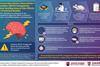
New study revives long-doubted target for depression drugs
Researchers have shown that changing the molecular structure of NK1 receptor antagonists may restore antidepressant effects after decades of failed trials.
-
 Article
Peptides in practice: what it takes to advance these therapies to clinic
Peptide therapeutics are emerging as a powerful class of medicines capable of targeting diseases that challenge traditional modalities. This article reveals their rising clinical impact and the key development, safety and translational challenges that must be addressed to bring them successfully to patients.
-
 Article
Fighting MS progression: why GPR17 is the target to watch
Despite major advances in multiple sclerosis treatment, stopping disease progression has remained out of reach. Targeting the receptor GPR17 may harness the brain’s own repair system, offering the prospect of genuine remyelination and lasting benefit for patients.
-
 Article
From injections to pills: oral peptides set to transform drug development
Oral peptide-based drugs are set to revolutionise the pharmaceutical industry, overcoming the long-standing challenge of poor bioavailability. Santosh Kulkarni reveals how new breakthroughs in drug discovery and delivery offer the potential for more convenient, effective treatments for a range of conditions – without the need for injections.
-
 News
Scientists discover how 5-HT1A receptor shapes brain signalling
Researchers at Mount Sinai have mapped how the 5-HT1A serotonin receptor controls brain signalling – finding a hidden lipid ‘co-pilot’ that could lead to the development of more targeted antidepressants.
-
 Article
Outsmarting immune suppression through GPCR innovation
Immune resistance is one of cancer’s toughest tricks. By rethinking how we target GPCRs, scientists may finally have a way to modulate it with precision.
-
 Article
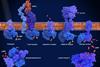
How GPCR-targeting therapies are advancing the fight against inflammatory disease
Discover how Domain Therapeutics is using its deep knowledge of GPCR biology to create novel therapeutics with the potential to combat inflammatory diseases such as atopic dermatitis, IBD and arthritis.
-
 Article
Next-generation drug design: how generative AI can tackle undruggable targets
Generative AI is broadening the boundaries of what is possible in drug discovery. In this article, Murat Tunaboylu, CEO and Co-founder of Antiverse, reveals how the zeitgeist technology is enabling scientists to tackle previously undruggable targets like GPCRs and ion channels to deliver patient impact faster.
-
 Article
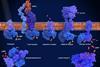
Advancements in hit identification for membrane protein drug discovery
GPCRs are crucial drug targets, but their complex structures present significant challenges in drug discovery. In this article, Domainex’s Philip Rawlins explores how fragment-based screening and innovative technologies like PoLiPa are helping to overcome these hurdles, with a focus on the Adenosine A2a receptor.
-
 Webinar
Advancing obesity drug discovery: Cell-based assays for GLP-1 and the G-Suite
Gain valuable insights into the latest advancements in obesity drug discovery and enhance your research capabilities.
-
 Article
How GPCR agonists, including antibodies, are shaping the future of metabolic care
Find out how Confo Therapeutics is overcoming challenges in GPCR drug development to create next-gen therapies for metabolic diseases.
-
 News
New insights into adhesion GPCRs spark drug design potential
Researchers at the University of Chicago have revealed the complete structure of adhesion GPCRs, uncovering new activation mechanisms that could lead to more targeted drug treatments.
-
 News
AI for drug discovery in advanced pain management
A deep-learning model found metabolites and drugs that could be repurposed for non-addictive and non-opioid options to treat chronic pain.