



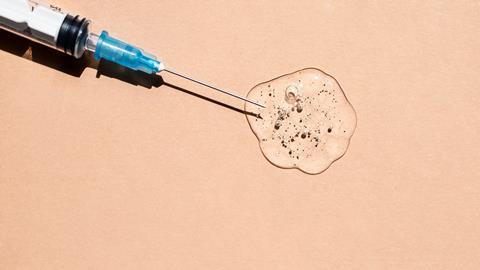
A multifunctional injectable hydrogel built on a cerium–rutin metal–phenolic nanocomplex could offer a new approach to deep wound repair, combining antioxidant enzyme mimicry, antibacterial activity and moisture regulation within a single platform.
Deep wounds are hard to treat because healing is often disrupted by multiple biological factors that occur simultaneously. Bacterial contamination, excessive inflammation, oxidative stress and the build-up of wound fluid can all delay tissue repair, making these injuries difficult to medicate.
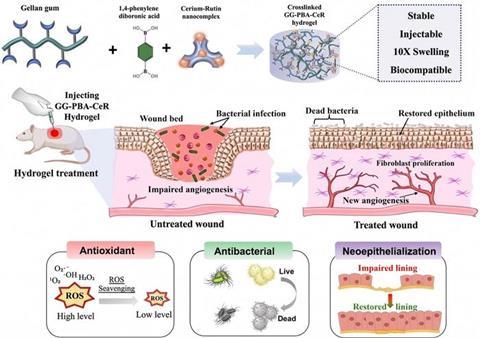
Now, researchers at the Indian Institute of Technology Gandhinagar (IITGN) have developed an injectable hydrogel designed to address several of these barriers at once. Published in ACS Applied Bio Materials, the study describes a biomaterial based on a novel cerium–rutin metal–phenolic nanocomplex that promotes faster wound closure in preclinical models without incorporating antibiotics.
While the technology is still some way from clinical use, it reflects the current state of biomaterials research as they move towards multifunctional therapeutic platforms that actively influence the wound microenvironment rather than acting as passive coverings.
A new metal–phenolic network for wound healing
The hydrogel is built around a metal–phenolic network (MPN), a class of biomaterials formed through interactions between metal ions and plant-derived polyphenols.
The researchers combined cerium ions, which mimic naturally occurring antioxidant enzymes and neutralise excess reactive oxygen species (ROS), and rutin, a naturally occurring flavonoid with antioxidant, anti-inflammatory and antibacterial properties.
Together, these components form what the authors describe as the first cerium–rutin nanocomplex developed specifically for wound healing.
Once injected into the wound, the hydrogel gradually releases the therapeutic components while absorbing wound exudate – up to ten times its own weight – helping maintain a moist but controlled environment that supports tissue regeneration.
Laboratory testing and preclinical animal studies demonstrated good blood and tissue compatibility, alongside faster wound closure than untreated wounds.
Why are reactive oxygen species (ROS) important in wound healing?
Reactive oxygen species (ROS) are highly reactive molecules naturally produced by cells during metabolism and inflammation.
Although often associated with cellular damage, ROS are not inherently harmful. At controlled levels they help regulate immune responses, destroy invading microbes and signal cells involved in tissue repair.
Problems arise when ROS production becomes excessive, as commonly occurs in deep or chronic wounds.
High ROS levels can:
- Damage proteins, lipids and DNA
- Prolong inflammation
- Impair collagen production
- Inhibit cell migration
- Slow the formation of new blood vessels
For this reason, regulating oxidative stress has become an important area of regenerative medicine research. Rather than eliminating ROS completely, many emerging therapies – including antioxidant biomaterials such as the IITGN hydrogel – aim to restore the balance needed for normal healing.
Why does this matter?
Traditional wound dressings provide a physical barrier to protect damaged tissue, but they don’t address the underlying biological processes that prevent healing. In chronic wounds – including diabetic ulcers, burns and traumatic injuries – persistent inflammation and oxidative stress can prevent tissues from progressing through the normal stages of repair.
Researchers are now developing smart biomaterials that combine several therapeutic functions within a single platform. Instead of delivering one drug or targeting one biological pathway, these materials aim to recreate an environment that supports tissue regeneration.
The IITGN hydrogel exemplifies this approach by combining antioxidant activity, antibacterial effects, moisture regulation and sustained therapeutic release in a single injectable system. These kind of multifunctional designs could eventually reduce treatment complexity and complement existing wound care strategies.
How does this fit into current research?
This study reflects several broader trends that are now making regenerative medicine better.
Injectable hydrogels are growing alternatives to traditional dressings because they can conform to irregular wound shapes while acting as local drug-delivery systems. At the same time, researchers are exploring biomaterials that combine multiple therapeutic mechanisms instead of relying on a single active ingredient.
Metal–phenolic networks have attracted growing interest due to their modular chemistry, allowing researchers to tailor biological properties by selecting different combinations of metal ions and naturally occurring polyphenols.
The development of the cerium–rutin system adds to this expanding toolkit and illustrates how nanotechnology and biomaterials engineering are combining to create more sophisticated regenerative therapies.
Although the study focuses on wound repair, the work demonstrates how biomaterials can be engineered as therapeutic platforms that integrate multiple biological functions into a single formulation. Similar design principles are already being explored in tissue engineering, implant coatings, localised drug delivery and regenerative medicine.
The research also highlights growing interest in antibiotic-sparing technologies. By incorporating intrinsic antibacterial properties into biomaterials, researchers can reduce bacterial colonisation without relying exclusively on conventional antibiotics – a strategy that could contribute to broader efforts to address antimicrobial resistance.
What happens now?
Due to the hydrogel still being at the preclinical stage, it needs to clear several hurdles before it reaches patients.
Future work will now look to demonstrate:
- Dfficacy in large-animal models
- Long-term safety and biocompatibility
- Scalable manufacturing
- Regulatory approval
- Effectiveness across different wound types, including diabetic and chronic wounds.
The research team has patented the technology and is now looking for industry partners to support large-animal studies, clinical translation, commercialisation and technology licensing.
Whether multifunctional hydrogels ultimately become part of routine wound care will depend on how successfully these translational challenges can be addressed.




No comments yet