



Scientists at UCLA have secured $13.9 million to pioneer stem cell models of autism and schizophrenia, aiming to find their biological origins and develop the first targeted drug treatments for both conditions.
A major new research initiative led by UCLA aims to develop our understanding of autism and schizophrenia, after securing $13.9 million in funding from the California Institute of Regenerative Medicine to investigate the biological roots of both conditions and identify potential drug targets.
A critical gap in treatment
Autism and schizophrenia affect millions of people around the world, yet there are still no medicines that directly target their underlying biology. This is largely because scientists have not been able to clearly define how brain cells in affected individuals differ at a molecular level from those in neurotypical people.
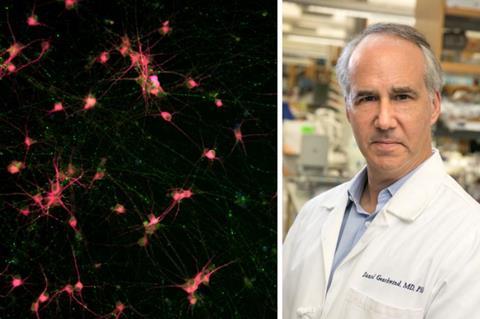
“Right now, there’s virtually no roadmap for developing treatments for these conditions,” said Dr Daniel Geschwind, a distinguished professor of human genetics, neurology and psychiatry at UCLA. “This work is focused on solving that problem by studying many variants in parallel which will provide an initial roadmap for our lab, for other researchers and for the pharmaceutical companies that could eventually take these findings into the clinic.”
Although both conditions are believed to have strong genetic origins that begin during prenatal brain development, these early differences have never been systematically mapped across a broad patient population. As a result, efforts to develop effective treatments have struggled to get off the ground.
Two-pronged research strategy
To attempt to solve this challenge, the research team will pursue two complementary approaches. The first will focus on specific genetic variants already known to increase the risk of autism or schizophrenia.
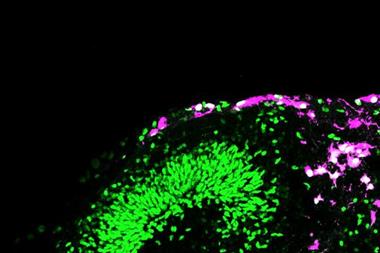
Using CRISPR gene editing, scientists will introduce dozens of these variants into human stem cells, which will then be developed into miniature brain-like structures. These include organoids, which mimic early brain architecture, and assembloids, which model communication between different brain regions. By analysing these models,researchers hope to pinpoint how each genetic change affects brain development.
Using CRISPR gene editing, scientists will introduce dozens of these variants into human stem cells, which will then be developed into miniature brain-like structures.
The second approach addresses a more complex issue. In most cases of autism and schizophrenia, no single genetic cause can be identified. To study these cases at scale, the team will use a method known as ‘cell villages’, allowing cells from hundreds of individuals to be grown together in a single environment.
This approach reduces experimental noise and allows scientists to track each cell back to its donor using unique genetic markers.
“By putting everyone’s cells together in the same dish we improve our ability to detect meaningful biological differences between patients and neurotypical controls,” said Dr Michael Wells, a co-investigator on the grant and an assistant professor of human genetics at the David Geffen School of Medicine at UCLA. “We also reduce costs dramatically: what might otherwise require tens of thousands of sequencing samples can be done with dozens to hundreds.”
Towards new drug targets
The two research streams will then be combined, enabling scientists to identify shared biological mechanisms across genetically diverse cases. These common pathways could provide promising targets for new treatments.
The two research streams will then be combined, enabling scientists to identify shared biological mechanisms across genetically diverse cases.
To further validate findings, the team will test them in more complex assembloid models, and in the final phase, evaluate up to ten potential drug compounds to see whether they can reverse observed cellular changes.
“It’s difficult to develop interventions without understanding the origins of these conditions,” Dr Wells said. “By studying such a broad range of genetic contributors, our goal is to identify mechanisms and drug targets that are relevant to a much larger proportion of these patient populations, potentially enabling drug screens in a dish that could ultimately feed a clinical trial pipeline.”
A focus on representation
A key aspect of the project is its emphasis on diversity. Unlike many previous studies, which have focused largely on individuals of European ancestry, this research will include participants from Hispanic or Latino, African American and European backgrounds.
“For us it’s all about representation,” Wells said. “Many drugs that work in one ancestral population do not work as well in others because those individuals were not included in the preclinical studies. At least here, we can ensure a broad array of genetic variation is included from the start.”
By bringing together experts from multiple disciplines, the project aims to lay the groundwork for a new generation of treatments.





No comments yet