



Scientists at Nanjing University have engineered a targeted platinum delivery system that enhances tumour immune recognition without the severe toxicity of conventional chemotherapy.
Researchers at Nanjing University have developed a new platinum-based cancer treatment strategy designed to improve the effectiveness of immunotherapy while reducing the toxic side effects commonly associated with chemotherapy.
The study could help overcome one of the major limitations of immune checkpoint inhibitors (ICIs), a class of immunotherapy drugs that has transformed treatment for several cancers but remains effective in only a proportion of patients.
Although ICIs can help the immune system recognise and attack tumours, many cancer cells evade immune detection by suppressing antigen presentation pathways or reducing expression of major histocompatibility complex class I (MHC-I) molecules, which are essential for immune recognition.
At the same time, platinum-based chemotherapy drugs can trigger anti-tumour immune responses through DNA damage but often require high doses that lead to severe systemic toxicity because of their non-specific distribution throughout the body.
Targeted platinum delivery system
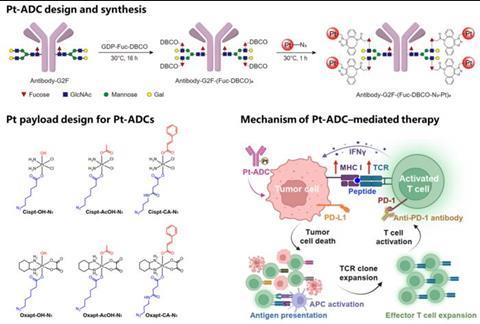
The Nanjing University team developed platinum(IV)-antibody conjugates, known as Pt-ADCs, to target tumours more precisely.
The system combines antibodies with platinum-based compounds in a structurally defined platform designed to deliver low-dose platinum directly into tumour tissue while minimising exposure elsewhere in the body.
Researchers used a site-specific glycoengineering technique to create homogeneous antibody modifications and precisely control the drug-to-antibody ratio.
Unlike traditional antibody-drug conjugates that rely on external cleavable linkers, the Pt-ADC system uses platinum(IV) compounds that function both as drug precursors and as stable molecular linkers.
The system combines antibodies with platinum-based compounds in a structurally defined platform designed to deliver low-dose platinum directly into tumour tissue while minimising exposure elsewhere in the body
Once inside the tumour’s reductive microenvironment, the platinum(IV) complexes gradually convert into active platinum(II) compounds, allowing controlled drug release without additional linker structures.
According to the researchers, the strategy effectively separates tumour immune activation from the high-dose cytotoxicity typically associated with platinum chemotherapy.
Improved immune recognition
Functional studies showed that the low-dose platinum delivered through Pt-ADCs did not directly cause major tumour cell death. Instead, it increased MHC-I expression, enhanced antigen processing and activated immune-related signalling pathways.
This left tumour cells in what researchers described as a sustained immune-recognisable state, making them more visible to the immune system.
Functional studies showed that the low-dose platinum delivered through Pt-ADCs did not directly cause major tumour cell death
In syngeneic tumour models, the treatment significantly promoted the expansion of tumour-reactive T-cell receptor clonotypes and demonstrated strong synergy when combined with anti-PD-1 immunotherapy.
The combined treatment enhanced CD8-positive T-cell anti-tumour responses and achieved greater tumour suppression than either treatment alone or standard combination approaches.
Researchers also found that Pt-ADCs significantly reduced platinum exposure in non-tumour tissues, helping to lower systemic toxicity.
Controlled release mechanism
Further kinetic studies showed that modifying the axial ligands attached to the platinum compounds allowed researchers to precisely tune how quickly platinum was released within the tumour microenvironment.
The optimised system maintained stability in the bloodstream while enabling mild and sustained platinum release over extended periods.
Scientists said this slow-release pattern helped maintain long-term immune activation and MHC-I upregulation without causing the immunosuppressive or toxic effects linked to high platinum concentrations.
The researchers concluded that the study establishes a new platinum-based therapeutic strategy characterised by ’low toxicity but high immunogenicity.’
They believe the work provides both a chemical and biological framework for controlling what they describe as the ’metal immune effect’ while opening new possibilities for the use of platinum drugs in precision cancer immunotherapy.





No comments yet