


A study has revealed that ANO6 enables cancer-associated fibroblasts to supply cholesterol to pancreatic tumour cells via trogocytosis whilst simultaneously driving T-cell exhaustion.
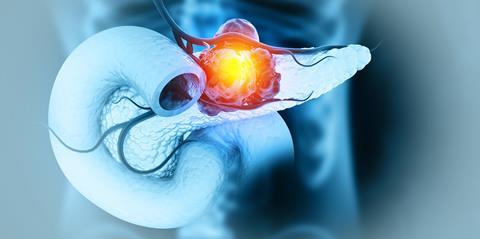
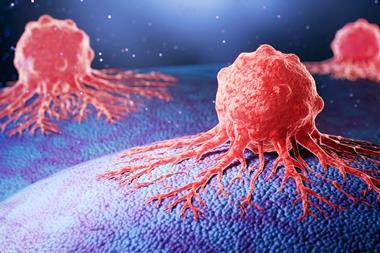
Researchers at Fox Chase Cancer Center have identified a potential therapeutic target for pancreatic cancer after finding that blocking a protein called anoctamin 6 (ANO6) can slow tumour growth and reduce immune suppression in preclinical models.
The study, published in, Nature Cancer, found that ANO6 helps pancreatic cancer cells obtain essential nutrients from surrounding cells while also weakening the immune system’s ability to attack tumours. This suggests that targeting ANO6 could disrupt pancreatic cancer’s access to nutrients and its ability to evade immune attack.
Fibroblasts provide nutrients to cancer cells
Pancreatic ductal adenocarcinoma (PDAC), the most common form of pancreatic cancer, is surrounded by dense connective tissue containing large numbers of cancer-associated fibroblasts (CAFs). These cells and the collagen fibres they produce contribute to the collapse of functional blood vessels, making it difficult for cancer cells to access nutrients from the bloodstream.
How pancreatic cancer cells obtain essential nutrients such as cholesterol in this environment has been difficult to establish, but the researchers found that CAFs can provide an alternative source through a process called trogocytosis, in which cancer cells take small pieces of the CAF cell membrane to acquire cholesterol and other lipids that support their survival and growth.
ANO6 plays an important role in this process by helping prepare CAF membranes for transfer. When researchers reduced or eliminated ANO6 in CAFs, the cells became less effective at supporting pancreatic cancer cell survival. Mouse models also showed that tumours supported by CAFs with functional ANO6 grew substantially faster.
“These findings help explain how pancreatic cancer cells obtain essential nutrients despite the unusual structure of the pancreatic tumor microenvironment,” said Igor Astsaturov, Professor at Fox Chase and co-senior author of the study. “Cancer-associated fibroblasts are not passive bystanders. They actively support tumour growth by transferring lipids to cancer cells.”
ANO6 contributes to immune suppression
The researchers also discovered that ANO6-dependent membrane transfer can weaken the immune response against cancer.
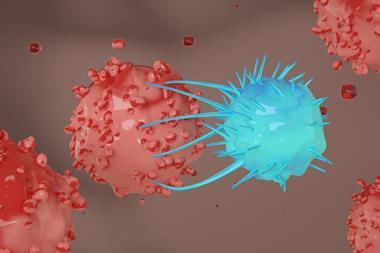
CAFs also interact directly with cytotoxic T lymphocytes (CTLs), immune cells that recognise and kill cancer cells. During these interactions, T cells can acquire cholesterol-containing material from CAF membranes. The resulting cholesterol accumulation can contribute to T-cell exhaustion, reducing the immune cells’ ability to effectively target and destroy cancer cells.
In mouse models, blocking ANO6 reduced cholesterol accumulation in tumour-infiltrating T cells and improved markers of their activity. Laboratory experiments also showed that T cells exposed to CAFs with reduced ANO6 had greater cancer-killing activity.
“With Serge Fuchs, professor at the University of Pennsylvania and co-author on the paper, we were surprised to find that the same cellular mechanism can benefit the tumour in two ways – by supplying cancer cells with lipids while also weakening cancer-fighting T cells,” said Astsaturov. “Targeting ANO6 could potentially disrupt both of these tumour-supporting functions at the same time.”
Potential therapeutic applications
The team investigated whether blocking ANO6 could reduce tumour growth using niclosamide and clofazimine, drugs that inhibited ANO6-dependent activity in the study.
Both treatments significantly reduced tumour weight in mouse models, while niclosamide also reduced cholesterol transfer to pancreatic cancer cells.
However, the researchers noted that trogocytosis is only one of several ways pancreatic cancer cells may obtain lipids. Further research is therefore needed to establish whether selectively targeting ANO6 could offer an effective treatment strategy.
“We believe our findings identify ANO6 as a potential therapeutic target that could simultaneously disrupt the nutrient supply supporting pancreatic cancer cells and reduce the immune-suppressive effects of the tumour microenvironment,” said Astsaturov.
The researchers also suggested that targeting ANO6 could have applications beyond pancreatic cancer, potentially offering a new approach to treating other difficult-to-treat cancers.


No comments yet