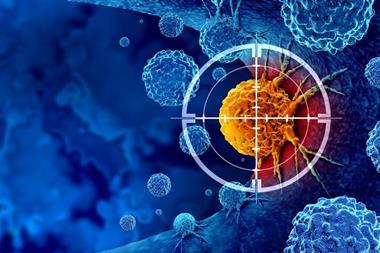
Relapse in acute myeloid leukaemia is driven by malignant cells that resist standard treatment. A synthetic cytokine approach in development targets inflammatory cell death pathways to suppress leukaemic cells while preserving healthy haematopoiesis.
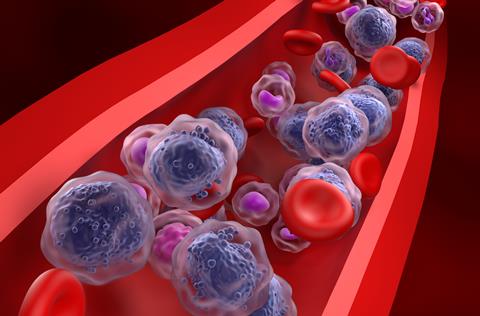
Acute myeloid leukaemia (AML) is an aggressive cancer of the blood and bone marrow characterised by the rapid expansion of immature myeloid cells that interfere with normal blood formation. Standard treatment typically involves intensive chemotherapy, often followed by stem cell transplantation in eligible patients, with the aim of achieving complete remission.
Despite initial responses, relapse remains common. Disease recurrence is largely driven by leukaemic stem cells, a small population of malignant cells that can survive frontline therapy and later regenerate the disease. These cells are intrinsically resistant to many cytotoxic agents and are associated with poor long-term outcomes. Preventing relapse therefore remains one of the central challenges of AML research and drug development.
At Cycuria Therapeutics, a therapeutic strategy is being developed that focuses on biological differences between leukaemic and healthy haematopoietic cells rather than on non-selective cytotoxicity or mutation-specific targeting. The approach exploits inflammatory signalling and programmed cell death pathways that are differentially regulated in malignant cells. It uses a synthetic engineered cytokine based on lymphotoxin alpha, which has shown selective activity against leukaemic stem and progenitor cells in preclinical models while largely preserving normal haematopoiesis.
This work builds on more than two decades of research into cell death and inflammation led by Dr Philipp Jost. Alongside his clinical responsibilities at the Medical University of Graz, where he leads the Clinical Department of Oncology, he has spent more than 20 years investigating how inflammatory pathways shape cancer development and progression. This long-standing interest in cell death biology led to the co-founding of Cycuria Therapeutics with Dr Nisit Khandelwal, CEO. Drawing on his experience as a haematologist and oncologist, Dr Jost now heads the scientific team at the company, with a focus on acute myeloid leukaemia and resistance mechanisms.
Rediscovering lymphotoxin alpha in AML
Lymphotoxin alpha is a cytokine belonging to the tumour necrosis factor (TNF) superfamily and is well known for its ability to induce inflammation. Its role in cancer biology, however, has historically been complex and context dependent.
We tested a range of different cytokines and, using primary patient samples as well as a range of different mouse model systems, identified that lymphotoxin alpha has a powerful leukaemia-suppressive role.
Dr Jost’s interest in lymphotoxin alpha arose from earlier work, published in 2016, in which his group demonstrated that the kinase RIPK3 suppresses myeloid leukaemia. This finding prompted a search for the upstream signals capable of activating RIPK3-dependent cell death in malignant cells.
Using primary patient-derived samples alongside multiple mouse model systems, the team systematically evaluated inflammatory cytokines to identify candidates capable of triggering this pathway.
Dr Jost said: “We tested a range of different cytokines and, using primary patient samples as well as a range of different mouse model systems, identified that lymphotoxin alpha has a powerful leukaemia-suppressive role.”
Lymphotoxin alpha showed a markedly different toxicity profile compared with TNF, a closely related cytokine that has long been limited by systemic side effects.
“Importantly we found that, when given to experimental mice, lymphotoxin alpha differs from TNF by eliciting substantially lower systemic toxicity,” noted Dr Jost.
These findings provided the biological foundation for the development of CUR-101, a synthetic biologic engineered to harness the tumour suppressive properties of lymphotoxin alpha.
Limitations of current AML therapies
Despite significant therapeutic advances, treatment options for acute myeloid leukaemia remain constrained by toxicity, limited applicability and high relapse rates.
Current therapies for AML rely heavily on the suppression of the malignant AML clone by chemotherapy and targeted agents for specific genetic subgroups of AML.
“Current therapies for AML rely heavily on the suppression of the malignant AML clone by chemotherapy and targeted agents for specific genetic subgroups of AML,” said Dr Jost.
While younger and fitter patients may proceed to stem cell transplantation, many older or frail individuals cannot tolerate intensive regimens. Even among those who do, relapse remains common.
Dr Jost added: “Despite intensive treatment schedules, even younger fitter patients exhibit significant relapse rates, which represent the main challenge for current therapeutic options.”
Targeted therapies have improved outcomes for defined molecular subgroups but apply to only a minority of patients, leaving a substantial unmet need for broadly applicable and less toxic approaches.
A dual mechanism approach with CUR-101
CUR-101 represents a mechanistically distinct strategy. Rather than focusing solely on suppressing proliferation or targeting individual mutations, it aims to reprogramme leukaemic cells by activating inflammatory cell death and enforcing myeloid differentiation.
We have shown that CUR-101, a synthetic biologic based on lymphotoxin alpha, potently induces cell death as well as myeloid differentiation of the leukaemic progenitor compartment.
“We have shown that CUR-101, a synthetic biologic based on lymphotoxin alpha, potently induces cell death as well as myeloid differentiation of the leukaemic progenitor compartment.”
These two effects act in concert to suppress disease progression, said Dr Jost.
“As such, CUR-101 is capable of repressing leukaemia progression by two independent, yet highly synergistic, molecular mechanisms.”
Importantly, this activity appears highly selective for malignant cells. Healthy haematopoietic cells and the surrounding bone marrow environment are largely spared.
“Healthy human haematopoietic cells and even the adjacent haematopoiesis in the bone marrow of AML patients remain largely unaffected by CUR-101.”
In some experimental settings, the compound appears to actively support normal blood formation.
“Indeed, we even observed an improvement in the number of healthy haematopoietic progenitor cells as well as mature haematopoietic cells indicating the beneficial effect of CUR-101 on healthy haematopoiesis.”
Exploiting signalling asymmetry in leukaemic stem cells
The selectivity of CUR-101 arises from differences in intracellular signalling capacity between malignant and healthy cells. Lymphotoxin alpha signals primarily through TNF receptor 1 and indirectly through TNF receptor 2.
Activation of both receptors leads to competition for the adaptor protein TRAF2, which is required for pro-survival signalling. In leukaemic cells, where baseline TRAF2 levels are lower, this competition destabilises survival signalling complexes.
“The intracellular competition for TRAF2 reduces the amount of TRAF2 that is available at TNFR1, resulting in the failure to form a functional pro-survival signalling hub.”
Malignant cells are repressed whereas healthy cells are promoted by the same compound at the same time, giving us an exceptional therapeutic window.
This failure triggers RIPK3 dependent inflammatory cell death. In contrast, healthy haematopoietic cells contain sufficient TRAF2 to sustain survival signalling even in the presence of lymphotoxin alpha.
“Accordingly, malignant cells are repressed whereas healthy cells are promoted by the same compound at the same time, giving us an exceptional therapeutic window.”
Preclinical evidence supporting development
Extensive preclinical studies have reinforced confidence in the therapeutic potential of CUR-101. In both syngeneic and patient-derived xenograft models, lymphotoxin alpha-based treatment produced sustained disease control.
“We’ve seen that lymphotoxin alpha can produce durable leukaemia control in both syngeneic and patient-derived xenograft models, with disease suppression maintained for more than 300 days and no meaningful safety signals in animals.”
The compound has also been tested across a broad panel of primary human AML bone marrow samples representing multiple genetic subtypes and ELN risk groups.
“We consistently observe strong induction of differentiation alongside a marked reduction in malignant progenitor cells in ex vivo assays.”
Together, these data provide a strong translational rationale for advancing CUR-101 toward clinical evaluation.
Preparing for first-in-human studies
Cycuria is now progressing towards GMP manufacturing and IND-enabling studies planned for 2026. Key priorities include establishing a robust production process and completing GLP safety and toxicology studies.
We are shaping the Phase I clinical trial to ensure we learn as much as possible from the very first patients we treat.
“For us, that means finalising a reliable GMP process so we can deliver a high-quality clinical-grade product and completing our GLP safety and toxicology studies in non-human primates to clearly define the therapeutic window.”
In parallel, the company is building a detailed pharmacokinetic and pharmacodynamic framework and expanding its biomarker programme to support patient selection and early proof of mechanism.
“And of course, we are shaping the Phase I clinical trial to ensure we learn as much as possible from the very first patients we treat.”
Durable disease control
Dr Jost sees this strategy as a way to move beyond short-term remission towards durable disease control.
“By focusing on leukaemic stem cells, the cells most responsible for relapse, while also supporting the recovery of healthy haematopoiesis, we’re aiming to do more than just induce remission.”
If clinical results mirror preclinical findings, CUR-101 could represent a new class of AML therapy that combines durability with reduced toxicity.
“If the clinical data reflect what we’ve seen preclinically, I believe this approach has the potential to offer more durable, less toxic and more personalised outcomes for AML patients who urgently need better options.”
Meet the expert
 Professor Philipp J. Jost is the scientific founder and Managing Director of Cycuria. He is a Full Professor of Clinical Oncology and Director of the Clinical Department of Oncology and the University Palliative Care Unit at the Medical University of Graz, Austria. He also serves as Director of the Comprehensive Cancer Center at the Medical University of Graz.
Professor Jost is a board-certified hematologist and medical oncologist. He completed his clinical and research training at the Technical University of Munich (Germany), Imperial College London (UK), and the Walter and Eliza Hall Institute of Medical Research in Melbourne (Australia).


Topics
- Assays
- Biologics
- Cancer
- Companies
- Cycuria Therapeutics
- Dr Philipp Jost (scientific founder and Managing Director - Cycuria Therapeutics)
- Drug Development
- Drug Discovery
- Drug Discovery Processes
- Drug Targets
- High-Throughput Screening (HTS)
- Immunology
- Immuno-oncology
- Immuno-oncology
- Molecular Biology
- Neurological disorders
- Oncology
- Stem Cells
- Tools and techniques
- Translational Science