



New research has indentified amyloid beta protein misfolding as the earliest detectable blood-based marker of Alzheimer’s disease, outperforming p-tau 217 in pre-symptomatic prediction.
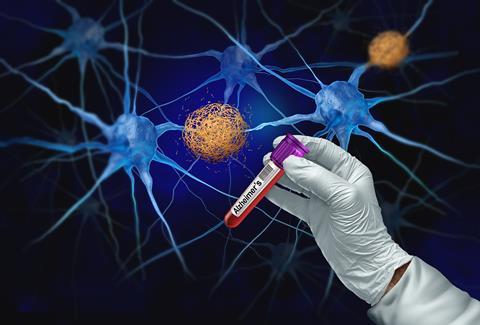
A new study has found that a blood test measuring protein misfolding could identify people at risk of developing Alzheimer’s disease many years before symptoms appear.
Researchers compared the ability of commonly used blood-based biomarkers to predict future Alzheimer’s dementia in people with no clinical symptoms. The team analysed blood samples from the ESTHER study, a major long-term investigation into the health of older adults conducted at the German Cancer Research Center (DKFZ).
Different biomarkers at different stages
The findings revealed that different biomarkers are most effective at different stages of Alzheimer’s disease, with p-tau 217 demonstrating strong diagnostic effectiveness when Alzheimer’s reaches the clinical stage.
The findings revealed that different biomarkers are most effective at different stages of Alzheimer’s disease
Researchers compared its accuracy with established diagnostic methods, including the Aβ42/40 ratio in cerebrospinal fluid and amyloid PET imaging. However, its ability to predict the disease before symptoms developed was more limited, achieving an area under the curve (AUC) score of 0.67. By comparison, AUC values of around 0.8 or above are considered highly significant.
Earlier warning signs
In contrast, the biomarker for amyloid beta protein misfolding successfully identified future Alzheimer’s risk in people who remained cognitively normal at the time of testing, achieving an AUC score of 0.79.
When researchers combined the protein misfolding biomarker with demographic information, genetic factors and other blood biomarkers, the resulting screening panel achieved an AUC of 0.87. This enabled highly accurate prediction of a future Alzheimer’s diagnosis long before clinical symptoms emerged.
“Prevention and anti-amyloid therapies could noticeably slow the development of symptoms or perhaps even largely prevent them, especially in this early stage,” says study leader Klaus Gerwert, Professor at Ruhr University Bochum.
Importance of early detection
The researchers believe the findings could transform efforts to identify people at greatest risk of Alzheimer’s before irreversible damage occurs.
“Our study shows that the protein misfolding is the earliest measurable, blood-based marker of Alzheimer’s disease,” says Gerwert. “P-tau 217 is an outstanding biomarker once the disease has clinically manifested. When it comes to identifying persons with an increased risk of disease many years before the initial symptoms occur, however, the biomarker for protein misfolding provides the most significant predictive information.”
Our study shows that the protein misfolding is the earliest measurable, blood-based marker of Alzheimer’s disease
The study comes as disease-modifying anti-amyloid therapies become available. While these treatments can slow the progression of Alzheimer’s disease, they are only approved for people with mild cognitive impairment or mild Alzheimer’s dementia.
The treatments can also cause serious side effects, including amyloid-related imaging abnormalities (ARIA), which may result in brain swelling and small bleeds. As a result, treatment is suitable only for selected patients who meet strict diagnostic criteria.
Foundation for future screening
Researchers say identifying people at risk during the earliest molecular stages of Alzheimer’s is becoming increasingly important as new treatments emerge.
“The possibility of treating Alzheimer’s in its earliest molecular stage is thus becoming one of the most important challenges in preventing the disease,” says Gerwert.
The authors conclude that protein misfolding should form the basis of future blood-based screening strategies. They hope this approach could help identify at-risk individuals much earlier, improve the selection of patients for preventative treatments and clinical trials and support more cost-effective, population-wide screening programmes.










1 Reader's comment