



All Drug Discovery articles – Page 17
-
 News
NewsEvenamide targets multiple symptoms in schizophrenia models
New preclinical research suggests that evenamide – a glutamate modulator – targets hippocampal hyperexcitability, potentially addressing positive, negative and cognitive symptoms of schizophrenia.
-
 News
NewsecDNA discovery targets 'zombie' cells in childhood cancers
Researchers have discovered how circular extra-chromosomal DNA drives relapse in childhood cancers and found a way to target dormant “zombie” tumour cells – which could allow for the development of more durable treatments.
-
 Article
Beyond the hype: a veteran’s honest assessment of AI in drug discovery - Part 1
An interview with Thibault Géoui reveals why this technology wave might finally break through pharma’s productivity crisis – and why it will take longer than the optimists claim.
-
 Article
Lupus reimagined: targeting the cause, not just the symptoms
Engineered cell therapies are offering a potential new way to treat lupus – not by suppressing symptoms, but by reprogramming the immune system itself. For the first time, lasting remission looks like a real possibility.
-
 News
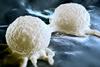
NewsNew PCAI compound targets aromatase inhibitor-resistant breast cancer
Researchers at Florida A&M University have identified a new compound – NSL-YHJ-2-27 – that disrupts key survival pathways in aromatase inhibitor-resistant breast cancer cells – offering a potential new treatment for hard-to-treat cases.
-
 News
NewsKidney tumour organoids offer new drug testing platform
Scientists in China have used 3D bioprinting to grow kidney tumours from patients’ own cells, creating realistic models that could speed up development of personalised treatments.
-
News
New patent for traumatic brain injury drug announced
Drug discovery company, TauGen, has filed a US patent application for a new series of drug candidates targeting endoplasmic reticulum (ER) stress – a key factor in secondary brain injury following traumatic brain injury (TBI).
-
 Article
From injections to pills: oral peptides set to transform drug development
Oral peptide-based drugs are set to revolutionise the pharmaceutical industry, overcoming the long-standing challenge of poor bioavailability. Santosh Kulkarni reveals how new breakthroughs in drug discovery and delivery offer the potential for more convenient, effective treatments for a range of conditions – without the need for injections.
-
News
Next-gen malaria vaccine created using mapped parasite protein
Australian scientists have, for the first time, visualised a malaria parasite protein complex – a discovery that has led to a new mRNA vaccine capable of blocking the parasite’s reproduction in mosquitoes and potentially halting transmission.
-
News
Whole-brain organoid offers breakthrough in neurological research
Johns Hopkins University scientists have engineered a new multi-region brain organoid that mimics early human brain development. The model offers a powerful new tool for studying disorders like autism, schizophrenia and Alzheimer’s disease.
-
 News
NewsScientists discover how 5-HT1A receptor shapes brain signalling
Researchers at Mount Sinai have mapped how the 5-HT1A serotonin receptor controls brain signalling – finding a hidden lipid ‘co-pilot’ that could lead to the development of more targeted antidepressants.
-
 News
NewsNew lipid nanoparticle boosts mRNA delivery fivefold in cancer study
Japanese researchers have engineered a new lipid nanoparticle that delivers mRNA to cells five times more effectively, resulting in stronger immune responses and tumour suppression in mice.
-
 News
NewsVitamin B1 + glucose: a new combination approach to tackling sepsis
Scientists at Ghent University have discovered that a simple combination of vitamin B1 and glucose could drastically improve survival in sepsis – a life-threatening condition responsible for millions of deaths each year.
-
 Report
Beyond the Lab: Biomarkers Powering Tomorrow’s Therapies
Biomarkers are redefining how precision therapies are discovered, validated and delivered. This exclusive expert-led report reveals how leading teams are using biomarker science to drive faster insights, cleaner data and more targeted treatments – from discovery to diagnostics.
-
 News
NewsCOVID-19 and flu could awaken hidden breast cancer cells
Scientists have discovered that infections like COVID-19 and flu can “wake up” dormant breast cancer cells – triggering new tumour growth in the lungs.
-
 News
NewsNew stroke drug reduces brain damage by 60 percent in preclinical study
Cambridge researchers have discovered a new drug that could dramatically improve stroke recovery by reducing brain damage caused when blood flow is restored.
-
 News
NewsCDK4/6 and PARP combo improves prostate cancer treatment
Researchers at VHIO have discovered a new way to overcome drug resistance in metastatic prostate cancer – by combining CDK4/6 inhibitors with follow-up therapies.
-
 News
NewsNew drug combo targets PRMT5 to fight deadly cancers
Scientists at Virginia Tech’s Fralin Biomedical Research Institute have identified a promising drug target – PRMT5 – that could make treatment-resistant lung, brain and pancreatic cancers more vulnerable to therapy.
-
 Article
Antibodies come full circle: biopharma back at the bench
Recombinant antibody technology is redefining research standards - bringing biopharma-grade precision, consistency, and customisation to the lab. Discover how advances like Fc engineering and chimerisation are accelerating progress from basic discovery to clinical insight.
-
 News
NewsHow FtsZ and ZapA proteins drive bacterial cell division
Japanese researchers have discovered how the bacterial proteins FtsZ and ZapA work together to drive cell division – a discovery that could guide the development of new antibacterial treatments.