



All Drug Discovery articles – Page 12
-
 Article
Fast, scalable free energy prediction with nonequilibrium switching
Nonequilibrium switching (NES) offers a faster, more scalable way to predict how strongly drugs bind to their targets. By replacing slow equilibrium simulations with rapid, parallel transitions, NES delivers accurate free energy predictions at speed.
-
 News
NewsOral arginine reduces harmful amyloid in Alzheimer’s models
A naturally occurring amino acid commonly found in supplements has reduced harmful amyloid build-up and eased symptoms in animal models of Alzheimer’s disease.
-
 Article
Mapping lipid pockets to drug the undruggable proteome
Tasca Therapeutics is using chemical proteomics to map lipid-binding pockets on proteins. By targeting auto-palmitoylation, the company aims to turn previously undruggable cancer drivers into viable therapeutic targets.
-
 News
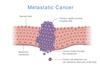
NewsNew stealth CRISPR method reduces immune interference in tumours
Researchers have developed a novel CRISPR method that evades the immune system in mice, allowing scientists to study tumour growth and metastasis more accurately.
-
 Article
AI and policy reform set to reshape UK drug development
BCG’s Chris Meier outlines how advances in AI and new UK policies could accelerate drug development, streamline clinical trials and strengthen the country’s life sciences sector.
-
 News
NewsRecycled nuclear fuel to power new cancer treatments in the UK
The UK is set to turn recycled nuclear fuel into new cancer treatments, thanks to a £18.8 million investment in a project using lead-212 to develop Targeted Alpha Therapies.
-
 Article
Tackling the organ shortage through vascular bioengineering
Frontier Bio’s vascular bioengineering research connects tissue modelling with graft development to advance regenerative medicine and drug discovery.
-
 News
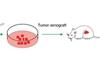
NewsPDX models: a new tool for colorectal cancer research
Patient-derived xenograft models are reshaping colorectal cancer research by preserving the complexity of real tumours, potentially helping scientists to develop new therapies in the future.
-
 News
NewsDeepTarget tool helps identify secondary cancer drug targets
A new computational tool, DeepTarget, is demonstrating context-specific targets and repurposing opportunities, showing that what may be a side effect in one patient could serve as a treatment in another.
-
 Article
Making science run at the speed of thought: the reality of AI in drug discovery – Part 1
Everyone talks about AI speeding up drug discovery, but Eric Ma explains why, without clean data and statistical discipline, it can actually do the opposite.
-
 News
NewsScripta Therapeutics raises $12m to advance neurodegenerative research
Oxford-based techbio start-up Scripta Therapeutics has announced a $12 million seed funding round helping them to reshape conventional drug discovery.
-
 Article
AI and the future of biomarker analysis in early R&D
AI is transforming biomarker analysis in early drug discovery, revealing hidden biological patterns that improve target discovery, patient selection and trial design for more precise and predictive R&D.
-
 News
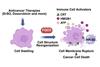
NewsFGD3 protein enhances breast cancer therapies
Scientists have identified a little-known protein, FGD3, that can boost the power of key breast cancer treatments by helping drugs rupture tumour cells and activate the immune system.
-
 News
NewsHow antibody-drug conjugates are improving gynaecological cancer outcomes
Antibody-drug conjugates (ADCs) are emerging as a breakthrough in the fight against gynaecological cancers, offering targeted treatment for cervical, ovarian and uterine tumours.
-
 Article
Circular RNA technology: the future of gene therapy
Pioneering circular RNA could redefine what the future of gene therapy looks like. Erik Digman Wiklund, CEO of Circio, shares how his company’s platform is enhancing gene expression and tackling toxicity challenges through smarter design and scientific collaboration.
-
 News
NewsNew framework enhances reliability of virtual cell models
Shift Bioscience have announced new research revealing that AI-driven virtual cell models perform far better than previously thought when assessed with correctly calibrated metrics.
-
 Article
Why first-void urine could potentially change the future of HPV screening
From richer biomarker content to patient-friendly sampling, first-void urine is emerging as a promising tool in precision health. Here is why scientists are paying attention.
-
 News
NewsPARP14: the human gene that fights against herpes and COVID
Researchers have identified a human gene, PARP14, that not only helps the body’s immune system to combat multiple viruses but could also potentially be used to treat inflammatory and autoimmune diseases.
-
 News
NewsHow a psychedelic found in mushrooms could help fight alcoholism
Scientists have discovered that psilocin – the compound produced in the body from the psychedelic found in magic mushrooms – may reduce alcohol consumption by calming activity in brain regions linked to stress.
-
 News
NewsTRβ receptor could be key to slowing prostate cancer
A thyroid hormone receptor may play a key role in prostate cancer growth, offering a potential new target for treating aggressive forms of the disease.