Scientists at the University of Toronto have created long noncoding RNA outside living cells for the first time, a breakthrough that has already produced experimental anti-inflammatory molecules.
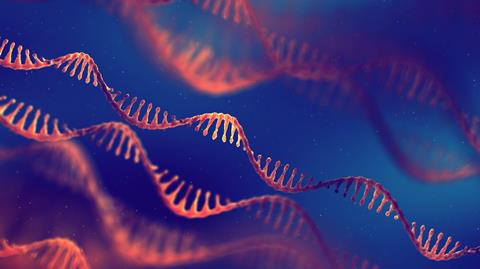
Researchers at University of Toronto Engineering have become the first to synthesise long noncoding RNA outside the cell, creating a potential new pathway for drug discovery that has already produced promising anti-inflammatory molecules.
The work explores a largely mysterious part of human genetics, sometimes known as the ‘dark transcriptome’, which could eventually lead to a new class of medicines that regulate the body’s natural biological processes.
Unlocking the ‘dark transcriptome’
The research team drew inspiration from advances in therapies based on messenger RNA (mRNA) which provide cells with instructions to produce specific proteins.
“Only about 25 percent of our DNA encodes for proteins, including everything from insulin for regulating blood sugar to antibodies for immune defence,” says Omar Khan, Assistant Professor at University of Toronto Engineering and senior author of the study. “Proteins are made via messenger RNA, or mRNA, which conveys the instructions for how to build proteins from our genes to our ribosomes, the part of our cells where proteins are assembled.”
Only about 25 percent of our DNA encodes for proteins, including everything from insulin for regulating blood sugar to antibodies for immune defence.
A large proportion of the genome does not encode proteins. Instead it produces long strands of RNA with different biological roles. However, a large proportion of our DNA does not encode proteins and scientists are still working to understand its function. What researchers do know is that around 45 percent of the genome produces long strands of RNA that do not act as messengers but still interact with other biomolecules. These strands are known as long noncoding RNA, or lncRNA.
Around 40,000 lncRNA transcripts have been identified so far. Their biological purpose is, however, still unclear, earning them the nickname the ‘dark transcriptome’. Researchers believe many of these molecules may influence how genes are switched on or off.
“There’s no way evolution would allow these lncRNAs to take up so much space in our genome unless they were giving us some kind of survival advantage,” said Khan. “If we can figure out what these lncRNAs do, make them in the lab and then administer them to sick patients like any other medicine, we could modify or enhance the body’s natural processes to promote healing.”
Targeting inflammation
To begin exploring the potential of lncRNA as a therapy, the team searched scientific literature to identify sequences linked with inflammation.
“Although inflammation is one of the body’s natural responses to injury or infection, extreme or chronic inflammation can become a problem,” said Janice Pang, a PhD student in Khan’s laboratory and lead author of the study. “For example, sepsis is a potentially life-threatening condition caused by an overactive inflammation response and chronic inflammation is associated with many conditions from arthritis to cardiovascular disease. The idea was that if we could identify lncRNA sequences that regulate inflammation, we could use them to shut it down when it gets out of control.”
The team selected three lncRNA sequences previously linked with inflammation: GAPLINC, MIST and DRAIR. Using laboratory techniques including in vitro transcription synthesis, chemical modification and high-performance liquid chromatography purification, they created the first copies of these molecules outside living cells.
Promising early results
The researchers packaged the synthesised lncRNA into nanoparticles designed to deliver RNA safely into cells. These were then tested in human cell cultures and in mice suffering from inflammatory disease.
“We found that each sequence reduced inflammation in a different way,” said Pang. “They did this by decreasing the production of specific cytokines, which are signalling proteins produced in the body that trigger inflammation.”
The researchers packaged the synthesised lncRNA into nanoparticles designed to deliver RNA safely into cells.
The team then modified the molecules’ structures to improve their effectiveness, enabling lower doses to achieve similar results.
“It’s a very tricky thing because the shape of these molecules matters to their function and you don’t want to break that by changing too much,” says Khan. “But through hard work and thoughtful choices, Janice and the team were able to find modifications that actually increased their potency.”
A new approach for medicines
While the early anti-inflammatory results are encouraging Khan believes the greater significance lies in the new strategy for drug discovery.
“The traditional way of making drugs is time-consuming and costly, so many candidate molecules fail because of negative interactions with the body or a lack of performance in humans,” he said. “What’s so great about these lncRNA sequences is that they’ve been honed by millions of years of evolution, so we know they’re biocompatible with humans, they’ve already been de-risked, in a sense. On top of that, each lncRNA evolved to have a very narrow, specific mechanism of action. That specificity reduces the potential for side effects and it also enables us to get the desired response with minimal doses.”
The work represents an entirely new approach to drug discovery that could provide a major opportunity to identify treatments capable of significantly improving lives in the future.