Procedural advances in IVF are reaching their biological limits. Reproductive biotech is now moving upstream, developing first in class therapeutics that target meiosis, gamete quality and implantation biology as druggable mechanisms in early discovery.
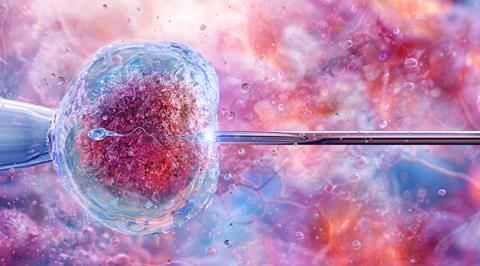
For decades, the landscape of Assisted Reproductive Technology (ART) and In Vitro Fertilisation (IVF) has been defined by procedural refinement rather than fundamental biological intervention. Clinical success has largely depended on optimising what already exists: refining hormonal stimulation protocols to retrieve more eggs, improving culture media to support embryo growth in the lab and deploying advanced selection techniques like preimplantation genetic testing to choose the most viable candidates.
However, this procedural approach is currently facing a hard biological limit. As individuals and couples increasingly delay family building, they encounter the sharp, age-related decline in gamete quality. Current data indicates that fertility outcomes fall precipitously with age, not primarily because the uterus cannot sustain a pregnancy, but because the egg itself lacks the developmental competence to form a healthy embryo. Procedural optimisation cannot reverse this intrinsic cellular deterioration.
A new wave of reproductive therapeutics is moving beyond managing infertility processes to actively engineering biological solutions.
To overcome this barrier, the field is undergoing a pivotal shift. A new wave of reproductive therapeutics is moving beyond managing infertility processes to actively engineering biological solutions. This emerging frontier targets the root causes of gamete and implantation failure. Spearheaded by a cohort of biotech startups and attracting significant attention from both investors and established pharmaceutical players, these innovations aim to uncouple reproductive success from chronological age. The solutions currently in development fall into three complementary pillars: improving gamete quality, creating new gametes via stem cell technologies and optimising the implantation environment.
Improving gamete quality
The most significant biological constraint in modern fertility is maternally inherited meiotic aneuploidy, a process where chromosomes fail to separate correctly during egg maturation. This cellular error results in eggs passing on an incorrect number of chromosomes to the embryo, which is the primary driver of IVF failure and miscarriage in patients of advanced maternal age. Studies1 show that meiotic errors are already common by the early 30s and by around age 33, roughly half of oocytes are expected to undergo at least one chromosome segregation error during meiosis, with the probability rising steeply thereafter and approaching ubiquity by the early 40s.
The most significant biological constraint in modern fertility is maternally inherited meiotic aneuploidy, a process where chromosomes fail to separate correctly during egg maturation.
New therapeutic classes are being developed to tackle this bottleneck. U-Ploid Biotechnologies is at the forefront of addressing this challenge and is developing LyvantaTM, first-in-class therapeutic designed to directly treat age-related meiotic errors. Rather than selecting the best available embryo from a declining cohort, this approach targets the machinery of meiosis itself. By introducing a therapeutic agent to the egg, the technology acts to stabilise the chromosomal assembly and ensure faithful segregation of maternal chromatids. This method aims to reduce the biological age penalty by supporting a natural process that becomes error-prone over time. In reducing the rate of age-related chromosomal abnormalities upstream, the technology seeks to increase the number of healthy embryos per cycle without altering DNA or employing genetic modification.
Parallel to this is the development of advanced cell engineering platforms to reimagine the ovarian environment. Gameto’s Fertilo program exemplifies this shift, utilising induced pluripotent stem cell (iPSC)-derived ovarian support cells to recreate the follicular niche outside the body. This technology enables the maturation of eggs in a laboratory dish (in vitro maturation or IVM) by mimicking the chemical and structural signals of a young, healthy ovary. This approach could drastically reduce the burden of conventional IVF by replacing the need for weeks of high-dose hormonal injections with a shorter, less invasive process. By recreating the biological environment ex vivo, these platforms aim to improve the quality of egg maturation while making the retrieval process safer.
Creating new gametes
While improving existing eggs offers a solution for many, a radical long-term vision for reproductive biotech is In Vitro Gametogenesis (IVG). This technology aims to bypass the limitations of ovarian reserve entirely by creating gametes de novo from non-reproductive cells.
If successful, this technology would allow individuals with no functional eggs - due to age, chemotherapy, or premature ovarian insufficiency - to have biologically related children.
Labs such as those at Conception are at the forefront of this moonshot science, developing protocols to transform somatic cells (such as blood or skin cells) into induced pluripotent stem cells (iPSCs), which are then differentiated into viable human oocytes. This process involves complex genetic and epigenetic reprogramming to replicate the intricate developmental stages of gametogenesis in a petri dish. If successful, this technology would allow individuals with no functional eggs - due to age, chemotherapy, or premature ovarian insufficiency - to have biologically related children.
Similarly, Japanese biotech Dioseve is advancing a proprietary differentiation induction technology. Their approach focuses on generating oocytes specifically to address female reproductive longevity. By identifying and enforcing the expression of specific transcription factors that drive oocyte development, they aim to accelerate the production of functional germ cells from stem cells. This form of regenerative medicine could theoretically provide a vast supply of gametes, removing the biological clock as the ultimate determinant of fertility. Despite its transformative potential, IVG raises profound technical, ethical and regulatory questions that will likely place clinical translation on a longer horizon.
Optimising the implantation environment
Even after accounting for embryo aneuploidy, an estimated ~15 percent of IVF failures occur due to implantation defects, where otherwise competent embryos fail to attach to the uterine lining.
New therapeutic classes are emerging to tackle this inefficiency. Oxolife is developing OXO-001, a non-hormonal oral drug designed to act directly on the endometrium. Unlike traditional hormonal supports such as progesterone, this molecule works by modulating the endometrial tissue to enhance the expression of adhesion and invasion molecules, effectively making the lining more receptive to the embryo. Early clinical data suggests that by pharmacologically managing the uterus-embryo interface, pregnancy rates per transfer can be meaningfully improved.
Complementing this therapeutic approach is the rise of non-invasive diagnostic platforms. Genie Fertility is leveraging machine learning and multi-omics to analyse molecular biomarkers found in menstrual blood. By treating menstrual effluent not as waste but as a liquid biopsy of the uterus, their technology analyses RNA and protein signatures to assess endometrial health. This data-driven approach allows clinicians to identify the optimal window of implantation and detect underlying pathologies without the need for painful tissue biopsies, ensuring that therapeutic interventions can be precisely timed and targeted.
The trajectory of fertility care is decisively shifting from better procedures to better biology. The rise of these therapeutic interventions signals the beginning of a comprehensive reproductive medicine that prioritises biological efficiency over statistical selection.
By stabilising the meiotic machinery, engineering ex vivo ovarian niches, generating gametes de novo, and pharmacologically enhancing implantation, these technologies promise to address the unmet need at the heart of the global infertility crisis. If investment and strategic partnerships continue to support this translation from bench to clinic, the field stands on the brink of a new era where fertility is no longer strictly bound by the constraints of age.
References:
- Gruhn JR, Zielinska AP, Shukla V, Blanshard R, Capalbo A, Cimadomo D, et al. Chromosome errors in human eggs shape natural fertility over reproductive life span. Science. 2019 Sep 27;365(6460):1466–1469. doi:10.1126/science.aav7321. PMID:31604276; PMCID:PMC7212007.
Meet the author
 Jordan Abdi, MD MSc is a physician-scientist and co-founder and CEO of U-Ploid Biotechnologies, a reproductive health biotech developing first-in-class therapeutics to address age-related egg quality decline. He trained in medicine and translational science and has worked across clinical research, biotech formation and regulatory strategy, with a focus on bringing novel reproductive therapeutics from discovery into the clinic.

Topics
- Assays
- Biomarkers
- Biotechnology & Bioengineering
- Biotherapeutics
- Cell & Gene Therapy
- Companies
- Dr Jordan Abdi (co-founder and CEO of U-Ploid Biotechnologies)
- Drug Development
- Drug Discovery
- Drug Discovery Processes
- Drug Targets
- Endocrine disorders
- High-Throughput Screening (HTS)
- In Vitro Testing
- Molecular Biology
- Neurological disorders
- Regenerative Medicine
- Sequencing
- Stem Cells
- Tools and techniques
- Translational Science