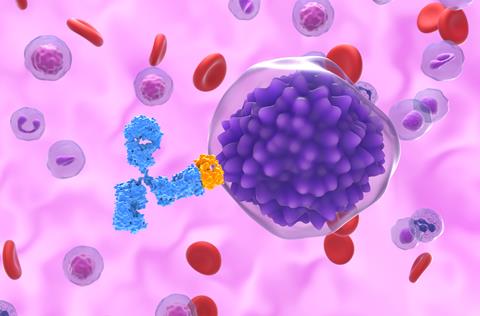
Cancer immunotherapies, including CAR T-cell treatments, have given hope to millions of cancer patients by promising long-term remission, better survival rates and more personalised approaches to care. However, achieving equitable access for all who need these treatments remains a huge challenge, with clinical, operational and systemic barriers limiting broader adoption outside of the large academic medical centres.
Among these challenges is the need to anticipate and respond to serious complications like cytokine release syndrome (CRS). The dangers of CRS mean that patients receiving immunotherapy must stay in hospital for several days after infusion for close observation. This inpatient monitoring makes it harder to extend access to treatment, as many community hospitals lack the resources to support this delivery model.
With immunotherapy treatments now expanding to include solid tumours, there is an urgent need to develop more scalable approaches to predict, monitor and manage adverse events and reduce barriers to treatment, improve patient safety and accelerate the development of the next generation of immuno-oncology therapies.
Immunotherapy and the challenge of CRS
Immunotherapies, such as CAR T-cell treatments, have shown success, particularly in treating haematologic cancers such as lymphomas, some forms of leukaemia and multiple myeloma. Today, seven CAR T-cell therapies1 and six T-cell engager therapies are approved by the US Food and Drug Administration (FDA).2
When immune cells are activated, they can release large amounts of cytokines into the blood, which may lead to CRS in some patients. This surge can cause fever, nausea, low blood pressure and, in severe cases, multiple organ failure or death. The incidence rates differ by therapy, but research indicates that 42-100 percent of patients may experience some level of CRS, with severe cases (grade 3 or higher) occurring in up to 46 percent of those cases.3
Using digital health technologies (DHTs) for continuous data collection to characterise CRS offers a way to manage patients outside traditional inpatient settings.
While current treatment protocols require patients to be closely monitored in a hospital or clinical setting for several days, there is growing evidence to suggest that safety and efficacy are comparable under appropriately monitored outpatient care. Relying on only inpatient monitoring increases the burden on patients and their families, restricts access to only treatment centres and hospitals with the requisite resources for inpatient monitoring, and drives up healthcare costs. The need for patients to remain in hospital after treatment can also complicate patient recruitment for clinical trials. Many patients, particularly those from underserved populations, find that facilities equipped to deliver immunotherapy are geographically inaccessible to them.
Using digital health technologies (DHTs) for continuous data collection to characterise CRS offers a way to manage patients outside traditional inpatient settings. While many clinicians, in theory, support investigating this approach, there are concerns about implementation, including logistics, legal responsibility and the need for accurate and reliable monitoring solutions to give them the confidence to support outpatient immunotherapy care.
Continuous monitoring and the role of AI
Instead of relying on periodic vital sign checks (the current standard of care (SoC) is to take patients’ vitals every six to eight hours) and doctors’ judgement, AI-enabled continuous monitoring solutions can detect changes in the body’s functions as they occur. Machine learning algorithms can identify small changes linked to the early development of CRS by analysing data, including body temperature, heart rate, blood pressure, oxygen saturation and activity.
Machine learning algorithms can identify small changes linked to the early development of CRS by analysing data, including body temperature, heart rate, blood pressure, oxygen saturation and activity.
These systems can detect changes in body physiology and alert clinicians before CRS can be detected under SoC, enabling earlier intervention and potentially halting the condition’s progression.
Continuous monitoring can also reveal immune activation in ways that static, one-time tests cannot. By providing a continuous data stream, it more accurately reflects the trajectory of physiological change – information essential for both patient management and the enhancement of our scientific understanding of immunotherapy response dynamics.
A new data layer for early-stage drug development
Continuous monitoring has clear advantages for clinical safety, but it could also support better early-stage drug development. Changes in immune and inflammatory processes that occur within hours or days of treatment constitute an immunotherapy response. Conventional study designs often fail to capture this complexity, resulting in gaps in the assessment of both efficacy and toxicity.
The ability to collect high-resolution data would enable future development of treatments using a data-driven approach that could inform dose selection or the way a treatment is administered.
AI-driven analysis of continuous physiological data provides an improved instrument for interpreting these immune dynamics. For instance, by analysing the slope and duration of immune-related physiological changes among patients, researchers could differentiate between ‘healthy’ immune activation, indicative of effective tumour interaction, and immune overactivation, which precedes CRS.
Patterns may emerge over time that link specific physiological responses to a treatment’s effectiveness. A rapid but controlled immune response might be linked to improved outcomes, whereas a long-lasting or overactive response might increase the risk of toxicity. The ability to collect high-resolution data would enable future development of treatments using a data-driven approach that could inform dose selection or the way a treatment is administered.
Creating a better monitoring pathway
To use an AI-enabled continuous monitoring approach would require a strong digital infrastructure that works well with the patient care pathway. One new model is to enrol patients onto a digital health platform before they receive immunotherapy treatment. Wearable devices can collect baseline physiological data, which creates a personalised baseline profile for each patient. After treatment, continuous monitoring starts, and data is analysed for patterns that indicate CRS or other immune-related toxicities. When significant differences from a patient’s baseline are identified, clinicians get alerts. This allows them to decide whether intervention or hospital readmission is needed.
From a research perspective, these data streams produce standardised, objective records of physiological variations across trials and treatment centres. Over time, this can make safety assessments more consistent, facilitate comparisons across studies and accelerate the identification of predictive digital biomarkers.
The future of patient monitoring in immunotherapy
There is growing evidence that digital monitoring can significantly enhance the care of patients receiving immunotherapy. Digital health technologies can identify changes much earlier than the current standard of care allows, enabling doctors to base decisions on physiological data. At the same time, they provide researchers with ongoing, real-world insights into how new treatments affect the immune system.
At a time when access to immunotherapy remains limited, partly due to the risks posed by CRS, continuous monitoring can yield more precise data, establish clearer baselines for detection and management, and ultimately help make these life-saving therapies safer and more accessible to more patients.
As AI-enabled monitoring and data analysis become increasingly important in immunotherapy research and care, understanding the real capabilities and limitations of AI is essential. Learn more in the webinar:
11 March 2026 | 2:00 PM GMT
Free registration | Live Q&A included
Gain practical insights into AI’s current capability, the gaps that continue to slow teams down and what to expect in the next phase of AI adoption. Hear directly from leaders across biotech, pharma and academia:
- Dr Raminderpal Singh, Global Head of AI & GenAI Practice at 20/15 Visioneers
- Prof Jonathan Stokes, Assistant Professor of Biochemistry and Biomedical Sciences at McMaster University
- Dr Shantanu Singh, Principal Investigator and Senior Group Leader at the Broad Institute of MIT and Harvard
- Dr Noor Shaker, Founder and CEO of SpatialX
- Dr John Androsavich, General Manager of Ginkgo Datapoints
Register for free and join the live Q&A
References
- National Cancer Institute. CAR T cells: Engineering immune cells to treat cancer [Internet]. National Cancer Institute. Cancer.gov; 2025. Available from: https://www.cancer.gov/about-cancer/treatment/research/car-t-cells
- PhD NJP. Taking a BiTE Out of Cancer [Internet]. American Association for Cancer Research (AACR). 2023. Available from: https://www.aacr.org/blog/2023/11/14/bites-help-immune-system-destroy-cancer-cells/
- Xiao X, Huang S, Chen S, et al. Mechanisms of cytokine release syndrome and neurotoxicity of CAR T-cell therapy and associated prevention and management strategies. Journal of Experimental & Clinical Cancer Research. 2021 Nov 18;40(1).
About the author
 Dr Christine Guo, Chief Scientific Officer, Ametris (formerly ActiGraph)
Christine Guo leads the clinical and data science team at Ametris and is responsible for the scientific strategy and services, supporting Ametris leadership in digital medicine. Christine has over 20 years of experience in clinical research and a vision for leveraging technology in clinical trials and practice. Prior to Ametris, Christine was Head of Scientific Innovation at Biogen Healthcare Solutions, leading the clinical development and validation of Biogen’s digital medicine products (Software as Medical device) in multiple sclerosis, neuromuscular and neurodegenerative diseases. Christine brings unique scientific insights by bridging clinical and technical disciplines and is passionate about leveraging data and technology to improve people’s health. Christine holds a BA in biological sciences from Peking University and PhD in neuroscience from Stanford University.
Connect on LinkedIn >>