Researchers have discovered that the enzyme OTULIN, known for regulating the immune system, also drives the formation of tau – a protein linked to Alzheimer’s and other neurodegenerative diseases.
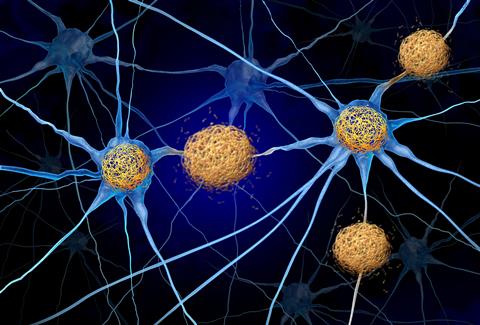
Researchers at the University of New Mexico (UNM) have identified a new role for the enzyme OTULIN, revealing that it not only regulates the immune system but also drives the formation of tau – a protein responsible for neurodegenerative diseases – as well as brain inflammation and ageing. These findings could lead to new treatments for Alzheimer’s disease and other tau-related disorders.
Halting tau production by targeting OTULIN
In their study, the team demonstrated that deactivating OTULIN – either by administering a custom-designed small molecule or knocking out the gene responsible for it – effectively halted tau production and removed the protein from neurons. The experiments were conducted on two types of cells: one derived from a patient who had died from late-onset sporadic Alzheimer’s disease, and another from a human neuroblastoma cell line often used in neuroscience research.
Pathological tau is the main player for both brain aging and neurodegenerative disease.
“Pathological tau is the main player for both brain aging and neurodegenerative disease,” said Dr Karthikeyan Tangavelou, a senior scientist in the lab of Dr Kiran Bhaskar, professor in the department of molecular genetics & microbiology at the UNM School of Medicine. “If you stop tau synthesis by targeting OTULIN in neurons, you can restore a healthy brain and prevent brain ageing.”
OTULIN: from inflammation regulator to tau controller
The gene coding for OTULIN – an acronym for 'OTU deubiquitinase with linear linkage specificity' – contains instructions for making a protein that regulates inflammation and autophagy, the mechanism that clears cellular debris. The researchers were initially investigating OTULIN’s role in waste removal when they discovered its unexpected influence on tau production.
The researchers were initially investigating OTULIN’s role in waste removal when they discovered its unexpected influence on tau production.
Tangavelou described the finding as “a ground breaking discovery that will be helpful to solve a complex puzzle in various neurological diseases and ageing of the brain.”
Normally, tau stabilises microtubules that provide structure to neurons. However, when tau undergoes chemical changes known as phosphorylation, it forms neurofibrillary tangles, which are a key component more than 20 other tau-related neurodegenerative conditions – known as tauopathies.
Implications for neurodegenerative treatments
Interest in tau has grown as therapies targeting amyloid beta plaques – long thought to be central to dementia – have shown limited clinical benefit. Bhaskar’s lab has previously developed a vaccine designed to prevent the accumulation of toxic tau proteins and plans to test it in patients.
Bhaskar’s lab has previously developed a vaccine designed to prevent the accumulation of toxic tau proteins and plans to test it in patients.
The study also found that neurons remained healthy even after tau was removed. “Neurons can survive without tau,” Tangavelou said. “They are looking healthy, even with the tau removed.”
He emphasised that the brain contains many other cell types, including astrocytes, microglia, oligodendrocytes and endothelial cells. “We discovered OTULIN’s function in neurons,” he said. “We don’t know how OTULIN functions in other cell types in the brain. If there is no OTULIN in microglia, that may cause auto-inflammation. We are testing OTULIN in different brain cell types to narrow down OTULIN as a therapeutic target for various brain cell diseases.”
OTULIN as a master regulator of brain aging
Additionally, the study demonstrated that suppressing OTULIN influenced messenger RNA (mRNA) signalling and altered the expression of numerous genes.
“We believe that OTULIN is the master regulator of brain ageing, because this protein regulates RNA metabolism,” Tangavelou said. “Knocking out the OTULIN gene alters many dozens of genes, mainly in the inflammatory pathway.”
We believe that OTULIN is the master regulator of brain ageing, because this protein regulates RNA metabolism.
The researchers used cutting-edge techniques including CRISPR gene editing, pluripotent stem cell induction, bulk RNA sequencing and computational drug design to develop the small molecule that inhibits OTULIN formation.
“There is an imbalance between protein synthesis and degradation during normal brain ageing and accelerated brain ageing in diseased brains,” Tangavelou explained. “OTULIN could be a key regulator in creating an imbalance between protein synthesis and degradation and may cause brain ageing.”
A pathway to future research
The discovery opens multiple opportunities for future research, with the researchers now developing a project to study the role of OTULIN in brain ageing. This will allow them to develop different projects for further research with the aim of reversing brain ageing.




Topics
- Disease Research
- Dr Karthikeyan Tangavelou (professor in the department of molecular genetics & microbiology at the UNM School of Medicine)
- Drug Development
- Drug Discovery
- Drug Discovery Processes
- Drug Targets
- Enzymes
- Molecular Biology
- Neurological disorders
- Neuroprotection
- Neurosciences
- Protein Expression
- the University of New Mexico (UNM)
- Translational Science