New research has revealed how cellular senescence – the process in which ageing cells change function – shapes human brain structure from development to old age, improving our understanding of brain ageing and neurodegenerative diseases.
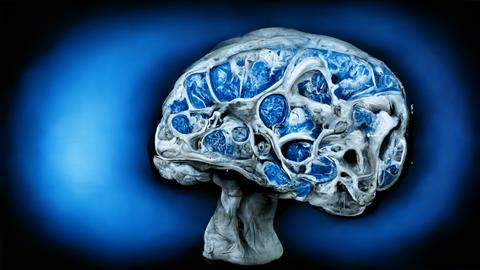
Researchers at the Icahn School of Medicine at Mount Sinai have discovered how cellular senescence – a biological process in which ageing cells change their function – is associated with human brain structure during both development and late life. The study demonstrates how molecular signatures of cellular senescence mirror brain volume and cortical organisation throughout life.
Decoding brain structure and cellular senescence
Understanding the structure of the human brain has always been a key challenge in neuroscience. While it is known that brain structure changes over time and is linked to both ageing and neurodegenerative conditions, the molecular processes that drive these changes – including cellular senescence – have been poorly understood.
Cellular senescence is known as a state in which cells permanently stop dividing but do not die, instead taking on altered functions. Although senescence has been implicated in ageing and disease, its role in shaping human brain structure – both during early development and in later life – isn’t very well understood either.
“This is the first study to directly link senescence-related molecular networks in living human brain tissue to measurable differences in brain structure within the same individuals,” said Dr Noam Beckmann, Director of Data Sciences and Assistant Professor of Artificial Intelligence and Human Health at the Icahn School of Medicine at Mount Sinai, and co-senior author of the paper. “By identifying molecular pathways that are engaged in both brain structure development and ageing, our work highlights senescence as a fundamental biological feature of brain ageing and neurodegenerative disease and helps prioritise targets for future experimental research aimed at protecting brain health.”
A new resource: the Living Brain Project
A key resource for this study was the Living Brain Project, which combines prefrontal cortex biopsies obtained during deep brain stimulation procedures with brain imaging data. This approach allowed researchers to study molecular and structural features in living individuals. The team developed a method to identify senescent cells in human brain tissue and explored how senescence-related gene expression correlates with brain structure.
“By leveraging datasets from the Living Brain Project, we can begin to understand how senescence-related biology may differentially influence brain organisation across cell types and across the lifespan," said Dr Alexander W Charney, MD, Director of the Charles Bronfman Institute for Personalized Medicine and co-senior author of the paper.
Cell type and life stage matter
One of the study’s main findings was that cellular senescence plays distinct roles depending on cell type and stage of life. Genes associated with senescence in microglia – the brain’s primary immune cells – were linked to larger brain volumes, while senescence-related genes in excitatory neurons correlated with smaller brain volumes in the ageing brain. These neuron-related patterns were also observed early in life, suggesting that senescence-related processes are active soon after embryonic development.
One of the study’s main findings was that cellular senescence plays distinct roles depending on cell type and stage of life.
“We were excited to see clear signs of senescence in both the ageing and developing brain using our new method,” said Dr Anina N Lund, a former neuroscience graduate student and now postdoctoral fellow at the Icahn School of Medicine and lead author of the study. “Our results support brain cellular senescence as an example of ‘antagonistic pleiotropy’ – the idea that some genes help survival or fertility early in life but cause harm later, contributing to ageing and disease. Most prior work links brain cellular senescence only to brain ageing, but our finding of it during development shows this process is not just a marker of ageing or disease; it also may play key roles in early brain development.”
Implications for future research
“Often the greatest developments in medicine are not through invention of totally new means but through a unique understanding of whatever is already in reach,” said Brian Kopell, MD, Director of the Center for Neuromodulation at Mount Sinai and co-lead of the Living Brain Project. “This work represents another fruition of the Living Brain Project’s ability to harness known data types in unique combinations to pave the way for future therapies. While brain ‘senescence’ or growing frail is largely accepted as a normal process of ageing, this data set represents an opportunity to challenge that notion.”
Often the greatest developments in medicine are not through invention of totally new means but through a unique understanding of whatever is already in reach.
Although the findings do not point to immediate treatments, they provide a framework for understanding how brain structure evolves over time and how age-related differences may arise. The authors acknowledge limitations, including the small and clinically specific cohort and focus on the prefrontal cortex, but stress that the research lays important groundwork for future studies.
Next steps will include expanding to larger, more diverse cohorts, refining cell type-specific definitions of senescence and conducting experimental studies to test whether senescence-related pathways causally affect brain structure. Such work could clarify when senescence supports brain health and when it contributes to vulnerability in ageing and neurodegenerative disease.



Topics
- Analytical Techniques
- Artificial Intelligence (AI)
- Big Data
- Bioinformatics
- Biomarkers
- Brian Kopell (director of the Center for Neuromodulation at Mount Sinai and co-lead of The Living Brain Project)
- Disease Research
- Diseases
- Dr Alexander W Charney (director of the Charles Bronfman Institute for Personalized Medicine)
- Dr Noam Beckmann (director of data sciences and assistant professor of artificial Intelligence and human health at the Icahn School of Medicine at Mount Sinai)
- Genetic Analysis
- Genomics & Sequencing
- High-Throughput Screening (HTS)
- Imaging & Diagnostics
- In Vitro Testing
- In Vivo Testing
- Informatics
- Microglial Cells
- Molecular Biology
- Neurological disorders
- Neurons
- Neurosciences
- Proteomics
- the Icahn School of Medicine at Mount Sinai
- Tools and techniques
- Translational Science