



All Precision Medicine articles – Page 3
-
 Report
Organoids and Organ Chips: Improving Decision-Making in Early Drug Discovery
Traditional preclinical models do not always predict what will happen in patients. This report explores how organoids, organ-on-chip systems and advanced imaging are being used to generate more clinically relevant insights and support better decision-making earlier in drug discovery.
-
 News
NewsMachine learning identifies five distinct Parkinson’s disease subtypes
A new study from VIB and KU Leuven has revealed that Parkinson’s disease comprises five distinct molecular subtypes, each requiring tailored therapeutic approaches.
-
 Article
Beyond serendipity: rational design and AI’s expansion of the undruggable target landscape
For decades, drugging the ‘undruggable’ was thought to require luck rather than logic. Today, AI is transforming serendipity into strategy by enabling rational, data-driven approaches to previously inaccessible targets.
-
 News
NewsChampions Oncology to present eight studies at AACR 2026
Champions Oncology will present eight studies at AACR 2026 spanning KRAS-mutant tumours, ovarian cancer, glioblastoma and emerging therapies including radiopharmaceuticals and CAR-T, using patient-derived models to improve early-stage decision-making in oncology drug development.
-
 News
NewsZebrafish drug screening identifies precision therapies for autism
Yale University researchers have created a behavioural drug screening database using zebrafish models to identify FDA-approved compounds that reverse disrupted behaviours linked to autism risk genes.
-
 News
NewsDNA-based system delivers targeted cancer drugs via biomarker logic
Researchers at the University of Geneva have developed a DNA-based drug delivery platform that uses molecular logic gates to identify cancer cells through dual biomarker recognition. The system activates cytotoxic agents only when both tumour markers are present, offering enhanced specificity over current antibody–drug conjugates while enabling deeper tissue penetration and multi-drug combinations.
-
 Report
CRISPR & Genomics: Turning Data into Confident Drug Discovery Decisions
Early drug discovery has no shortage of genomic data, but confidence remains scarce. This report examines how CRISPR, functional genomics and human-relevant models are being applied to determine which signals matter, how they influence disease biology and which targets and strategies are worth pursuing.
-
 News
NewsSonoPIN ultrasound method shows promise for targeted cancer therapy
A new ultrasound-based technique developed by researchers at Duke University uses microbubbles to deliver cancer drugs directly into tumour cells, showing promise for highly targeted treatments that cause minimal damage to healthy tissue.
-
 Article
Designing targeted assays for clinical success from the start
Why do some targeted assays move smoothly from discovery to clinical practice while others stall? The answer often lies in the earliest design decisions, where choices about samples, platforms and data determine what is possible later.
-
 Article
World ADC 2026: where antibody-drug conjugates are heading
At World ADC London 2026, experts highlighted how advances in payload design, targeting strategies and AI-driven discovery are changing antibody–drug conjugate development.
-
 News
NewsCat cancer study reveals targets for human drugs
A major international study has discovered genetic similarities between cancers in cats and humans, potentially helping to inform future drugs that could benefit both species.
-
 News
NewsLario raises $2.4m for neurological drug development
Lario Therapeutics has secured $2.4 million in funding from The Michael J. Fox Foundation for Parkinson’s Research and Wellcome to accelerate development of its neuronal calcium channel platform.
-
 News
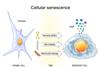
NewsTargeting senescent cells may reduce postpartum breast cancer risk
A study from the Institut Pasteur reveals how cellular senescence during mammary gland involution after pregnancy may both aid tissue repair and promote postpartum breast cancer.
-
 News
News$3.2m project targets aggressive MDM2 in breast cancer
A University of Houston scientist has joined a $3.2 million research collaboration to develop a new drug targeting one of the key drivers of triple-negative breast cancer.
-
 Article
Engineering the next generation of T-cell engagers
T-cell engagers are a branch of immunotherapy that has undergone considerable change since their clinical inception. Andrew J Souers, VP, Oncology Discovery Research at AbbVie, elucidates the current understanding of their biology and expanding focus areas of application.
-
 News
NewsSiglec-15 identified as key target in paediatric brain cancer
Scientists have identified a previously unknown lysosomal signalling pathway that drives growth in drug-resistant SHH medulloblastoma, which could lead to more precise and less harmful treatments for children with aggressive brain tumours.
-
 News
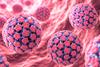
NewsHow vaccine structure shapes immune response to HPV tumours
Researchers have discovered that reorganising a single cancer-targeting peptide within a spherical nucleic acid vaccine dramatically boosts the immune system’s ability to attack HPV-driven tumours.
-
 Article
2026: the year AI stops being optional in drug discovery
AI is moving from a supporting role into the core of drug discovery. By 2026, it is expected to shape how targets are chosen, how biology is analysed and how development decisions are made.
-
 News
NewsNew fluorescent technology tracks drug responses in cells
Researchers have developed new innovative fluorescent labels that allow scientists to observe cellular processes with unprecedented clarity – offering a powerful tool for medicine, drug research and cell biology.
-
 News
NewsMagnetic stimulation advances heart organoids for future therapies
Researchers have shown that applying magnetic forces to lab-grown human heart organoids enhances their maturation and vascular development, offering a more realistic model of early heart formation and the possibility of future cardiac therapies.