
Technology
-
 Article
The future of academic core labs: scaling operational excellence without increasing staff
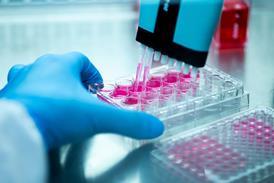
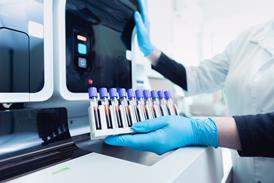
The grounds have shifted the foundations of academic core facilities and the current climate demands their strategic agility in order to thrive. Boyd Butler at Molecular Devices reveals how these labs can capitalise on this opportunity to increase value and efficiency.
-
 Article
Analytica 2026: Connecting data across drug discovery workflows
Drug discovery is generating more data than ever, but the challenge is making sure that data is reliable, connected and usable. At Analytica 2026 in Munich, Drug Target Review spoke with technology developers and industry leaders across the exhibition floor to understand how these challenges are being addressed.
-
 Article
AI builds dual-action cancer drug targeting PKMYT1
Research published in Nature Communications shows how generative AI can be used to design complex dual-action cancer drug candidates. Insilico Medicine has developed a PKMYT1 degrader that both eliminates the target protein and blocks its activity, demonstrating the growing role of AI in advanced drug discovery.
-
 Article
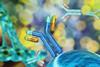
AI to antibody in days: breaking the wet lab bottleneck via high-throughput integration
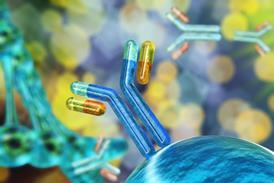
AI is accelerating drug discovery at an unprecedented pace. Thousands of antibody candidates can now be designed in silico within hours. The challenge now is keeping experimental workflows fast enough to keep up. High-throughput expression and integrated developability assessment are making it possible to move from sequence to data in days.
-
 Article
Beyond serendipity: rational design and AI’s expansion of the undruggable target landscape
For decades, drugging the ‘undruggable’ was thought to require luck rather than logic. Today, AI is transforming serendipity into strategy by enabling rational, data-driven approaches to previously inaccessible targets.
-
 Article
Operational data: the hidden driver of faster drug discovery
The key to faster, smarter drug discovery lies in data that’s often overlooked. By exposing hidden delays and inefficiencies, this data enables teams to shorten discovery cycles and progress promising candidates faster.
-
 Article
From fragments to maps: scaling drug–target interaction data
Most drug–target data were never designed to be compared at scale. Pharmome mapping takes a different approach, building a shared dataset intended to support more predictable discovery.
-
 Report
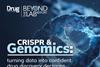
CRISPR & Genomics: Turning Data into Confident Drug Discovery Decisions
Early drug discovery has no shortage of genomic data, but confidence remains scarce. This report examines how CRISPR, functional genomics and human-relevant models are being applied to determine which signals matter, how they influence disease biology and which targets and strategies are worth pursuing.
-
 Interview
Computational design drives new generation of synthetic promoters
Designing gene control from scratch is becoming possible. SynGenSys is using computational design to create synthetic promoters for advanced therapies.
-
 Interview
Physics-based modelling offers a new way to study drug targets
Australian start-up OmnigeniQ has demonstrated what it describes as the first deterministic, physics-based computation of a human protein in its native state.
-
 Interview
From scientist to bioinformatician: how AI coding tools dissolved the activation energy barrier
A biotech CEO with decades of scientific experience but sporadic coding practice gained practical bioinformatics capabilities in six weeks using AI coding assistants.
-
 Article
Designing targeted assays for clinical success from the start
Why do some targeted assays move smoothly from discovery to clinical practice while others stall? The answer often lies in the earliest design decisions, where choices about samples, platforms and data determine what is possible later.
-
 Article
Discovery is changing – and automation leads the way
Automation is helping drug discovery teams screen faster, cut costs and run complex assays at scale – but its real value lies in what happens next.
-
 Article
World ADC 2026: where antibody-drug conjugates are heading
At World ADC London 2026, experts highlighted how advances in payload design, targeting strategies and AI-driven discovery are changing antibody–drug conjugate development.
-
 Interview
How self-driving labs are changing drug development
Automation and artificial intelligence are changing how scientists design, test and refine new molecules. At the University of Toronto, Stuart R Green and the Acceleration Consortium are building a self-driving lab that could change the pace of early drug discovery.
-
 Article
International Women’s Day: digital pathology in early drug discovery
For International Women’s Day, Dr Amanda Hemmerich, Global Director of Digital Pathology & Innovation at IQVIA Laboratories, describes how digital pathology is being applied in early drug development and what it takes to build credibility in a multidisciplinary technical field.
-
 Article
How brain donation is driving autism research
To study the biological underpinnings of autism, researchers must examine the human brain itself. This article explores how Autism BrainNet supports this work through coordinated tissue donation and preservation.
-
 Article
Why most labs are not ready for AI: Cenevo shares what must change
Most labs want to use AI, but few have the digital foundations to support it. Cenevo’s leaders explain why progress is slow and what laboratories must fix before AI can deliver real value.
-
 Article
Preclinical takeaways from the World ADC Conference London
Experts from the World ADC Conference in London highlight how patient-centric, predictive preclinical tools and innovative ADC designs are improving safety, efficacy and clinical translation.
-
 Article
Drug discovery integration takes centre stage at SLAS Boston 2026
Drug discovery has no shortage of powerful technologies, but the challenge now is making them work together. At SLAS Boston 2026, researchers and technology developers revealed how laboratories are connecting the entire experimental pipeline.