Drug discovery has no shortage of powerful technologies, but the challenge now is making them work together. At SLAS Boston 2026, researchers and technology developers revealed how laboratories are connecting the entire experimental pipeline.
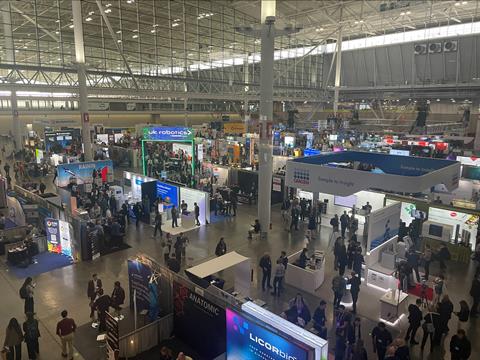
At the Society for Laboratory Automation and Screening (SLAS) Boston 2026 conference, Drug Target Review spoke with technology developers, researchers and drug discovery leaders from across the industry about the true focus of today’s drug discovery labs. Laboratories now have powerful tools and generate vast amounts of data, but making the different research stages work reliably together remains a major challenge, particularly as experiments grow larger and more complex.
This was evident throughout SLAS Boston. Companies focused less on isolated technologies and more on connecting experimental workflows, from laboratory automation and biological models to data infrastructure and reagent supply. Their aim is linking drug discovery more tightly from early hypothesis to downstream testing.
Scaling laboratory execution
One of the most immediate pressures appears in routine experimental work. Procedures that function reliably at small scale often become difficult to control as sample numbers increase.
At SLAS, SPT Labtech addressed this issue by considering how genomics workflows change as throughput increases. Rob Walton, CEO of SPT Labtech, described a familiar pattern in laboratory operations. Manual processing works well at small scale, but as experiments expand, the risk of human error increases.
“You can handle a small number of samples manually without much difficulty. But when you scale up to 100 or 200, people are people. Errors are inevitable.”
For Walton, automation is not simply about speed; it is about maintaining consistency when experiments grow beyond what manual work can reliably support.
“Scientists should be using their intelligence to interpret results, not spending their time on repetitive manual tasks,” he said.

SPT Labtech exhibiting at SLAS Boston 2026, highlighting automation technologies designed to support scalable genomics workflows.[/caption]
The company also highlighted growing demand for standardised, hands-free processing in genomics workflows, including its firefly all-in-one liquid handling platform. The compact system integrates multiple steps into a single instrument, automating both sample and library preparation.
We know we're a support act to our customers and they're doing some pretty amazing work that we want to support.
Walton emphasised that for automation to be widely adopted, it must be accessible. Many existing systems are large, complex and dependent on specialist operators, limiting use in laboratories without dedicated automation engineers. The firefly was designed so researchers can design and run protocols soon after installation, reducing reliance on individual experts and supporting continuity as teams grow.
Walton described automation as a way to help scientists scale experiments without losing control of data quality or workflow reliability.
“We know we're a support act to our customers and they're doing some pretty amazing work that we want to support,” he said.
Scaling laboratory execution is only part of the challenge. Once automated processes move beyond research and into clinical testing, far stricter requirements can apply.
When automation meets regulation
Scaling laboratory work is one stage of automation. Running automated processes that support clinical testing studies operates under a different set of requirements. Research workflows can tolerate adjustment and experimentation, but clinical study workflows must be traceable, reproducible and defensible under regulatory scrutiny.
Thermo Fisher Scientific presented its long-term collaboration with the Clinical Biomarker Laboratory at Moderna on end-to-end clinical laboratory automation, showing how automated workflows developed in research settings can be translated into regulated clinical environments.

Thermo Fisher Scientific at SLAS Boston 2026 – a busy booth and great discussions with colleagues and partners across the industry.[/caption]
Dr Hansjoerg Haas, Senior Director and General Manager for Lab Automation at Thermo Fisher Scientific, explained that this transition requires automation systems to function not only as experimental tools but as regulated production systems. Every action must be recorded, reviewable and auditable.
It’s not just a technology change. It’s also an organisational change how you respond to this market.
“It has to be auditable and be the source of truth,” he explained.
In practice, software must capture user actions, support validated process control and keep development environments separate from production systems handling patient samples. This enables formal validation of laboratory processes. Haas also emphasised that implementing clinical automation is not only a technical shift.
“It’s not just a technology change. It’s also an organisational change how you respond to this market,” he said.
The practical impact becomes clear as clinical trials progress. In a clinical study, the volume of specimens increases substantially from Phase I to Phase III and testing capabilities must scale without introducing variability. Similarly, compliance expectations may change depending on the intended use of the data. Standardised automated workflows can be replicated internally or transferred to contract research organisations (CROs) more easily than manual processes, reducing the complexity of technology transfer.
Haas linked the approach demonstrated with the Clinical Biomarker Lab at Moderna to measurable operational improvements. He said Moderna saw its failure rate drop through automation from 6 percent to less than 0.4 percent, a sixteen-fold reduction. An additional benefit of this is that fewer failures reduce the volume of investigations and documentation required in regulated environments.
Building data that predicts biology
High-throughput experimentation produces large datasets, but predictive modelling requires more than data volume; it requires measurements that capture meaningful biological responses.
Dr John Androsavich, General Manager of Ginkgo Datapoints, discussed the emerging field of virtual cell modelling. Despite rapid progress, he said the field still lacks a shared definition or standard methodology.
“I do not think there's any agreement on what a virtual cell is; it's very nascent.”
Many current approaches rely on generating large single-cell datasets. However, dataset size alone does not guarantee predictive accuracy.
“It's all about scale and volume data. It's not always about scaled volume quality,” asserted Androsavich.
He revealed that some models built from large single-cell datasets do not outperform simpler statistical approaches.
“We have data showing that it's not working, that models built off single-cell data are no better than simple statistical methods.”

The Ginkgo Datapoints team gathered at their booth during SLAS Boston 2026.[/caption]
The Virtual Cell Pharmacology Initiative (VCPI) thus takes a different experimental approach. Rather than prioritising single-cell resolution, it focuses on generating higher signal-to-noise measurements of how cells respond to drug exposure using arrayed sequencing experiments. Each compound is tested in separate wells using DRUG-seq, allowing clearer attribution of cellular responses and more consistent pharmacological data.
These experiments are supported by automation and can scale across many conditions. Studies can begin small and expand as needed. Androsavich noted that sequencing is no longer the main constraint. Instead, many laboratories lack the automation required to generate data at this scale.
We love open science. We can all operate in silos, but then we would be making the same mistakes.
The initiative is also built around open participation. Researchers can submit compounds for screening and resulting datasets are released publicly so predictive models can be developed collectively.
“We love open science. We can all operate in silos, but then we would be making the same mistakes,” he concluded.
Ginkgo Bioworks also received the SLAS People’s Choice Award, which recognises integrative innovation in laboratory automation and connected experimental workflows.
Running experiments continuously
ABB Robotics focused on the practical challenge of executing experiments once they have been designed digitally. Yolanda Casas, Global Sales and Marketing Manager for Life Sciences and Service Robotics at ABB Robotics, said many R&D laboratories already have AI tools to analyse data and design experiments, but still need reliable ways to carry out synthesis, testing and data generation at scale.
“They need to take the step from the virtual world into the real world.”
Casas said robotics can help accelerate design–make–test–analyse cycles by producing more consistent results, generating larger volumes of data and reducing the time scientists spend on repetitive experimental work.
“These systems can work around the clock in an autonomous manner.”
Casas referenced the industry roundtable hosted by ABB at SLAS examining the current state of AI, digitalisation and automation in laboratories and where these technologies are heading next. The session successfully brought together manufacturers and pharmaceutical companies to discuss how laboratory operations are evolving.

ABB Robotics’ GoFa collaborative robot demonstrated modular laboratory automation designed to implement autonomous laboratory workflows and provide consistent experimental execution.[/caption]
At the event, ABB Robotics also demonstrated collaborative robotic process cells designed to automate laboratory workflows and integrate with instruments and software from multiple vendors. Demonstrations included multi-step analytical workflows, gas chromatography sample preparation and robotic plate transfer between laboratory systems, using collaborative robots such as the GoFa platform to operate safely alongside laboratory staff.
Removing reagent delays
DNA Script focused on another practical constraint in experimental workflows: reagent availability. Presenting enzymatic DNA synthesis technology that enables laboratories to produce oligonucleotides directly at the bench, Dr Thomas Ybert, Co-founder and Chief Scientific Officer of DNA Script, said it allows more experimental work to be done in-house.
“As modern laboratories become increasingly autonomous, more of the experimental workflow is moving in-house.”

Engaging discussions at the DNA Script booth during SLAS 2026.[/caption]
On-demand DNA printing also reduces the time between sequence design and experimentation.
“Our enzymatic DNA synthesis benchtop system enables on-demand oligo printing directly in the lab, dramatically reducing turnaround times,” he said.
Applications include gene assembly, mRNA research and precise poly(A) tail synthesis.
Striving to improve biological relevance
Drug discovery models must better reflect human biology. Increasingly, that means using human cell systems rather than animal models.
Coby Carlson, Senior Director of Applications and New Technologies at FUJIFILM Cellular Dynamics, who leads the development of novel in vitro screening models, described the growing use of human induced pluripotent stem cells (iPSC) as an integral part of new approach methodologies (NAMs) designed to reduce reliance on animal testing.
At SLAS 2026, the FUJIFILM team presented high-throughput models ranging from brain neurospheres and cardiac microtissues to liver-based organ chips compatible with discovery screening and toxicology testing.

The FUJIFILM booth at SLAS 2026 highlighted high-throughput human iPSC-derived disease models for discovery screening and toxicology testing.[/caption]
Carlson identified automation and standardisation as ways to manage variability as a central challenge. He further emphasised that building reproducible assay systems with the needed biological complexity requires collaboration across the wider technology ecosystem.
“Running a drug discovery lab is the ultimate team sport and SLAS brings all the right players together. Instruments and equipment, plates and pipettes, cells and media. We are all looking to build the best assay systems to discover the next best-in-class therapeutic,” he noted.
From discovery platforms to clinical programmes
Keynote speaker Dr Serena Silver, Chief Scientific Officer at Accent Therapeutics, highlighted progress in the company’s KIF18A programme, which is currently being evaluated in a Phase I/II clinical trial. She said the programme reflects Accent’s integrated approach to drug discovery and could benefit large patient populations across several cancer indications, including ovarian, breast and lung cancers.
“Our integrated approach to drug discovery has led to our potentially best-in-class KIF18A programme,” she said.

Dr Serena Silver, Chief Scientific Officer at Accent Therapeutics, delivering her keynote at SLAS Boston 2026, highlighting progress in the company’s KIF18A programme and the role of cross-disciplinary collaboration in modern drug discovery.[/caption]
Silver explained that the programme is designed to exploit cancer vulnerabilities associated with genomic and chromosomal instability. Identifying and advancing these targets, she said, depends on close coordination across biology, chemistry and engineering.
She also described SLAS as a community that brings together wet lab science, engineering and informatics to help organisations translate emerging technologies into scalable drug discovery strategies.
“Solving complex problems in target discovery requires deep collaboration across disciplines,” she asserted.
Connecting the experimental pipeline
Across SLAS Boston 2026, one practical challenge stood out. Laboratories can generate data and design experiments, but keeping work moving reliably between stages remains difficult. Many of the technologies on show were aimed at making drug discovery more consistent from early research to therapeutic testing. The extent of that progress will become clearer when the community meets again next year.