



All 3D Cell Cultures articles – Page 3
-
 News
NewsMini-stomach organoids grown to improve disease research
Scientists have grown the first multi-regional “mini-stomach” in the lab, creating a new way to study rare genetic stomach diseases and help to develop new treatments for digestive conditions.
-
 News
NewsCentrifuge technique creates functional bioengineered lymph nodes
Using a straightforward cell stacking method, researchers have regenerated functional lymph nodes, offering a potential long-lasting therapy for secondary lymphedema and creating new opportunities for immunology and oncology drug discovery.
-
 News
NewsNew dual CDK approach tackles drug-resistant breast cancer
A new preclinical study suggests that combining next-generation CDK2 inhibitors with existing CDK4/6 therapies could overcome drug resistance in breast cancer, delivering durable tumour control across multiple subtypes.
-
 News
NewsHIV drug Maraviroc could be used to slow glioblastoma growth
Researchers have discovered how seemingly supportive brain cells help glioblastoma thrive, whilst identifying an existing HIV drug, Maraviroc, that could be repurposed to slow tumour growth.
-
 News
NewsNew fluorescent technology tracks drug responses in cells
Researchers have developed new innovative fluorescent labels that allow scientists to observe cellular processes with unprecedented clarity – offering a powerful tool for medicine, drug research and cell biology.
-
 News
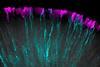
NewsFunctional retinal organoids improve drug testing for eye disease
Researchers have developed vascularised human retinal organoids featuring the first fully functional light-signal pathways in lab-grown human retina models, opening new possibilities for studying eye disease and testing therapies.
-
 News
NewsMagnetic stimulation advances heart organoids for future therapies
Researchers have shown that applying magnetic forces to lab-grown human heart organoids enhances their maturation and vascular development, offering a more realistic model of early heart formation and the possibility of future cardiac therapies.
-
 News
NewsNew method preserves iPS cells for regenerative medicine
Kobe University researchers have developed a new way of freeze induced pluripotent stem cells (iPS cells) directly in their culture dishes without losing viability or pluripotency.
-
 News
NewsHydrogel tech enables global shipping of organoid models
A partnership between Atelerix and Cherry Biotech is enabling the shipping of complex biological models worldwide, using hydrogel preservation technology to eliminate cold-chain logistics.
-
 News
NewsCBD and THC show anti-cancer effects against ovarian tumours
New research suggests cannabis compounds CBD and THC could offer a new approach to treating ovarian cancer.
-
 News
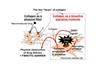
NewsInhibiting DDR1 pathway helps breach pancreatic cancer’s drug barrier
Scientists in Japan have identified a way to weaken the dense fibrotic barrier that prevents drugs from penetrating pancreatic tumours – a promising new strategy that could improve treatment for pancreatic cancer.
-
 News
NewsNew Spheromatrix platform speeds up cancer drug research
Researchers at NYU Abu Dhabi have developed a cheap, paper-based platform that allows tumour models to be grown, frozen and stored for future cancer drug testing – called Spheromatrix.
-
 News
NewsLive-cell liquid biopsy study aims to transform cancer treatment
Vortex Liquid Biopsy Solutions has launched a new clinical study with The Doctors Laboratory to assess how its live-cell liquid biopsy technology could change cancer monitoring and treatment.
-
 News
NewsMYC inhibitor Omomyc boosts PARP drug response in breast cancer
A preclinical study led by VHIO reveals that the MYC inhibitor Omomyc enhances the effectiveness of PARP inhibitors, offering a potential new treatment strategy for patients with drug-resistant triple-negative breast cancer.
-
 Article
Tackling the organ shortage through vascular bioengineering
Frontier Bio’s vascular bioengineering research connects tissue modelling with graft development to advance regenerative medicine and drug discovery.
-
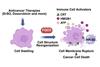 News
NewsFGD3 protein enhances breast cancer therapies
Scientists have identified a little-known protein, FGD3, that can boost the power of key breast cancer treatments by helping drugs rupture tumour cells and activate the immune system.
-
 News
NewsNew framework enhances reliability of virtual cell models
Shift Bioscience have announced new research revealing that AI-driven virtual cell models perform far better than previously thought when assessed with correctly calibrated metrics.
-
 News
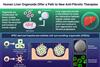
NewsLab-grown liver offers new platform to test fibrosis drugs
Japanese scientists have developed a lab-grown liver organoid that mimics human liver regeneration, offering a new platform to study fibrosis and test therapies.
-
 News
NewsTargeting fibroblasts could lead to new heart failure therapies
Long considered structural support cells, a new research study has discovered how fibroblasts actively worsen heart failure by disrupting heart muscle function, which could lead to new therapeutic strategies for heart failure.
-
 Article
Building reliable organoid models for human-relevant drug discovery
Organoids are changing the landscape of biomedical research, with automation and AI driving new levels of consistency, scalability and human relevance. Aaron Risinger of Molecular Devices discusses how these technologies are advancing precision medicine – and the challenges that remain.